TOSHIBA vs Comfee: Overview
Comparing TOSHIBA and Comfee helps you determine which brand is best suited for your needs in Toaster Ovens. Both brands offer strong choices depending on your budget and key feature requirements.
Key Features & Comparison
Evaluate factors such as build quality, warranty, customer satisfaction, and total value before making your final purchase choice between TOSHIBA and Comfee.
Features
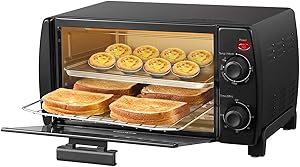
From a feature and functionality perspective, Comfee takes a minimalist approach, centering its design philosophy around mechanical simplicity and ease of use. Most Comfee units feature two or three analog dial knobs dedicated to standard parameters: temperature adjustment, a basic 30-to-60-minute timer with a stay-on function, and rudimentary mode selections such as bake, broil, and toast. While this mechanical setup minimizes potential circuit board failures and provides straightforward operation, it limits precise programming. High-end features like smart presets, dedicated dehydrate settings, or dynamic convection airflow are generally absent in Comfee’s entry-level lineup.
Conversely, Toshiba integrates rich, digitally controlled feature sets that dramatically expand culinary versatility. Many Toshiba models boast smart digital interfaces with clear LCD displays, offering ten or more pre-programmed cooking algorithms ranging from pizza and cookies to rotisserie and specialized air frying. Additionally, Toshiba often incorporates dual-speed convection fans, sensor-driven cooking modes, and high-precision timers that track cook cycles down to the second. The inclusion of multi-stage cooking functions and interior lighting highlights Toshiba's superior feature depth, catering to home cooks who demand more than basic bread toasting.
Performance
Thermal performance and consistency distinguish the two brands fundamentally. Comfee toaster ovens typically utilize basic calrod or standard metal heating elements that rely primarily on direct radiant heat and natural convection. While these elements generate heat rapidly, they often suffer from pronounced hot spots and thermal cycling fluctuations. Users frequently observe uneven browning across standard slices of bread, requiring manual rotation of pans during baking tasks. For basic tasks like melting cheese or reheating pizza, Comfee performs adequately, but it struggles with temperature stability when attempting delicate pastries or precise roasts.
Toshiba heavily outclasses Comfee in thermal dynamics and heating stability. Leveraging advanced quartz heating elements paired with sophisticated convection circulation, Toshiba units distribute thermal energy far more uniformly throughout the cooking cavity. The rapid thermal response of quartz elements reduces preheating intervals, while internal sensors adjust element outputs dynamically to maintain tight temperature tolerances. Whether crisping frozen foods with air-fry functionality or baking bread with even crusting, Toshiba delivers consistent, repeatable results that closely mirror the performance of a high-end traditional wall oven.
Design
The industrial design of Comfee toaster ovens emphasizes lightweight compactness and simple utility. Constructed primarily with thinner-gauge sheet metals and powder-coated finishes, Comfee appliances minimize their physical and visual footprint, making them well-suited for cramped countertops. However, this lighter construction comes with physical trade-offs: the exterior housing, including the single-pane glass door and outer top panel, often radiates considerable heat during sustained operation. The tactile interface leans heavily on analog plastic knobs, which, while durable in their simplicity, lack a refined or modern aesthetic.
Toshiba adopts a more sophisticated, architectural design language characterized by brushed stainless steel housings, double-pane tempered glass doors, and ergonomic pull-down handles. The double-layered glass door significantly enhances thermal insulation, keeping the outer chassis cooler while improving interior energy efficiency. The user interface on Toshiba units blends tactile rotary dials with digital push buttons and bright LED readouts, creating an upscale aesthetic that complements contemporary kitchen renovations. Although Toshiba appliances require significantly more counter depth and overhead clearance, their structural solidity and superior insulation reflect a higher standard of industrial design.