Breville vs Cuisinart: Overview & Brand Philosophy
When selecting a premium countertop appliance, the toaster oven category represents one of the most competitive intersections of everyday utility and culinary performance. Breville and Cuisinart represent two distinct philosophical approaches to modern kitchen technology. Breville, founded in Australia, approaches appliance design with a focus on cutting-edge engineering, sophisticated digital user interfaces, and specialized thermal control. Their design ethos centers on transforming the humble toaster oven into a genuine miniaturized convection oven capable of handling complex cooking tasks with high precision.
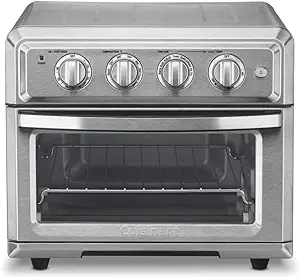
Conversely, Cuisinart, a brand deeply rooted in American home cooking heritage, focuses on high functionality, user-friendly simplicity, and accessible value. Rather than chasing bleeding-edge digital ecosystems, Cuisinart often emphasizes mechanical durability, analog-style controls, multi-functional capability (notably pioneer work in integrated air frying), and generous internal capacities at lower entry prices. Cuisinart views the toaster oven as an indispensable, hard-working workhorse that should perform daily tasks reliably without unnecessary complexity.
Understanding these different product approaches is essential for consumers. Choosing between Breville and Cuisinart is rarely a matter of raw quality alone; rather, it hinges on whether a buyer prioritizes advanced thermal algorithms and high-precision digital controls (Breville) or robust, utilitarian versatility and cost-efficiency (Cuisinart).
Key Differences & Technological Comparison
The primary technical differentiator between Breville and Cuisinart lies in heat distribution, heating element technology, and user interface design:
- Heating Element Technology: Breville's signature technological innovation is its proprietary Element iQ system. Utilizing quartz heating elements rather than traditional calrod (metallic) elements, Breville ovens can adjust heat distribution dynamically. The system shifts power across elements based on the selected preset, ensuring that heat is directed specifically where needed (such as high top-heat for broiling or even top-and-bottom heat for baking). Cuisinart models typically use standard calrod or basic quartz elements arranged in fixed patterns, relying more on convective airflow to distribute heat rather than active element-level modulation.
- Air Fry & Convection Capabilities: While Breville utilizes dual-speed convection fans with high-volume air delivery (especially in their "Super Convection" models), Cuisinart popularized the dedicated, high-velocity countertop air fryer/toaster oven hybrid with their TOA series. Cuisinart’s top-down fan placement in models like the TOA-60/TOA-70 creates exceptionally rapid air movement, frequently outperforming entry-level convection ovens in raw air-frying crispness, though sometimes at the cost of temperature precision.
- Build Quality and Aesthetics: Breville appliances feature heavy-gauge brushed stainless steel construction, magnetic auto-eject racks, LCD screens with backlighting that changes color to indicate heating status, and smooth-damped dials. Cuisinart utilizes a more utilitarian stainless finish, often paired with analog turn-dials or simplified digital push-buttons. While Cuisinart units are durable, Breville maintains a clear advantage in terms of tactile refinement and overall aesthetic integration.
- Cavity Size and Footprint: Cuisinart excels at maximizing vertical internal space relative to counter footprint, making them ideal for roasting whole chickens or tall baked goods. Breville generally favors wider, deeper configurations that accommodate standard 9x13-inch baking pans or 13-inch pizzas, requiring significantly more counter depth.
Pros & Cons Comparison
Breville Toaster Ovens
- Pro: Element iQ System: Best-in-class algorithmic temperature control reduces hot spots and improves consistency.
- Pro: Premium Interface: Intuitive digital controls, clear LCD screens, and pre-programmed cooking functions.
- Pro: Superior Baking Performance: Precise temperature regulation delivers results matching full-sized wall ovens.
- Pro: Construction & Details: High-grade materials, insulated doors, and thoughtful features like magnetic auto-pull racks.
- Con: Premium Price Point: Breville units sit at the upper end of consumer appliance budgets.
- Con: Size & Weight: Most models require substantial counter depth and clearance due to thermal output.
Cuisinart Toaster Ovens
- Pro: Value Proposition: Delivers high-capacity cooking and versatile feature sets at accessible price points.
- Pro: Aggressive Air Frying: Dedicated overhead fan design provides exceptionally fast crisping.
- Pro: Simpler Operation: Intuitive, tactile controls that require minimal learning curve for daily use.
- Pro: Vertical Capacity: Excellent interior height-to-footprint ratio accommodates taller dishes easily.
- Con: Temperature Inconsistency: Prone to running hot; standard thermostats may fluctuate more than digital PID systems.
- Con: Harder to Clean: Non-stick interior coatings vary by model, and high-velocity air-fry grease splatter can be difficult to remove.
Performance, Durability & Value Analysis
In side-by-side performance assessments, Breville toaster ovens demonstrate superior thermal stability and cooking consistency. When baking delicate items like cookies, custards, or artisan breads, Breville's quartz elements and PID temperature control prevent the wide temperature swings commonly found in countertop appliances. Cuisinart units, however, excel in speed and sheer heating power. For everyday tasks like reheating pizza, broiling open-faced sandwiches, and air-frying wings, Cuisinart often completes the cycle faster, though users must monitor food closely to prevent scorching due to aggressive heating elements.
From a longevity and investment standpoint, both brands hold strong reputations, but they manifest durability differently. Breville’s electronic micro-switches and internal cooling fans protect internal circuits, though out-of-warranty electronic repairs can be costly. Cuisinart's reliance on simpler mechanical switches in many of its most popular models provides robust physical longevity with fewer electronic components vulnerable to heat-induced failure. In terms of sheer price-to-performance ratio, Cuisinart consistently offers exceptional value for mid-range budgets, while Breville justifies its higher price tag through precision engineering and everyday usability.
Final Verdict: Which Brand Should You Choose?
Choose Breville if: You are seeking a legitimate replacement for your full-sized oven, value exact baking precision, appreciate modern digital interfaces, and have both the counter space and budget for a top-tier appliance. Breville is the superior choice for home cooks who bake frequently, demand consistent temperatures across long cooking cycles, and prefer a refined, automated culinary experience.
Choose Cuisinart if: Your primary goals are high-velocity air frying, quick daily family meals, and robust performance without paying a premium. Cuisinart is the ideal option for consumers who prioritize straightforward knob-based controls, compact vertical footprints, and exceptional multi-functional value for everyday cooking tasks.
Features
When evaluating the feature sets of Breville and Cuisinart toaster ovens, the divergence in engineering philosophy becomes immediately apparent. Breville establishes its technical superiority through its proprietary Element iQ technology, a sophisticated system of independent quartz heating elements paired with algorithmic thermal sensors. This system dynamically shifts wattage where it is needed most, allowing for granular micro-adjustments across dedicated presets such as slow cook, dehydrate, proof, and air fry. Breville’s digital architecture is anchored by high-contrast LCD interfaces that shift color (blue to orange) to indicate preheating status, intuitive dual-dial controls, and interior smart cavity lights that automatically activate upon cycle completion or opening. In contrast, Cuisinart approaches feature sets with an emphasis on utilitarian high-output performance and physical simplicity. Rather than smart algorithmic heating, Cuisinart typically relies on standard calrod heating elements and raw thermal power, frequently excelling in high-velocity convection and top-down infrared broiling. While premium Cuisinart models feature digital panels, many of their best-selling workhorses utilize tactile, mechanical dials that trade programmable precision for immediate, analog ease-of-use.
The practical trade-offs between the two brands center on the balance between cooking precision and targeted functionality, particularly regarding air frying and multi-zone cooking. Cuisinart frequently integrates specialized features that outshine Breville in speed and specific culinary niches. For instance, Cuisinart pioneered the integration of high-powered top-down fans in models like the TOA-60 series, producing a more aggressive, high-velocity air circulation that achieves faster, crunchier air-frying results than Breville's more ambient, balanced convection currents. Furthermore, Cuisinart experiments with hybrid dual-zone cooking capabilities and specialized accessories like integrated non-stick grill grates that reach searing temperatures upward of 450°F to 500°F. Breville, conversely, excels in breadth and consistency across diverse culinary tasks, offering expansive multi-rack capacities, magnetic auto-eject racks that safely pull hot pans forward, and precision temperature management that eliminates cold spots during low-and-slow baking or delicate pastry preparation.
Ultimately, Breville’s feature portfolio represents the pinnacle of digital culinary control, appealing to technical cooks who value hyper-accurate thermal management, automated conveniences, and refined user experience design. Cuisinart wins on functional horsepower, rapid preheating, and accessible versatility, packaging essential high-heat capabilities and market-leading air-fryer features into robust chassis that deliver immense utility at an approachable price point. For consumers prioritizing sophisticated automation and uniform results across complex cooking modes, Breville holds the technical edge; for those prioritizing aggressive crisping, straightforward controls, and maximum thermal velocity, Cuisinart’s feature suite remains exceptionally competitive.
Performance
When evaluating performance in the toaster oven category, Breville sets the industry benchmark through its proprietary Element iQ technology. This smart heating system dynamically directs power across multiple independent quartz heating elements, adjusting wattage automatically based on the selected cooking preset. In Breville units like the Smart Oven series, this results in remarkably even browning, razor-sharp temperature precision, and the elimination of the hot spots that plague lesser appliances. The dual-speed convection fans deliver consistent, uniform air movement that excels in both low-and-slow roasting and intense air-frying. Breville’s high thermal mass and responsive digital controls ensure minimal temperature drift, allowing for artisanal-level bread toasting and precise patisserie baking that rivals full-sized conventional wall ovens.
Cuisinart takes a distinctly different, brute-force engineering approach that prioritizes raw heating power and rapid recovery times. Often employing high-velocity convection systems coupled with robust calrod heating elements, Cuisinart ovens—particularly the widely popular Air Fryer + Convection series—heat up substantially faster than their Breville counterparts. However, this aggressive heat delivery creates noticeable performance trade-offs. The intense, direct radiant heat can lead to accelerated browning on exterior surfaces before the interior of dense foods is thoroughly cooked, making the toast cycle somewhat erratic and prone to edge-scorching. While Cuisinart excels at high-heat tasks like searing, melting, and fast, crunchy air-frying, it struggles with the delicate thermal regulation needed for sensitive baking tasks.
Ultimately, the performance divide centers on precision versus speed. Breville represents superior engineering refinement, offering calculated thermal distribution that guarantees repeatable, uniform culinary results across a wide spectrum of techniques. In contrast, Cuisinart serves the home cook who values efficiency, aggressive searing, and rapid preheating, trading away micro-managed temperature uniformity for accelerated cooking times. For culinary enthusiasts who demand absolute accuracy in baking and roasting, Breville is the superior performer, whereas Cuisinart offers reliable, high-powered utility for fast, weeknight meal preparation.
Design
When evaluating the design philosophy of toaster ovens, Breville and Cuisinart approach engineering from distinctly different angles: Breville prioritizes high-tech precision and modern aesthetics, while Cuisinart emphasizes robust, utilitarian functionality. Breville’s Smart Oven lineup is universally recognized for its sleek, brushed stainless steel architecture, weighted ergonomic handles, and vibrant LCD interfaces that intuitively change color based on operating status. At the heart of Breville's technical design is its proprietary Element iQ system, which dynamically steers heat across smart quartz elements to eliminate hot spots. Cuisinart counterbalances this digital-forward style with a more retro, commercial-kitchen design, often featuring tactile mechanical dials, heavy-duty switches, and dual-pane glass doors. While Cuisinart’s aesthetic feels more traditional and less seamless than Breville’s, it appeals to consumers seeking instant, unmediated physical feedback without complex menu navigation.
From a spatial and ergonomic standpoint, both manufacturers present clear trade-offs in footprint, capacity, and air movement. Cuisinart—most notably in its bestselling Chef’s Convection and Air Fryer Convection series—often optimizes interior verticality. Their boxy, squared-off chassis design allows for multi-level cooking and robust high-velocity air-frying, though it requires substantial vertical clearance and can look bulky on shallow countertops. Breville generally engineers wider, low-profile cavities designed to accommodate standard 9x13-inch baking pans or 13-inch pizzas effortlessly. Furthermore, Breville's attention to daily usability details is unmatched, featuring magnetic auto-eject middle racks, external pull-out crumb trays accessible from the front, and illuminated interior cavities that activate automatically when the cycle finishes. Cuisinart's interior layouts are highly capable, yet minor pain points—such as occasionally awkward crumb tray placement and analog dials that make exact minute-by-minute timing difficult—can detract from the user experience.
Ultimately, the design choice hinges on whether a user values computational refinement or long-lasting mechanical simplicity. Breville’s sophisticated digital interfaces, micro-adjusted thermal algorithms, and premium tactile finishes deliver a luxury countertop experience, though their reliance on complex internal circuit boards introduces potential points of failure over extended lifespans. In contrast, Cuisinart’s heavy reliance on analog controls, thicker gauge steel components, and straightforward heating coil layouts offers workhorse durability and intuitive operation for busy households. Breville represents the pinnacle of contemporary appliance design and culinary precision, while Cuisinart delivers a functional, durable aesthetic optimized for straightforward utility.