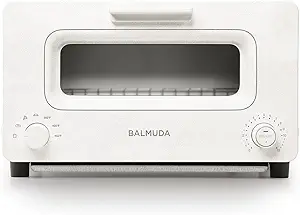
TOSHIBA vs Balmuda: Overview
Comparing TOSHIBA and Balmuda helps you determine which brand is best suited for your needs in Toaster Ovens. Both brands offer strong choices depending on your budget and key feature requirements.
Key Features & Comparison
Evaluate factors such as build quality, warranty, customer satisfaction, and total value before making your final purchase choice between TOSHIBA and Balmuda.
Features
TOSHIBA toaster ovens shine through sheer feature density and technological breadth, frequently integrating advanced convection systems, integrated air fry capabilities, rotisserie assemblies, and up to a dozen automated smart cooking algorithms. Their multi-level rack designs and oversized interiors easily accommodate standard baking pans and 12-inch pizzas, supported by intuitive digital interfaces, clear LCD readouts, and independent temperature sensor arrays that adapt heat output according to the chosen cook profile. This robust suite of features empowers users to execute complex multi-stage cooking tasks, ranging from slow dehydrating to aggressive high-heat broiling, without needing specialized secondary accessories.
Balmuda takes a radically minimalist yet technically sophisticated route, eschewing multi-rack cooking and digital display complexity in favor of proprietary steam-heating architecture. Equipped with a dedicated 5cc water reservoir and micro-dosing boiler channel, Balmuda ovens generate a burst of steam at the start of each cycle to seal in bread moisture before transitioning through three computer-controlled temperature phases. Rather than offering broad generic presets, Balmuda features hyper-specific baking modes tailored for sandwich bread, artisan loaves, pizza toast, and croissants, alongside conventional temperature settings. While it lacks air-frying and rotisserie capabilities, its single-minded focus on moisture retention creates an unmatched feature set for pastry connoisseurs.
Performance
In terms of raw thermal performance, TOSHIBA relies on high-wattage quartz and stainless steel heating elements backed by high-velocity convection fans to circulate dry, hot air uniformly across larger cubic footages. This architecture excels at rapid caramelization, crisping food surfaces in air fry modes, and maintaining stable cavity temperatures during extended baking sessions. While it delivers excellent browning and reliable results for sheet-pan dinners and frozen snacks, the aggressive air movement and high-intensity dry heat can occasionally dehydrate delicate baked goods or leave thicker slices of bread overly parched on the interior.
Balmuda redefines toasting performance by leveraging thermodynamic phase changes, transforming ordinary slices of stale bread into bakery-fresh delicacies. By blanketing the food in a microscopic layer of steam during the initial heating phase, it prevents internal water evaporation while warming the crumb, followed by a sudden ramp to high heat that caramelizes the outer crust to a golden crisp. The result is an extraordinary textural contrast of a crackling exterior and a pillowy, moist interior that conventional dry-heat toaster ovens like TOSHIBA simply cannot replicate, although Balmuda struggles when tasked with dense proteins or high-volume roasting.
Design
Aesthetic and physical construction differences between the two brands reflect their divergent priorities, with TOSHIBA favoring industrial durability and modern utilitarian design. Clad in brushed stainless steel or matte black finishes, TOSHIBA models incorporate sturdy double-paned glass doors, large tactile selector dials, and ergonomic cool-touch handles engineered to withstand daily wear and tear. The trade-off is an imposing countertop footprint that demands considerable kitchen real estate and vertical clearance, projecting the image of a miniature traditional oven rather than a delicate luxury accent piece.
Balmuda champions timeless, retro-modern Japanese minimalism, presenting a compact, svelte silhouette that elevates countertop aesthetics. Featuring smooth matte textures, polished metallic accents, a vintage-style analog timer click, and an ambient internal amber glow, the unit evokes an intentional sense of ritual and craft. Every detail, from the miniature magnetic measuring cup to the musical chime signaling the end of a cycle, is deliberately curated to enhance the user experience, providing an ultra-compact footprint that fits seamlessly into design-forward urban kitchens where space is at a premium.