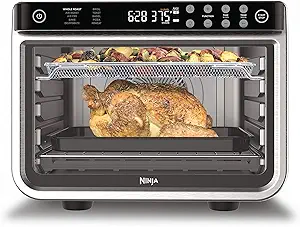
Ninja vs KitchenAid: Overview & Brand Philosophy
The modern countertop oven market has evolved far beyond basic bread-toasting, transforming into a competitive arena of multifunctional culinary appliances. In this space, Ninja and KitchenAid represent two fundamentally different engineering philosophies and user experiences. Ninja, an operating brand under SharkNinja, has built its reputation on rapid technological innovation, aggressive feature packing, and problem-solving designs tailored to fast-paced, contemporary households. Their toaster ovens frequently champion high-velocity convection, integrated air frying, and space-saving form factors designed to disrupt traditional kitchen workflows.
Conversely, KitchenAid, a heritage brand under the Whirlpool Corporation umbrella, approaches the toaster oven category through the lens of classic culinary craft and timeless industrial design. Known globally for its iconic stand mixers, KitchenAid prioritizes precision temperature control, durable construction, and quiet, refined operation. Rather than competing in a race to maximize heating velocity or novelty presets, KitchenAid focuses on baking consistency, gentle heat distribution, and aesthetic continuity that integrates seamlessly into upscale kitchen environments.
Understanding these distinct brand philosophies is essential for consumers evaluating their options. While Ninja appeals to modern cooks seeking maximum speed, compact footprints, and hybrid cooking modes (particularly air frying and dehydrating), KitchenAid caters to culinary purists, traditional home bakers, and those who prioritize robust interior capacity, heavy-gauge materials, and intuitive, straightforward operation.
Key Differences & Technological Comparison
The technical differentiation between Ninja and KitchenAid toaster ovens centers on heating element technology, airflow dynamics, and spatial utility. Ninja models, such as the Foodi series, frequently utilize high-wattage quartz heating elements paired with ultra-high-velocity convection fans. This configuration mimics industrial air fryers, allowing for rapid preheating—often under ninety seconds—and aggressive crisping. Furthermore, Ninja has patented physical form innovations, such as vertical flip-away storage mechanisms and dual-door multi-zone cavities, that maximize small countertop workspaces.
KitchenAid relies on traditional heating technology engineered for precision rather than brute speed. Utilizing advanced Even-Heat Technology, KitchenAid toaster ovens continuously cycle their top and bottom calrod or quartz elements while operating a slower, more deliberate convection fan. This engineered airflow prevents hotspots and eliminates the perimeter-scorching common in ultra-fast air fryers, making KitchenAid significantly superior for delicate tasks like soufflés, artisan breads, and low-and-slow roasting. However, this method requires standard preheat cycles running five to ten minutes.
Build materials and user interfaces further illustrate the technological divide. Ninja favors digital-first controls, segmented LED displays, and exterior housings built from lighter-gauge sheet metal with heat-resistant polymers to facilitate articulated movement. KitchenAid incorporates heavy-gauge brushed stainless steel, cast metal control dials, and heavy, insulated door hinges that minimize heat leakage to the surrounding countertop. While Ninja provides a modern, appliance-as-a-gadget interface, KitchenAid provides a tactile, professional-grade cooking station.
Pros & Cons Comparison
Ninja Toaster Ovens
- Pro: Industry-Leading Air Frying: High-velocity convection fans deliver superior crispiness compared to standard toaster ovens.
- Pro: Rapid Preheat Times: Most models reach high cooking temperatures in under two minutes, saving significant time.
- Pro: Innovative Space Management: Certain models feature flip-up designs that store vertically against the backsplash when idle.
- Pro: Dual-Zone Capabilities: Select offerings allow two independent cooking temperatures and programs concurrently.
- Con: Baking Inconsistency: High-speed airflow can cause uneven surface browning and dry out delicate baked goods.
- Con: Cleaning Difficulties: Internal design and heating element proximity make interior degreasing challenging over time.
- Con: Operating Noise: The high-output convection fans generate noticeable ambient noise during high-heat cycles.
KitchenAid Toaster Ovens
- Pro: Exceptional Temperature Accuracy: Even-Heat technology maintains steady thermal levels ideal for professional-grade baking.
- Pro: Superior Build Quality: Heavier steel gauge, reinforced door hinges, and high-quality tactile knobs ensure long operational life.
- Pro: Quiet Operation: Convection systems circulate air effectively without the high-pitched whirring typical of air-fryer hybrids.
- Pro: Generous Vertical Interior: Taller interior cavities easily accommodate whole chickens, dutch ovens, and cake pans.
- Con: Mediocre Air Frying: Air flow speed is rarely sufficient to replicate the crispness achieved by dedicated air fryers or Ninja ovens.
- Con: Slow Preheating: Takes considerably longer to reach operating temperatures compared to Ninja's rapid-fire elements.
- Con: Countertop Footprint: Large, rigid dimensions require dedicated, permanent counter space without fold-away options.
Performance, Durability & Value Analysis
From a long-term reliability standpoint, KitchenAid holds a clear advantage over Ninja. KitchenAid's reliance on proven, heavy-duty electromechanical components and robust thermal insulation translates into higher durability over a 5-to-10-year horizon. The door springs, internal racks, and exterior coatings resist thermal warping and wear exceptionally well. Ninja appliances, while engineered smartly, incorporate more complex moving parts, hinges (on flip models), and lighter thermal shielding. Over extended periods of daily use, Ninja units are more prone to fan noise development and cosmetic degradation from high-heat exposure, though their core electronics generally remain dependable throughout typical consumer product cycles.
Regarding value proposition, the assessment shifts based on lifestyle priorities. Ninja delivers extraordinary transactional value by consolidating multiple appliances—toaster, oven, dehydrator, and standalone air fryer—into a single footprint, often priced competitively between $150 and $300. For households seeking fast dinners and multi-use flexibility, Ninja yields a rapid return on investment. KitchenAid, positioned typically in the $180 to $350 range, offers value through longevity, classic aesthetics, and superior culinary output for traditional cooking tasks. If you evaluate value by speed and versatility, Ninja wins; if you evaluate value by build longevity and baking precision, KitchenAid takes the lead.
Final Verdict: Which Brand Should You Choose?
Choosing between Ninja and KitchenAid requires identifying whether your cooking style leans toward rapid convenience or traditional culinary technique.
Choose Ninja if:
- You prioritize air frying, quick weeknight dinners, frozen-food preparation, and accelerated cooking cycles.
- Countertop real estate is scarce, and you can benefit from vertical fold-away storage or low-profile designs.
- You want an all-in-one appliance to completely replace a standalone basket-style air fryer.
Choose KitchenAid if:
- You are an avid baker who demands precise, stable temperatures for breads, pastries, and delicate proteins.
- You prefer a whisper-quiet appliance with commercial-inspired aesthetic appeal and heavy-duty tactile dials.
- You require substantial vertical clearance inside the cavity to accommodate high-walled cookware, cake pans, or larger roasts.
Features
When evaluating the feature sets of Ninja and KitchenAid toaster ovens, consumers are met with fundamentally different engineering philosophies: Ninja leans heavily into multifunctional speed and high-velocity airflow, whereas KitchenAid champions precision baking, thermal mass, and traditional culinary versatility. Ninja models, such as the Foodi series, are distinguished by their rapid convection technology, often incorporating dual-speed fans and intense quartz heating elements that prioritize air frying, dehydrating, and hyper-efficient broiling. A standout engineering feat in several Ninja units is the flip-away storage capability, directly targeting spatial economy without sacrificing capacity. Furthermore, Ninja frequently integrates smart multi-zone cooking features and dual-tier racks, allowing users to cook distinct foods at separate temperatures simultaneously—a technical strength that appeals to fast-paced households prioritizing utility and turnover over artisanal baking.
Conversely, KitchenAid approaches feature design from the perspective of traditional thermal dynamics and heavy-duty reliability. Utilizing Even-Heat™ technology and advanced sensor-driven temperature regulation, KitchenAid units prioritize consistent interior heat distribution over brute-force air circulation. While modern KitchenAid selections feature high-heat air fryer modes, their primary feature strengths lie in nuanced cooking methods, such as dedicated low-temperature dough proofing, slow roasting, and precise broiling utilizing multiple calrod or quartz heating elements. Their internal cavity engineering is optimized for deep commercial-size baking sheets, cast-iron Dutch ovens, and full-size chickens, which is paired with intuitive digital dials, heavy-gauge non-stick interiors, and soft-close door mechanisms that reflect a more tactile, professional-grade cooking experience.
Ultimately, the practical trade-offs regarding features center on rapid convenience versus thermal precision. Ninja's interface is feature-dense, boasting quick preheat cycles and aggressive convective currents that slash cooking times, though it can run hot and dry out delicate baked goods due to localized air intensity. In contrast, KitchenAid trades blistering speed for gentle, radiant consistency, excelling in pastry baking, delicate roasting, and sustained low-temperature tasks, though its preheat cycles are notably longer and its footprint is permanently static. Shoppers seeking an all-in-one rapid-cook station with superior air frying will benefit most from Ninja’s feature ecosystem, while those seeking a mini conventional oven engineered for disciplined culinary control will find KitchenAid’s feature matrix far superior.
Performance
When evaluating the performance of toaster ovens, Ninja and KitchenAid diverge significantly in their engineering philosophies, heating dynamics, and operational strengths. Ninja prioritizes aggressive, high-velocity convection and ultra-fast thermal responsiveness, heavily skewing toward multifunctional air frying and rapid roasting. Engineered with powerful heating elements combined with high-RPM top-mounted convection fans (often branded as Air Crisp technology), Ninja units excel in high-heat circulation that rapidly strips surface moisture from proteins and achieves exceptional crispiness. This high thermal velocity drastically cuts preheat times—frequently under two minutes—and accelerates overall cook cycles. However, this aggressive airflow can be a double-edged sword; in more delicate baking applications like cakes or pastries, Ninja ovens often create hot spots and can prematurely brown exteriors before the interior structure fully sets, forcing users to vigilantly manage cook times and lower temperatures.
Conversely, KitchenAid approaches performance through the lens of traditional culinary precision and superior thermal stability. Employing robust quartz heating elements paired with advanced thermal sensors and optimized, lower-velocity convection systems, KitchenAid toaster ovens focus on even, radiant heat distribution and steady cavity temperatures. The trade-off is a longer preheat duration and slower overall cooking speeds, but the payoff is professional-grade consistency: toast achieves edge-to-edge browning without hot spots, roasts retain deeper internal moisture, and baked goods rise uniformly without scorched crusts. KitchenAid’s heavier gauge metal construction, superior cavity insulation, and thicker glass doors also mean the unit retains ambient heat far better than thinner-walled Ninja designs, minimizing temperature drops when the door is opened.
Ultimately, the performance winner depends entirely on your daily cooking habits and culinary priorities. Ninja holds a definitive technical edge for consumers who demand speed, versatility, and best-in-class air-frying capabilities, delivering swift, aggressively crisped results that cater to fast-paced weeknight meals. On the other hand, KitchenAid is the superior performer for baking purists and culinary perfectionists who value radiant heat precision, gentle and consistent airflow, and steady thermal retention over sheer velocity and intense convection power.
Design
When evaluating the design philosophy of toaster ovens, Ninja and KitchenAid present two contrasting engineering approaches tailored to distinct kitchen demographics. Ninja emphasizes modern versatility, modularity, and aggressive space optimization. The brand's hallmark design achievement is its "Flip-Up" series, which allows the appliance to rotate vertically against the kitchen backsplash when not in use, drastically reducing its physical footprint by up to 50 percent. Ninja’s exterior engineering heavily incorporates brushed stainless steel accented with utilitarian, digital-first control schemes featuring crisp LED displays, tactile push-buttons, and high-response rotary selector dials. Internally, Ninja focuses on low-clearance, wide-pan formats engineered specifically for high-velocity convection and rapid preheating, optimizing horizontal air-channeling rather than vertical capacity.
Conversely, KitchenAid leans into classic culinary architectural design, focusing on vertical volume, premium material density, and timeless tabletop aesthetics. Inspired by their commercial-grade heritage, KitchenAid toaster ovens feature heavy-gauge metal construction, robust bar handles, and smooth-gliding, soft-close door mechanisms that impart an immediate sense of durability. Instead of sprawling digital interfaces, KitchenAid frequently employs clean, analog-inspired chrome dials alongside subtle, high-contrast LCDs, making operation intuitive for traditional cooks. Internally, KitchenAid prioritizes vertical clearance—often engineered with an arched back or dual-tier rack capability—allowing it to easily accommodate whole chickens, Dutch ovens, and high-sided baking dishes that simply cannot fit within Ninja’s streamlined, low-profile cavities.
The practical trade-offs between the two brands ultimately center on counter space dynamics versus multi-shelf culinary capacity. Ninja delivers exceptional ergonomic ingenuity for compact kitchens, urban apartments, and cooks who prioritize speed, sheet-pan roasting, and storage efficiency over cavity height. However, its low interior clearance increases the risk of food splatter nearing the heating elements, demanding more frequent cleaning. KitchenAid demands a permanent, unyielding footprint on the countertop and tends to carry a heavier, bulkier frame that is difficult to move, but rewards the user with superior thermal insulation, cooler exterior housing temperatures during high-heat cycles, and an elegant aesthetic that anchors luxury kitchen setups.