Ninja vs Hamilton Beach: Overview
Comparing Ninja and Hamilton Beach helps you determine which brand is best suited for your needs in Toaster Ovens. Both brands offer strong choices depending on your budget and key feature requirements.
Key Features & Comparison
Evaluate factors such as build quality, warranty, customer satisfaction, and total value before making your final purchase choice between Ninja and Hamilton Beach.
Features
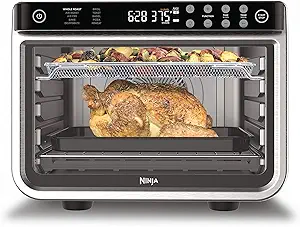
Ninja distinguishes itself through aggressive feature integration, often blurring the line between a traditional toaster oven, an air fryer, and a miniature convection oven. Flagship models such as the Foodi series incorporate multi-level cooking racks, high-output air crisping functions, dehydrating modes, and even dual-heat technology that sears foods directly on specialized griddle plates. Their inclusion of smart internal thermometers, multi-zone heating elements, and precisely calibrated digital presets allows users to execute delicate culinary operations with minimal manual intervention. The electronic controls offer minute-by-minute adjustments and fine temperature gradients, providing superior precision for modern culinary techniques.
Hamilton Beach adopts a more traditional and streamlined feature philosophy. While the brand has introduced models with convection and basic air-frying capabilities, their configurations primarily revolve around staple heating profiles: toast, bake, broil, and warm. Control layouts frequently feature mechanical dials with standard 30-to-60-minute analog timers and stay-on functions, though select higher-tier models do feature digital LCD screens. Roll-top doors and slide-out crumb trays are popular signature conveniences that improve daily usability. Hamilton Beach rarely attempts to overwhelm the consumer with high-tech sensors or specialized searing zones, focusing instead on utilitarian features that fulfill core cooking needs reliably.
Performance
In terms of thermal performance, Ninja frequently outpaces traditional counterparts due to its high-wattage quartz heating elements and high-velocity circulation fans. Ninja’s heat distribution systems are engineered to eliminate cold spots, enabling extremely fast preheating (often within 60 to 90 seconds) and producing exceptional results in air frying, roasting, and searing. The internal cavity temperatures remain stable even during rapid cycling, resulting in crispy exteriors and moist interiors. However, this aggressive convection airflow requires careful monitoring by the cook, as it can occasionally over-brown delicate baked goods or dry out thinner cuts of protein if cook times are not adjusted downward.
Hamilton Beach delivers steady, predictable thermal output that aligns with conventional home cooking expectations. Relying predominantly on traditional calrod or standard quartz elements without ultra-high-speed fans, heat generation is gradual and gentle. This makes Hamilton Beach ovens particularly forgiving for classic baking tasks, such as cookies, casseroles, and open-faced melts, where intense air velocity might otherwise scorch the surface. The trade-off is a longer preheat cycle and longer overall cook times, along with less potent browning capability during broil or air fry modes compared to Ninja’s pressurized thermal circulation.
Design
Ninja’s design language is distinctly modern, architectural, and tech-forward, characterized by dark stainless steel, matte black accents, and crisp digital readouts. One of Ninja's most notable engineering achievements is the "flip-up" vertical storage capability found in models like the Foodi Digital Air Fry Oven, which reclaims up to 50 percent of counter footprint when not in use. Internal construction generally utilizes thick gauge sheet metal, secure door gaskets, and seamless interiors that assist with heat containment and simplify cleaning. The robust, heavy-duty aesthetic conveys commercial durability, though the wider, lower-profile footprints can be cumbersome on standard counters during active operation.
Hamilton Beach prioritizes ergonomic practicality, classic styling, and vertical compactness. The brand's standout design innovation is the patented Roll-Top door, which rolls up and over the oven cavity rather than swinging down onto the counter. This design feature vastly improves access to food, prevents accidental spills on the door glass, and completely frees up valuable counter space in front of the unit. The chassis designs are universally lighter and more compact, making them effortless to maneuver or stow away in cabinets. While materials such as exterior sheet metal and dial plastics feel more utilitarian than luxurious, the overall engineering focuses squarely on ease of cleaning and practical counter-friendly footprints.
Compare current retail pricing, active promotions, and verified stock availability directly from authorized stores: