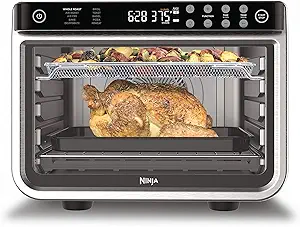
Ninja vs Cuisinart: Overview
Comparing Ninja and Cuisinart helps you determine which brand is best suited for your needs in Toaster Ovens. Both brands offer strong choices depending on your budget and key feature requirements.
Key Features & Comparison
Evaluate factors such as build quality, warranty, customer satisfaction, and total value before making your final purchase choice between Ninja and Cuisinart.
Features
Ninja equips its toaster oven lineup with extensive, high-speed functionality centered heavily on active air circulation and versatile cooking modes. Many of their flagship models, such as the Foodi Air Fry Oven series, feature up to a dozen discrete cooking functions, including specialized dehydrating, broiling, crisping, and dual-zone thermal control. A standout technical inclusion in several Ninja platforms is the Digital Crisp Control Technology, which modulates heating elements and fan speeds independently to simulate professional multi-stage cooking. Furthermore, Ninja leads the industry in ergonomic spatial features, notably their patented flip-up-and-away storage design, which clears significant counter space when the appliance is inactive and includes an accessible back panel for internal chamber cleaning.
Cuisinart counters with a feature set deeply rooted in fundamental thermal control and expansive internal capacity. While they offer comprehensive presets—including toast shade selectors, low-temperature proofing, and convection air frying—Cuisinart relies less on digitized algorithms and more on physical element distribution and sheer internal cavity volume. Many Cuisinart models feature interior non-stick coatings, high-intensity interior viewing lights, and specialized dual-sided racks that accommodate large Dutch ovens or standard 9x13-inch baking pans without handles. Cuisinart avoids mechanical gimmicks like folding hinges, opting instead for solid, heavy-gauge wire racks, pull-out crumb trays with safety interlocks, and dedicated analog-digital hybrids that maximize ease of use without introducing complex electronic failure points.
Performance
From an empirical performance standpoint, Ninja toaster ovens excel in thermal velocity, convective heat transfer, and surface crisping. Because Ninja designs their units with high-wattage fans and shallow cavity geometries or precise top-to-bottom airflow channels, they achieve preheat temperatures in a fraction of the time required by traditional appliances—often reaching 400°F in under ninety seconds. This aerodynamic engineering makes Ninja significantly superior for high-heat tasks such as air frying proteins, searing sheet-pan meals, and dehydrating produce. However, this aggressive convection can sometimes work against the user; the rapid, directional airflow can occasionally lead to premature surface browning on delicate pastries, cakes, or artisan breads before the internal structure has fully baked through.
Cuisinart provides a much more traditional, balanced thermal performance, making it the preferred brand for delicate baking and slow roasting. With greater vertical clearance between the heating elements and the food tray, Cuisinart ovens minimize the risk of radiant scorching, delivering consistent, golden-brown toast and evenly baked cookies. The air-frying performance in Cuisinart's TOA series relies on a powerful top-mounted fan and high-density element setup that creates thorough radiant crisping, though it generally requires slightly longer preheating compared to Ninja. For users who prioritize baking, roasting whole poultry, and achieving predictable, conventional oven-grade results across diverse cooking vessels, Cuisinart demonstrates superior thermal stability and temperature accuracy across extended runtimes.
Design
The industrial design of Ninja toaster ovens is distinctly futuristic, featuring sleek brushed dark metals, high-contrast digital LED displays, and specialized structural articulation. Ninja models frequently employ wide, horizontal footprints with reduced vertical profiles, deliberately styled to accommodate standard baking sheets while fitting neatly under upper cabinetry. The tactile feedback in Ninja units is governed primarily by microswitches, digital dials, and illuminated touch panels, reinforcing an appliance identity that feels closer to consumer electronics. While this design is undeniably sleek and hyper-efficient for modern minimalist spaces, the lower internal cavity height can limit the preparation of taller roasts, whole chickens, or standard loaf pans.
Cuisinart adheres to a professional, timeless aesthetic characterized by heavy-gauge, polished or brushed stainless steel, large viewing windows, and prominent mechanical control knobs. The architectural footprint is taller and squarer, mimicking the classic lines of commercial restaurant salamanders and countertop broilers. This vertical emphasis provides generous overhead clearance inside the chamber, facilitating multi-level baking and accommodating larger cookware with ease. While Cuisinart units demand a more permanent and prominent footprint on the kitchen counter, their heavy-duty door hinges, insulated cool-touch handles, and enduring stainless exterior blend seamlessly into both modern and traditional kitchen environments without feeling visually dated over time.
Compare current retail pricing, active promotions, and verified stock availability directly from authorized stores: