Instant Pot vs Ninja: Overview
Comparing Instant Pot and Ninja helps you determine which brand is best suited for your needs in Toaster Ovens. Both brands offer strong choices depending on your budget and key feature requirements.
Key Features & Comparison
Evaluate factors such as build quality, warranty, customer satisfaction, and total value before making your final purchase choice between Instant Pot and Ninja.
Features
In terms of feature sets and versatility, both brands aggressively pack their appliances with 8-to-12 cooking functions, but the mechanical implementation differs significantly. Instant Pot’s standout feature across its flagship Omni Pro line is the inclusion of integrated rotisserie spit hardware, a rotisserie basket for automated tumble-frying, and built-in smart temperature probes that monitor interior meat temps directly through the oven's digital control board. Additionally, Instant Pot incorporates proprietary EvenCrisp technology and specialized proofing, dehydrating, and split-element broiling programs that appeal directly to traditional bakers and culinary enthusiasts who require low-and-slow fermentation alongside high-heat searing.
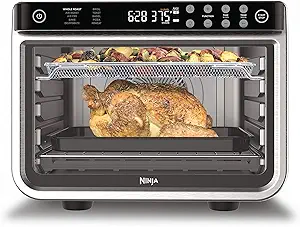
Ninja counters with highly pragmatic, performance-driven features aimed at reducing cooking friction and maximizing speed. Key innovations in Ninja’s lineup include their dual-heat technology, which combines a high-velocity convection fan with a direct-contact searing bottom plate capable of reaching 500°F for authentic skillet-style browning. High-end Ninja models also introduce the Smart Cook System with integrated Foodi smart thermometers, as well as distinct multi-rack cooking presets designed to synchronize cooking across multiple sheet pans. While Ninja lacks the motorized rotisserie capability found in Instant Pot's flagships, its high-heat searing, true multi-level sheet pan capacity, and specialized dehydrate and reheat modes make its daily utility exceptionally broad for high-turnover family meals.
Performance
Thermal performance and airflow velocity are the most crucial differentiators when evaluating these two competitors under rigorous cooking conditions. Ninja toaster ovens, particularly the Foodi Digital Air Fry Oven and Double Oven lines, generally feature superior airflow dynamics and rapid preheating cycles. Powered by high-output heating elements ranging between 1750 and 1800 watts coupled with focused convection fans, Ninja models reach target temperatures in under 90 seconds. This intense, targeted convective heat produces noticeably crispier air-fried foods and deeply caramelized roasted vegetables faster than standard countertop units, though users must be vigilant to avoid burning delicate items due to the high-velocity heat concentration.
Instant Pot takes a slightly more balanced, traditional thermal approach, which yields superior results for delicate baking, slow roasting, and volumetric cooking. While its preheat cycle takes moderately longer than Ninja's near-instantaneous warmup, Instant Pot’s cavity maintains exceptional temperature stability with fewer localized hot spots, minimizing the risk of uneven rises in cakes or scorched pastry tops. The motorized rotisserie also delivers uniform browning on whole poultry that stationary ovens simply cannot replicate, self-basting the meat throughout the cycle. If rapid air frying and searing are the primary benchmarks, Ninja holds the upper hand; however, for steady ambient baking, moisture retention in larger roasts, and gentle proofing, Instant Pot demonstrates superior thermal discipline.
Design
The industrial design languages of Instant Pot and Ninja highlight completely different spatial philosophies and kitchen integrations. Instant Pot models generally follow the traditional 'cube' format, constructed with heavy brushed stainless steel housings, double-pane glass doors, and bright blue LED control panels flanked by tactile rotary dials. This conventional vertical height allows Instant Pot to accommodate larger whole chickens, tall Dutch ovens, and multi-tier wire racks, but it commands a permanent, tall footprint on the countertop that may not comfortably clear low-hanging upper cabinetry.
Ninja redefines countertop ergonomics through clever, unconventional structural designs, most notably their flip-up and store-away mechanism found in the Foodi series, which allows the oven to pivot vertically against the kitchen backsplash when not in use to reclaim up to 50% of prep space. Other Ninja models feature split-door architectures (the Double Oven series) that isolate upper and lower cavities with independent temperature controls, preventing flavor transfer between dishes. The trade-off for Ninja's flip-away models is a shallow vertical cavity that cannot fit a standard whole chicken or high-profile loaf pan. Materially, both brands utilize a mix of stainless accents and heat-resistant plastics, but Ninja's interior nonstick surfaces and fold-down back panels generally offer more accessible cleaning and maintenance compared to Instant Pot's deeper, more cavernous interiors.