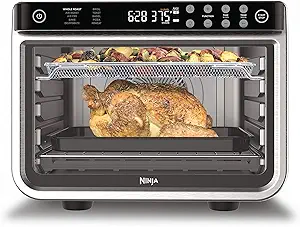
COSORI vs Ninja: Overview & Brand Philosophy
In the rapidly evolving countertop appliance market, toaster ovens have transformed from simple bread-browning devices into multi-functional culinary powerhouses. Two brands that consistently dominate consumer shortlists are COSORI and Ninja. While both target the modern home cook looking to save time and counter space, their design philosophies, engineering priorities, and technological implementations stem from distinctly different origins. COSORI, a flagship brand under the Vesync umbrella, emphasizes seamless smart-home integration, sleek aesthetic appeal, and expansive internal capacity. Their approach focuses on creating an intuitive, connected kitchen experience that democratizes advanced cooking techniques via accessible pricing and responsive companion software.
Conversely, SharkNinja's kitchen division, Ninja, approaches the category with a focus on high-velocity performance, mechanical versatility, and spatial optimization. Known for disruptive product design, Ninja views the toaster oven as an aggressive high-heat appliance engineered to replace traditional ranges entirely. Their philosophy prioritizes kinetic airflow (convection and air frying) and radical structural innovations—exemplified by their popular flip-up storage designs. While COSORI curates a gentle, connected, and methodical culinary ecosystem, Ninja leans into raw power, rapid preheating, and rapid cycling times, catering to consumers who demand speed and textural perfection above all else.
Key Differences & Technological Comparison
When evaluating COSORI and Ninja, the differences manifest primarily in thermal management, footprint engineering, user interface, and smart connectivity:
Heating Elements and Convection Dynamics: Ninja heavily prioritizes high-velocity convection. Models like the Ninja Foodi Digital Air Fry Oven utilize precise ducting and high-RPM fans to blast food with superheated air, yielding superior crisping results for fried foods and roasting. COSORI counters with precision quartz and nickel-chromium heating elements distributed across top and bottom banks. COSORI’s convective airflow is often gentler and more evenly distributed, making it exceptionally well-suited for delicate baking, low-temperature dehydration, and multi-rack roasting where aggressive air currents might cause uneven rise or surface over-browning.
Form Factor and Spatial Architecture: Ninja holds a significant patent advantage with its "flip-and-store" mechanism found in units like the SP101 and SP301 series. These ovens feature a wide, shallow cavity that maximizes single-layer surface area for crisping, and they can be flipped vertically against the kitchen backsplash when not in use, reclaiming up to 50% of counter space. COSORI adheres to a traditional, deeper cubic design. While this requires permanent counter real estate, it offers far superior vertical clearance, enabling users to bake tall artisan sourdough, roast a whole five-pound chicken, or accommodate a standard 12-inch pizza across multiple rack positions.
Smart Features and Ecosystem: COSORI decisively wins the connectivity battle. Many of COSORI’s flagship toaster ovens feature native Wi-Fi integration via the VeSync app, enabling remote monitoring, preheat alerts, voice control via Amazon Alexa and Google Assistant, and access to hundreds of guided step-by-step digital recipes. Ninja largely eschews smart-home integration, relying instead on integrated physical meat probes (Foodi Smart Thermometer) and automated thermal calculation settings directly managed from the appliance control panel.
Pros & Cons Comparison
COSORI Toaster Ovens
- Pro: Generous Vertical Clearance: Ample cubic capacity effortlessly accommodates whole poultry, Dutch ovens, and tall baked goods.
- Pro: Robust Smart-Home Integration: Intuitive VeSync app integration allows for remote monitoring, scheduling, and precise multi-stage cooking adjustments.
- Pro: Baking Uniformity: Balanced quartz heating elements combined with moderated convection create consistent, even heat distribution across racks.
- Pro: Intuitive Controls: Clean, modern digital interfaces with easy-to-read LED displays and well-indexed presets.
- Con: Permanent Counter Footprint: Traditional boxy form factors require significant permanent counter space.
- Con: Slower Crisp Times: Air frying capabilities, while functional, lack the intense kinetic velocity of dedicated air-fry-first brands like Ninja.
Ninja Toaster Ovens
- Pro: Space-Saving Innovation: Signature "flip-up" design allows units to be folded vertically against the wall when idle, freeing up high-value prep space.
- Pro: Rapid Air-Frying & Searing: High-velocity thermal fans and high-wattage arrays deliver industry-leading browning, searing, and air-fry crisping speeds.
- Pro: Easy Deep Cleaning: Hinged bottom panels on select models swing open completely to allow direct access to interior crumb surfaces and heating rods.
- Pro: Precision Cooking Probes: Top-tier models include integrated food thermometers that automatically shut down heating once exact core temperatures are achieved.
- Con: Severely Limited Vertical Height: The shallow design of many popular models cannot accommodate taller items like whole chickens, deep casserole dishes, or bundt cakes.
- Con: High Acoustic Output: Powerful convection fans generate significantly higher operational noise levels compared to COSORI counterparts.
Performance, Durability & Value Analysis
From an operational standpoint, both brands exhibit distinct strengths in long-term performance. Ninja appliances are designed for rigorous, high-temperature cycles. Their brushed stainless-steel housings and high-gauge sheet metals resist warping under thermal stress, and their mechanical flip mechanisms are tested for thousands of actuations without hinge failure. However, their internal coatings—frequently non-stick or treated aluminized steel—can deteriorate if subjected to abrasive scouring powders or corrosive spray-on cleaners. In terms of thermal consistency, Ninja models reach peak temperatures in a fraction of the time required by standard full-sized ovens, offering tangible energy and time savings for weeknight cooking.
COSORI delivers exceptional raw value per cubic inch. By packing large capacities, smart connectivity, multiple rack accessories, and dependable quartz elements into products that often retail 15% to 30% lower than comparable Ninja units, COSORI optimizes the feature-to-price ratio. Durability reports indicate reliable electronic control boards and stable long-term element life, though some users report that exterior surfaces can run warmer to the touch due to lighter thermal insulation along side panels. For consumers seeking maximum internal volume and modern software convenience without a premium price tag, COSORI stands out as the value-driven engineering leader.
Final Verdict: Which Brand Should You Choose?
Selecting between COSORI and Ninja ultimately hinges on kitchen layout, primary culinary applications, and the structural priority of your countertop:
Choose Ninja if: Counter space is strictly limited and your cooking repertoire heavily favors rapid air frying, sheet-pan dinners, toast, and high-heat searing. The ability to flip the oven vertical post-cooking is a transformative feature for compact kitchens, apartments, or minimalist aesthetics. Furthermore, if you value intense textural crispness and absolute cooking speed over baking high-rise pastries or roasting large rotisserie-style birds, Ninja's engineering provides an unmatched edge.
Choose COSORI if: You need an authentic secondary oven capable of baking artisan bread, roasting whole large poultry, or preparing layered family-style casseroles that require substantial vertical clearance. COSORI is also the definitive choice for tech-forward users who prioritize smart-home ecosystem integration, remote notifications, and hands-free voice commands, all delivered at a highly competitive, budget-friendly price point.
Features
When evaluating the feature ecosystems of COSORI and Ninja toaster ovens, both brands exhibit distinct engineering philosophies tailored to modern countertop cooking. COSORI largely leans into smart-home integration, precision heating, and versatile digital controls. Many of COSORI’s flagship toaster ovens, such as the CS130-AO, boast seamless Wi-Fi connectivity managed via the VeSync app, which allows users to monitor cook times, adjust temperatures remotely, and access hundreds of guided digital presets. Mechanically, COSORI models frequently feature multi-element heating configurations—combining quartz and stainless-steel heating elements distributed across the top and bottom—paired with two-speed convection fans. This setup affords the user granular temperature control across extended ranges (often from 80°F for dehydrating and proofing dough up to 450°F for high-heat searing), catering to culinary enthusiasts who appreciate technical precision and IoT-enabled monitoring.
Conversely, Ninja approaches features with a focus on tactile efficiency, multi-tiered cooking capacity, and rapid thermal transfer. Models like the Ninja Foodi 10-in-1 XL prioritize brute thermal power through proprietary systems like True Surround Convection, which delivers up to ten times the convection power of traditional ovens via high-velocity peripheral air vents and integrated heating elements. Furthermore, Ninja excels in intelligent cooking accessories, notably including integrated Foodi Smart Probes that actively track internal meat temperatures and automatically shut off the oven to eliminate guesswork. Ninja also pioneers spatial functionality with its popular "flip-up and away" storage design seen in the Foodi Digital Air Fry Oven, an engineering feature that physically reclaims countertop depth when the appliance is idle—a major convenience factor that COSORI’s traditional footprints do not offer.
Ultimately, the choice between COSORI and Ninja hinges on whether a consumer prioritizes digital automation or physical versatility. COSORI's major technical strength is its interconnected smart ecosystem and extensive baseline library of software presets, providing a tech-forward, set-it-and-forget-it cooking experience. The trade-off is a relatively conventional boxy chassis and slightly longer preheat times. Ninja, on the other hand, trades smart-app connectivity for hardware-level utility, such as high-velocity air frying, dual-level sheet pan roasting, spatial folding mechanisms, and integrated thermometer probes. For users demanding remote app telemetry and delicate low-temperature functions like dehydrating, COSORI holds the edge; for those prioritizing high-speed, dual-rack batch cooking and innovative hardware utility, Ninja presents a superior feature package.
Performance
When evaluating performance, both COSORI and Ninja demonstrate distinct engineering philosophies that cater to different culinary priorities. COSORI toaster ovens are engineered with a strong emphasis on smart-home integration, precision convection, and expansive capacity. Utilizing dual-speed convection fans and quartz heating elements positioned strategically above and below the food, COSORI models excel in multi-rack baking and consistent, steady heat distribution. Their PID temperature control algorithms monitor ambient internal temperatures closely, minimizing heat fluctuations during delicate tasks like slow-roasting a whole chicken, baking cookies, or dehydrating fruit. While COSORI units feature an air fry mode, the fan velocity is moderate, designed to provide a gentle, even crisp without aggressively drying out the interior of proteins, though this can result in slightly longer cook times for battered or frozen snacks.
Conversely, Ninja approaches toaster oven performance with a hyper-focus on rapid thermal velocity and industrial-grade air circulation, driven by their proprietary Digital Crisp Control and Surround Air Convection technologies. Ninja machines—exemplified by lines like the Foodi XL Pro and the compact Foodi Digital Fry Oven—utilize high-RPM fans paired with intense infrared elements to create an authentic convection-tornado effect. This engineering results in blistering preheat times, often under ninety seconds, and blistering air-frying performance that reliably achieves deep-fried texture using little to no oil. The trade-off, however, lies in the sheer force of this airflow; Ninja ovens can sometimes induce hot spots or over-brown the tops of delicate pastries and custards before the center has fully baked. Additionally, their intense radiant heat can lead to smoking if high-fat foods are cooked near the upper elements.
Ultimately, the practical trade-offs come down to versatility versus specialized speed. COSORI claims the upper hand for home cooks who view their toaster oven as an authentic, compact alternative to a traditional range oven, offering superior thermal balance for nuanced roasting, baking, and low-and-slow preparations. Ninja decisively wins for busy households that prioritize blistering fast meal turnarounds, frozen-food reconstitution, and best-in-class air frying crispiness. While COSORI delivers superior temperature stability and baking predictability, Ninja provides an unmatched high-velocity heating system that excels in speed and aggressive browning.
Design
When evaluating the design philosophy of toaster ovens, COSORI adopts a classic, culinary-forward aesthetic centered around sleek integration and modern countertop sophistication. Typically finished in brushed stainless steel or matte black, COSORI units feature clean, rectangular profiles with wide double-glass doors that maximize interior visibility and heat retention. Their control interfaces lean toward intuitive digital simplicity, utilizing high-contrast LED displays paired with responsive, tactile control knobs and capacitive touch buttons. The engineering inside COSORI toaster ovens reflects standard multi-tier rack architecture, often incorporating up to six high-efficiency quartz heating elements and smart convection fans. This traditional footprint prioritizes vertical cooking volume and multi-rack baking, allowing users to roast whole chickens or bake large pizzas without vertical space constraints, though it does demand a permanent, dedicated footprint on the kitchen counter.
In contrast, Ninja approaches toaster oven design from a perspective of aggressive space-saving engineering and multi-functional versatility. Rather than sticking to the monolithic countertop box, Ninja often employs distinct, purpose-built form factors—exemplified by their popular "Flip-Away" series that rotates vertically against the backsplash to free up over 50% of prep space when not in use, or their multi-zone double-oven configurations that allow simultaneous independent cooking. Ninja’s exterior design favors industrial, heavy-duty aesthetics with a combination of brushed stainless steel, ruggedized plastics, and ergonomic, door-integrated digital handles that keep controls cool and accessible. Internally, Ninja utilizes proprietary high-velocity air-flow systems and focused tubular heating arrays that maximize air frying efficiency, though some models compromise on vertical interior height to achieve their low-profile, space-saving footprints.
Ultimately, the design trade-off between COSORI and Ninja centers on spatial utility versus traditional culinary capacity. COSORI excels for home cooks who value standard baking mechanics, generous vertical clearance, and an unobtrusive, appliance-matching design that blends seamlessly into modern kitchen cabinetry. Ninja, on the other hand, is engineered for urban spaces, compact kitchens, and high-efficiency meal preparation where dynamic storage solutions, ultra-fast preheating, and rapid convection airflow take precedence over traditional rotisserie heights. While COSORI offers a more refined, quiet, and expansive internal cavity, Ninja delivers superior mechanical ingenuity that solves the persistent problem of countertop clutter.