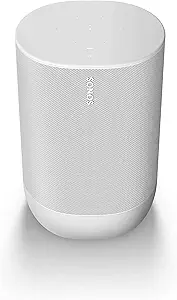
Sonos vs Amazon: Overview & Brand Philosophy
The modern speaker landscape is largely defined by a philosophical divide between dedicated acoustic engineering and pervasive digital utility. Sonos, founded in 2002, built its reputation on a singular mission: revolutionizing multi-room home audio. Approaching the market as an audiophile-adjacent audio brand, Sonos focuses on premium industrial design, proprietary acoustic hardware, seamless wireless synchronization, and platform-agnostic software integration. The Sonos ethos is that sound quality comes first, with smart connectivity serving as an enabler of high-fidelity playback throughout the entire home.
Conversely, Amazon entered the audio hardware category not to become a traditional hi-fi brand, but to establish a physical anchor for its ambient intelligence ecosystem. The Amazon Echo lineup was engineered primarily as a delivery vehicle for Alexa, transforming how consumers interact with their homes, shop, and retrieve information. While Amazon has substantially improved the audio fidelity of its hardware with newer Echo generations and the high-end Echo Studio, the brand’s core philosophy remains anchored in accessibility, smart-home orchestration, and low-friction computing rather than pure acoustic reproduction.
Consequently, comparing Sonos and Amazon is not merely a contest between two manufacturers of wireless speakers; it is a choice between dedicated, premium multi-room sound systems and utility-driven, smart assistant endpoints. Understanding this fundamental divergence in corporate DNA is critical to selecting the system that truly serves your domestic audio needs.
Key Differences & Technological Comparison
The technical architecture separating Sonos and Amazon centers on acoustic design, networking infrastructure, smart integration, and platform openness.
Acoustic Architecture and Sound Quality: Sonos components (such as the Era 100, Era 300, and Five) are engineered from the ground up with custom-designed woofers, angled tweeters, and discrete class-D amplifiers. This results in expansive stereo imaging, neutral frequency response, and minimal distortion even at peak volumes. Sonos also utilizes "Trueplay," a proprietary tuning software that analyzes room acoustics via iOS or onboard microphones to calibrate output accurately. While devices like the Amazon Echo Studio feature Dolby Atmos support and spatial processing, standard Echo units rely on compromise-driven acoustic hardware optimized for midrange frequencies—ensuring Alexa’s voice is intelligible rather than presenting a rich, layered musical soundstage.
Ecosystem & Multi-Room Synchronicity: Sonos has perfected local network streaming. Instead of relying purely on Bluetooth, Sonos devices communicate via high-bandwidth Wi-Fi (utilizing dynamic mesh networking), ensuring zero latency, drift-free multi-room playback, and lossless audio support. Amazon Echo devices handle multi-room audio competently over domestic Wi-Fi via the Alexa app, but grouping can occasionally suffer from network instability, latency quirks, and limitations in third-party library access.
Voice Assistance and Smart Home Integration: This is Amazon's definitive advantage. Echo devices natively house Alexa, enabling rapid voice-response times, extensive smart-home hardware control via Zigbee/Matter protocols, and seamless integration with routines and third-party skills. While select Sonos speakers offer built-in Amazon Alexa and Sonos Voice Control, they lack some native Echo features like Alexa Calling (Drop In), whisper mode responsiveness, and certain custom skill configurations. Sonos prioritizes privacy and playback control, whereas Amazon prioritizes broad-spectrum automation and household utility.
Streaming Support and Connectivity: Sonos maintains an agnostic platform capable of streaming over 100 services natively through the Sonos app, alongside support for Apple AirPlay 2, Spotify Connect, and newer Bluetooth/line-in options on the Era series. Amazon Echo speakers favor Amazon Music, Apple Music, and Spotify, but rely more heavily on voice prompts or Bluetooth pairing, offering less granular app-based control over intricate music libraries and local network-attached storage (NAS) drives.
Pros & Cons Comparison
Sonos
- Pros:
- Superior acoustic engineering with balanced, room-filling sound and deep bass extension.
- Industry-standard multi-room synchronization with virtually no audible latency.
- Platform-agnostic ecosystem supporting virtually every major streaming service and Apple AirPlay 2.
- Trueplay tuning compensates for suboptimal speaker placement.
- Expansive ecosystem spanning portable speakers, home theater soundbars, and subwoofers.
- Cons:
- High initial investment and expensive expansion costs.
- Occasional software/app stability issues during platform overhauls.
- Microphone responsiveness for smart assistants is slightly slower than dedicated Echo hardware.
Amazon
- Pros:
- Exceptionally accessible price-to-utility ratio across the product portfolio.
- Flawless, ultra-responsive smart home control via deep Alexa and Matter integration.
- Drop In, household intercom functionality, and broad communication features.
- High-end models (e.g., Echo Studio) provide budget-friendly spatial audio.
- Frequent promotional pricing and hardware bundling.
- Cons:
- Standard models lack the bass depth, dynamic range, and clarity found in dedicated speakers.
- Lacks native AirPlay 2 support, limiting flexibility for Apple users.
- The Alexa ecosystem pushes commercial interfaces and aggressive promotional prompts.
Performance, Durability & Value Analysis
From an audio performance and mechanical longevity standpoint, Sonos is positioned as an enduring consumer investment. Built using high-density plastics, precision-machined grilles, and robust internal heat dissipation, Sonos speakers routinely operate flawlessly for a decade or more. Furthermore, Sonos maintains software updates for legacy models far longer than the consumer tech standard. The value proposition here is rooted in long-term satisfaction: while you will spend three to four times the cost of an Echo speaker, you acquire an authentic hi-fi component that will anchor your domestic listening experience for years without obsolescence.
Amazon speakers represent a high-value, shorter-cycle proposition. Constructed with a focus on affordability and eco-conscious recycled materials, Echo speakers are resilient enough for day-to-day household usage, but they are essentially consumer electronics appliances rather than durable acoustic instruments. Their perceived value is undeniably high because Amazon prices hardware close to manufacturing cost to expand Alexa’s user footprint. For everyday background audio, podcasts, and morning timers, the value is unbeatable; however, as an enduring musical platform, they cannot match the physical build, audio refinement, or lifespan of dedicated audio gear.
Final Verdict: Which Brand Should You Choose?
Your choice between Sonos and Amazon ultimately hinges on whether your priority is authentic musical fidelity or ambient smart utility.
Choose Sonos if: You are an active listener who values rich dynamics, detailed instrument separation, and zero-compromise multi-room synchronization. Sonos is the undisputed choice for music enthusiasts, users heavily embedded in the Apple ecosystem (via AirPlay 2), and anyone seeking a scalable audio system that seamlessly transitions from living room vinyl and home theater setups to whole-home ambient playback.
Choose Amazon if: Your primary goal is hands-free convenience, voice-driven home automation, and affordable audio across multiple rooms. If you treat music primarily as background sound and prioritize asking for the weather, managing calendar appointments, and controlling smart lights on a strict budget, an Echo-based setup delivers unrivaled utility per dollar spent.
Product Selection
When evaluating product selection between Sonos and Amazon in the speaker category, the distinction lies between a curated acoustic ecosystem and a vast, utility-driven consumer portfolio. Sonos focuses strictly on high-fidelity audio engineering, offering a deliberate lineup designed for scalable multi-room audio, home theater integration, and premium portability. Its catalog includes dedicated soundbars spanning entry-to-flagship tiers (such as the Ray, Beam, and Arc), versatile architectural and ambient speakers (Era 100, Era 300), and ruggedized portable options (Roam, Move 2). Each Sonos product is engineered with custom-designed acoustic components, discrete class-D amplifiers, advanced waveguide technologies, and Trueplay room-tuning capabilities. While the total number of stock-keeping units (SKUs) from Sonos is relatively constrained, each unit serves a distinct, high-performance acoustic niche, allowing audiophiles and home-theater enthusiasts to mix and match components seamlessly over a shared, synchronized Wi-Fi mesh.
Conversely, Amazon’s product selection with the Echo family prioritizes ubiquitous smart assistant integration, ambient computing, and budget accessibility over bespoke acoustic fidelity. Amazon offers an expansive matrix of form factors, ranging from ultra-compact pucks (Echo Pop, Echo Dot) and central utility speakers (standard Echo, Echo Studio) to smart displays with integrated transducers (Echo Show series) and specialized auto accessories. While the high-end Echo Studio does feature computational audio with Dolby Atmos processing, the overwhelming majority of Amazon’s speaker catalog is architected around near-field microphones, low-to-mid frequency utility, and rapid voice-command processing through Alexa. Amazon provides unmatched variety in form factors and pricing tiers, making whole-home voice coverage exceptionally affordable, though its lineup inherently compromises on the structural acoustic mass, driver sophistication, and balanced stereo imaging standard across the Sonos line.
The practical trade-offs of these divergent portfolio strategies hinge on the user's primary functional objective: audiophile-grade home integration versus ubiquitous smart automation. Sonos presents a cohesive, future-proof selection where legacy products receive prolonged software support, and individual models are engineered to operate either autonomously or grouped into complex 5.1.2 or 7.1.4 Dolby Atmos surround configurations. Amazon excels at sheer market breadth, iteration speed, and price stratification, offering users versatile bedside clocks, video screens, and budget audio endpoints. However, Amazon lacks high-end, dedicated home theater soundbars and premium architectural installations, requiring external integrations for true cinema-grade setups. Consumers prioritizing sound quality, dedicated multi-room synchronization, and home cinema versatility will find Sonos’s curated selection superior, while those demanding low barriers to entry, visual smart hubs, and pervasive voice-first assistance will benefit more from Amazon's diverse catalog.
Affordability
When evaluating affordability, Amazon and Sonos occupy fundamentally different market tiers, reflecting contrasting philosophies regarding hardware monetization and manufacturing overhead. Amazon’s Echo ecosystem is designed with an aggressive loss-leader or near-cost pricing strategy, aiming to lower the barrier to entry for smart home adoption and drive users toward Amazon Prime and Alexa voice commerce. From the budget-friendly Echo Dot to the higher-fidelity Echo Studio, Amazon delivers unmatched acoustic value per dollar by utilizing mass-scale injection-molded plastics, cost-effective generic Class-D amplification, and high-volume component procurement. Consequently, consumers can outfit an entire multi-room audio setup via Amazon for the price of a single mid-tier Sonos speaker, making Amazon the undisputed leader in immediate financial accessibility and upfront value.
Conversely, Sonos positions itself in the premium audio segment, where affordability is framed as a long-term total cost of ownership and product longevity rather than a rock-bottom purchase price. Sonos products, such as the Era 100, Era 300, and Five, incorporate bespoke acoustic architecture—including custom wave guides, high-excursion woofers, and discrete amplifiers per driver—paired with sophisticated DSP and the Trueplay auto-tuning system. While this advanced engineering demands a significantly higher initial capital outlay, Sonos partially offsets this cost barrier through superior build durability, modular expandability, and multi-year software updates that keep legacy units fully operational long after traditional electronics become obsolete. However, this ecosystem remains inherently expensive, with the need for specialized accessories like wall mounts and the brand's premium home theater components quickly driving system costs into the thousands.
Ultimately, the practical trade-off between these two brands comes down to acoustic fidelity and system independence versus sheer economic efficiency. Amazon represents maximum democratization of smart sound, providing 80% of typical smart speaker utility—voice control, streaming connectivity, and basic multi-room synchronization—at a fraction of the cost, making it ideal for casual listeners and budget-conscious consumers. Sonos demands a prohibitive financial investment upfront and lacks true budget-tier options, but it justifies its premium price tag for audiophiles who prioritize neutral sound staging, uncompressed streaming capabilities, cross-platform voice assistant flexibility, and hardware that retains both performance and resale value over a decade.
Quality/Durability
From an engineering and build perspective, Sonos and Amazon diverge sharply in their manufacturing philosophies, reflecting their distinct market tiers. Sonos positions itself as a premium audio brand, which is immediately evident in its structural integrity and material selection. Sonos speakers—such as the Era 100, Five, and the portable Move 2—feature dense, high-grade acoustic plastics, precision-drilled micro-perforated grilles, and rubberized, impact-absorbing bases. Their internal hardware matches this exterior rigor, housing custom-engineered neodymium drivers, dedicated class-D amplifiers, and advanced heatsinks designed to prevent thermal degradation over years of continuous playback. In contrast, Amazon’s Echo ecosystem prioritizes mass-market affordability and functional utilitarianism. While modern Echo devices incorporate eco-friendly recycled fabrics, molded plastics, and die-cast aluminum frames, they lack the dense, vibration-dampening mass that characterizes high-end acoustic engineering. Amazon's hardware is well-assembled for static indoor use, but the external fabric wrappers are prone to staining, fraying, and collecting dust, making them considerably less resilient over time compared to the non-porous, easily cleaned exteriors of Sonos units.
When examining environmental durability and outdoor resilience, Sonos demonstrates a clear technical superiority, particularly within its portable lineup. Products like the Sonos Roam 2 and Move 2 are built with explicit ruggedness in mind, boasting IP67 and IP56 ratings respectively, which certify resistance to heavy rain, dust ingress, and accidental submersion, supplemented by drop-resistant shock absorption. Conversely, the vast majority of Amazon Echo smart speakers are designed strictly for permanent, indoor tabletop placement and offer zero certified water or dust ingress protection. While Amazon did engineer the outdoor-ready Echo Sub-family accessories and certain automotive variants, their primary speaker line will fail if exposed to high humidity, moisture, or direct impacts. The technical trade-off for Sonos’s hardened durability is both physical weight and financial investment; Sonos components are significantly heavier, less casually repositionable without effort, and command a steep price premium compared to the lightweight, easily replaceable Echo units.
Long-term operational durability—encompassing hardware longevity and firmware maintenance—further distinguishes the two brands. Sonos has historically maintained extended product lifecycles, routinely supporting legacy hardware with software and security updates for over a decade, with components engineered to resist the driver-surround rot and internal solder fatigue that can plague consumer electronics. Amazon Echo devices, by contrast, possess a shorter perceived hardware lifespan dictated by rapid obsolescence in the voice-assistant space. While Amazon continually updates Alexa in the cloud, older Echo speakers often suffer from microphone degradation, slow onboard processing over time, and deteriorating power supplies. Ultimately, consumer trade-offs center on disposable convenience versus sustained investment: Amazon offers low-cost, adequate durability tailored for ephemeral household utility, whereas Sonos delivers audiophile-grade structural integrity, superior environmental defense, and a heavy-duty architecture built to withstand years of rigorous acoustic output.
Sound Quality
When evaluating sound quality, Sonos operates from a hi-fi audio engineering pedigree, whereas Amazon approaches audio through the lens of utilitarian smart-home convenience. Sonos speakers, such as the Era 100, Era 300, and Five, feature custom-designed drivers, dedicated class-D digital amplifiers, and meticulously calculated acoustic chambers that deliver audiophile-grade precision. Across their lineup, Sonos excels in delivering a balanced frequency response, highlighted by tight, articulate bass that doesn't bleed into a warm, natural midrange, and crisp, non-fatiguing highs. Amazon’s Echo ecosystem, while progressively improving with multi-directional drivers and downward-firing subwoofers in devices like the Echo Studio and standard Echo, relies far more heavily on digital signal processing (DSP) to artificially pump up bass and volume. The result is a sound profile from Amazon that can feel boomy or compressed at higher volumes, frequently masking the subtle instrumental separation and vocal nuance that Sonos effortlessly preserves.
Room calibration and spatial audio processing further differentiate the two brands. Sonos relies on its proprietary Trueplay technology—now available via both iOS microphones and built-in speaker arrays—which maps the reflective surfaces of a room to eliminate standing waves and frequency dead zones with exceptional accuracy. Furthermore, high-end Sonos units support Dolby Atmos with dedicated height and side-firing drivers that cast a genuinely wide, holographic soundstage. Amazon combats this with its own automated room-tuning and spatial audio processing, most notably in the Echo Studio. While Amazon's spatial 3D audio provides an impressively wide dispersion given its price point, it often introduces artificial phasing and a slightly unnatural virtualized sound field compared to the authentic channel separation achieved by Sonos, particularly when grouping units or setting up stereo pairs.
Ultimately, the sound quality comparison presents a clear trade-off between price-to-performance accessibility and acoustic fidelity. Amazon delivers robust, room-filling sound that vastly outperforms expectations for background listening, casual streaming, and smart-assistant queries at an affordable price point. However, critical listeners and home theater enthusiasts will find Amazon’s upper-register harshness and veiled dynamics limiting. Sonos justifies its substantial premium through uncompromising engineering, transparent dynamic range, and a modular ecosystem that ensures superior sound quality regardless of room acoustics, music genre, or volume level.