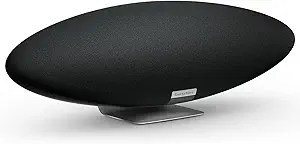







KEF vs Bowers & Wilkins: Overview & Brand Philosophy
In the pantheon of British high-fidelity audio, few rivalries are as storied, technically rigorous, or fiercely debated as that between KEF and Bowers & Wilkins (B&W). Founded in 1961 by BBC electrical engineer Raymond Cooke, KEF (originally Kent Engineering & Foundry) was built on a foundation of relentless scientific inquiry and synthetic materials research. KEF’s brand philosophy prioritizes mathematical precision, smooth dispersion, and an uncolored, objectively accurate reproduction of the recorded signal. From pioneering computerized loudspeaker analysis in the 1970s to modern advancements in acoustic metamaterials, KEF approaches speaker design as an empirical science where acoustic anomalies are engineered out of existence.
Bowers & Wilkins, established in 1966 by John Bowers in Worthing, England, approaches acoustic engineering with an equally dedicated but distinct artistic and sensory philosophy. Rather than chasing purely textbook flat-frequency measurements, B&W focuses on delivering an emotionally transcendent, highly dynamic, and revealing listening experience. Famous for its decades-long residency in London’s Abbey Road Studios, B&W treats speaker enclosures not merely as utility boxes, but as sculpted acoustic instruments designed to minimize diffraction and maximize transient attack. The brand embraces luxury industrial design alongside structural innovations, pairing cutting-edge materials like diamond and aramid fibers with lavish finishes that command visual as well as auditory attention.
Today, both manufacturers span the spectrum from consumer wireless lifestyle solutions to ultra-high-end audiophile statements commanding five- and six-figure price tags. However, their divergence in acoustic presentation—KEF’s phase-coherent neutrality versus B&W’s energetic, hyper-detailed presence—means that choosing between them is not simply a matter of budget, but of acoustic philosophy, room synergy, and personal preference.
Key Differences & Technological Comparison
The defining technological achievement of KEF is its proprietary Uni-Q driver array, now in its 12th generation. Unlike traditional multi-driver speakers where the tweeter and mid-bass drivers are physically separated on the baffle, KEF mounts the high-frequency tweeter directly at the acoustic center of the midrange cone. This creates a true "point-source" transducer. The practical benefit for the listener is near-flawless phase integration and exceptionally wide, uniform dispersion. The soundstage remains coherent whether you are sitting dead-center in the "sweet spot" or moving around the room. Furthermore, KEF’s modern lineups incorporate Metamaterial Absorption Technology (MAT)—a maze-like disc behind the tweeter that absorbs 99% of unwanted backward sound energy, drastically reducing high-frequency distortion.
Bowers & Wilkins counters this with its iconic Tweeter-on-Top decoupling architecture and distinctive driver materials. By isolating the high-frequency driver inside an elongated, solid-aluminum tapered tube decoupled from the main cabinet, B&W prevents vibrational energy generated by the bass drivers from smearing the high frequencies. In their flagship tiers, B&W employs chemical-vapor-deposited Diamond dome tweeters, prized for an astonishing stiffness-to-weight ratio that pushes the breakup frequency far beyond human hearing. For midrange reproduction, B&W developed the woven Continuum cone, which replaced their classic yellow Kevlar to provide controlled, predictable break-up behavior and lightning-fast transient response.
These divergent technologies yield profoundly different sound signatures. KEF speakers tend to exhibit a flat, linear tonal balance with a warm, natural midrange and smooth, non-fatiguing high frequencies. Bass response on KEF speakers is deeply articulated, controlled, and tight, though sometimes perceived as lean without proper amplifier current. Conversely, Bowers & Wilkins implements what many describe as a subtle "smile" curve: forward, crystalline highs combined with punchy, visceral low-end authority. B&W speakers present micro-details forward in the mix, giving instruments a tactile, "in-the-room" immediacy that rewards clean source gear, though they can sound aggressive or fatiguing if paired with overly bright amplification.
Pros & Cons Comparison
KEF: Strengths
- Expansive Sweet Spot: The Uni-Q point-source driver array delivers uniform off-axis dispersion, making seating position far less critical.
- Acoustic Neutrality: Highly accurate, balanced tonal profile that reproduces recordings exactly as engineered without artificial coloration.
- Metamaterial Technology (MAT): Exceptional reduction of rear-tweeter distortion yields pristine, grain-free treble performance.
- Class-Leading Active Ecosystem: The LS50 Wireless II and LS60 Wireless set the gold standard for all-in-one streaming audiophile systems.
- Subwoofer Integration: Industry-leading digital signal processing (DSP) and specialized compact subs (like the KC62) offer seamless integration.
KEF: Weaknesses
- Amplification Demands: Passive models frequently feature low impedance dips and modest sensitivity, demanding stable, high-current amplifiers.
- Polite Dynamics: The pursuit of neutral linearity can occasionally feel less thrilling or visceral on aggressive rock or electronic tracks compared to B&W.
Bowers & Wilkins: Strengths
- Class-Leading Detail & Attack: Decoupled tweeters and Continuum drivers deliver breathtaking transient speed, clarity, and spatial resolution.
- Dynamic Punch: Powerful, highly textured bass combined with energetic highs creates an engaging, cinematic listening experience.
- Exquisite Industrial Design: Striking aesthetics, luxurious real-wood veneers, polished lacquer finishes, and exposed driver housing serve as high-end furniture.
- Studio Provenance: Extensive history of monitoring use in premier mastering suites guarantees authentic dynamic range capability.
- Versatility in Home Theater: The brand's explosive dynamics and crisp dialogue projection make them phenomenal centerpieces for multichannel cinema setups.
Bowers & Wilkins: Weaknesses
- Picky with Upstream Gear: Highs can turn brittle or sibilant if paired with cheap, clinical, or underpowered amplification.
- Narrow Sweet Spot: Traditional driver placement creates a more directional dispersion pattern, requiring meticulous toe-in and room placement.
Performance, Durability & Value Analysis
From an engineering and build-quality standpoint, both manufacturers operate at the summit of modern industrial manufacturing. KEF’s cabinets are monuments to resonance control; their enclosures rely on cross-bracing and constrained layer damping, where internal braces are separated from outer walls by a lossy viscoelastic material that converts cabinet vibration directly into heat. Durability across their passive ranges (such as the Q, R Meta, and Reference series) is exemplary, with robust driver surrounds and stable internal crossovers designed to last decades. In terms of value, KEF punches well above its weight class in the mid-tier market. The entry-level Q Series and mid-tier R Meta series frequently outperform competitors costing significantly more, primarily because KEF trickles its top-tier Uni-Q and MAT technologies directly down through the entire catalog.
Bowers & Wilkins treats physical structural integrity as an uncompromising art form. Their higher-end series (notably the 700 and 800 Diamond ranges) utilize curved, reverse-wrap multi-ply wooden matrices and die-cast aluminum backsplates that render the enclosure almost completely inert. While build quality is indestructible, B&W’s value proposition is bifurcated. Their entry-level 600 Series faces intense competition from high-value internet-direct brands, but their premium offerings command value through bespoke materials (such as synthetic diamond domes and Biomimetic suspensions) and resale retention. A well-maintained pair of B&W 800-series speakers holds secondary-market value better than almost any other consumer loudspeaker brand in existence, mitigating the steeper upfront investment.
Final Verdict: Which Brand Should You Choose?
The choice between KEF and Bowers & Wilkins ultimately hinges on whether your listening preferences tilt toward clinical acoustic truth or dynamic, sensory excitement:
Choose KEF if:
- You value natural vocal timbre, smooth highs, and a neutral, uncolored sound that stays true to the source recording across long, fatigue-free listening sessions.
- Your listening space features multiple seating positions or irregular geometry; the wide dispersion of the Uni-Q array ensures consistent sound everywhere.
- You want a modern, compact, all-in-one wireless active system (e.g., KEF LSX II, LS50 Wireless II, or LS60) that eliminates the need for external amplifiers and DACs.
- You listen primarily to acoustic, jazz, classical, or vocal-centric music where soundstage coherence and mid-band transparency are paramount.
Choose Bowers & Wilkins if:
- You crave maximum detail retrieval, holographic imaging, and an energetic, tactile high-end that brings out micro-dynamics in modern recordings.
- Your speakers will pull double-duty as a flagship home theater surround system, where transient snap, dialogue clarity, and raw cinematic impact are vital.
- You are willing to invest in high-end, smooth, and powerful amplification (such as high-current Class A/B or warm tube gear) to extract the best possible performance.
- You appreciate dramatic, luxurious industrial design featuring visible, decoupled engineering elements that make a bold visual statement in your room.
Product Selection
When evaluating product selection, KEF and Bowers & Wilkins (B&W) both provide comprehensive lineups that span entry-level audiophile gear to ultra-high-end halo products, yet they diverge significantly in their engineering philosophies and contemporary market coverage. KEF organizes its portfolio strictly around its proprietary Uni-Q point-source driver array, creating a unified sonic identity across ranges like the entry-level Q Series, mid-tier R Series Meta, and flagship Reference and Blade models. Where KEF distinctly leads the market is in its aggressive and technologically sophisticated embrace of active, all-in-one wireless ecosystem products (the LSX II, LS50 Wireless II, and LS60 Wireless), complete with advanced digital signal processing (DSP) and modern network streaming integration. Additionally, KEF offers an extensive architectural speaker selection featuring specialized subwoofers (such as the dual-driver KC62) that utilize micro-cabinet technologies, appealing heavily to modern, space-conscious listeners who demand high-fidelity sound without separate amplification stacks.
Conversely, Bowers & Wilkins anchors its product selection in classical acoustic engineering and iconic mechanical isolation, dividing its core Hi-Fi offerings among the accessible 600 Series, the mid-range 700 Series, and the studio-standard 800 Series Diamond. B&W separates itself by leveraging trickle-down technologies from its flagship mastering monitors—such as Continuum cones, aerofoil bass drivers, and their signature decoupled "Solid Body Tweeter-on-Top" housing—providing traditional audiophiles and home theater purists with massive dynamic capability and unmatched physical enclosure craftsmanship. However, where KEF dominates active stereo speakers, B&W shifts its secondary focus toward luxury lifestyle integration, offering a broader array of premium wireless headphones (like the Px7 S2e and Px8), automotive premium audio partnerships, and high-design soundbars like the Panorama 3 and Formation series, rather than self-contained active floorstanders.
From a consumer perspective, the practical trade-off in catalog selection comes down to digital integration versus dedicated component versatility. KEF provides the superior portfolio for consumers seeking turnkey, high-performance active streaming systems that streamline the traditional hi-fi chain, alongside mathematically precise, phase-aligned passive speakers for standard stereo setups. On the other hand, Bowers & Wilkins delivers a deeper, more specialized lineup for consumers investing in dedicated high-current amplification chains, analog two-channel purism, and expansive multi-channel home cinema installations where towering scale and unrestrained dynamic headroom are the primary criteria. Buyers prioritizing cutting-edge lifestyle form-factors and modern active DSP will find KEF’s lineup more accommodating, while those building traditional, heirloom-grade audio systems will gravitate toward B&W’s tiered passive catalog.
Affordability
When evaluating affordability between KEF and Bowers & Wilkins (B&W), the comparison centers not simply on entry-level price tags, but on the acoustic engineering and feature completeness delivered per dollar. KEF generally maintains a more aggressively competitive value proposition, particularly in the sub-$2,000 bracket. Utilizing their proprietary Uni-Q coincident driver array—which places the tweeter at the acoustic center of the midrange cone—KEF trickles down flagship-grade acoustic dispersion, pinpoint imaging, and consistent off-axis linearity from their reference lines into budget-conscious offerings like the Q Series. Furthermore, KEF delivers high-value versatility through its active speaker lineups (such as the LSX II and LS50 Wireless II), which integrate high-resolution DACs, sophisticated DSP algorithms, and native streaming platforms directly into the chassis. This active architecture significantly lowers the total cost of ownership by eliminating the need for expensive outboard preamps, power amplification, and specialized cabling, maximizing functional affordability for modern consumers.
Conversely, Bowers & Wilkins adopts a luxury-first pricing strategy where premium industrial design, bespoke materials, and heritage brand equity demand a noticeable financial surcharge. While their entry-level 600 Series offers an accessible entry point into the B&W ecosystem, climbing their product ladder—especially into the 700 and flagship 800 Series Diamond ranges—involves exponential cost increases. B&W's engineering strengths lie in ultra-rigid cabinetry, specialized decoupled tweeter-on-top housings, and exotic driver materials like their Continuum cones and diamond dome tweeters. However, achieving the dynamic performance, visceral punch, and expansive staging that B&W is renowned for requires pairing these speakers with robust, high-current external amplification. Because B&W's passive speakers often present demanding, low-impedance acoustic loads, the ancillary component costs to adequately drive them substantially elevate the overall investment required compared to an equivalent KEF setup.
Ultimately, the practical trade-off regarding affordability leans in KEF’s favor for buyers seeking modern utility, placement versatility, and cohesive engineering without an exorbitant price multiplier. KEF’s systematic trickle-down approach—exemplified by deploying cutting-edge Metamaterial Absorption Technology (MAT) across mid-tier speakers—ensures that cost-conscious audiophiles receive class-leading transparency and neutral frequency response without an astronomical investment. Bowers & Wilkins remains an exceptional option for connoisseurs who prioritize striking aesthetic presence, hand-finished luxury cabinetry, and a bright, hyper-detailed signature sound, but this acoustic and visual prestige commands a substantial financial premium that makes the brand intrinsically less affordable than KEF across comparable consumer tiers.
Quality/Durability
When evaluating build quality and long-term durability, KEF and Bowers & Wilkins (B&W) represent the pinnacle of British acoustic engineering, yet they achieve structural integrity through divergent design philosophies. KEF anchors its quality around the proprietary Uni-Q driver array, a complex, coincident-source transducer that mounts a vented aluminum dome tweeter at the acoustic center of a mid-bass cone. This architecture relies on tight manufacturing tolerances and heavy use of computer-modeled materials. Modern KEF designs—spanning from the accessible LS50 line to the flagship Blade series—employ rigid constrained layer damping (CLD) and internal cross-bracing within their cabinets to mitigate mechanical resonances. In recent iterations, KEF has integrated Metamaterial Absorption Technology (MAT), a synthetic labyrinthine disc that absorbs 99% of rear-tweeter distortion. Durability in KEF’s passive speakers is exceptional, with durable anodized aluminum driver surfaces that resist ambient humidity and UV degradation far better than traditional treated-paper cones, though the exterior exposed "tangerine" waveguide remains physically delicate and vulnerable to blunt impact.
Bowers & Wilkins approaches engineering through high-mass mechanical isolation and exotic, aerospace-grade materials. Renowned for their "Tweeter-on-Top" decoupling assemblies and solid-body aluminum housings, B&W speakers—particularly the 700 and 800 Diamond series—physically isolate high-frequency drivers to prevent kinetic energy from the woofer from rattling sensitive assemblies. B&W's choice of driver materials, notably synthetic Continuum cones and ultra-stiff Diamond-vapor-deposited tweeters, yields practically zero structural fatigue over decades of high-SPL usage. Their cabinet construction is arguably more monolithic than KEF's, utilizing reverse-wrap curved plywood layers and heavy internal Matrix bracing interlocking systems that create a near-inert enclosure. While KEF excels in damping cabinet vibration via internal polymer layers, B&W neutralizes it through sheer mass, solid aluminum plinths, and robust structural joinery. However, the externalized tweeter pods on B&W's upper-tier models introduce an exposed mechanical failure point if the speakers are moved improperly without protective covers.
From a long-term reliability standpoint, passive models from both manufacturers will easily last decades with minimal maintenance, but the brands diverge significantly in the active/wireless segment. KEF’s powered offerings, such as the LS50 Wireless II and LS60, house dense internal electronics, complex DSP, and thermal management within compact enclosures. While sonically superior, early generations faced sporadic user reports of wireless connectivity degradation and plate-amplifier thermal wear, though current models have improved via passive heat-sinking and firmware stabilization. Bowers & Wilkins' active products (such as the Formation series) typically rely on more distributed digital architecture and robust external heatsinks, leading to slightly lower operating temperatures. Ultimately, consumers seeking precision-engineered driver cohesion and chemically stable acoustic metamaterials will find KEF’s durability unmatched, while those favoring over-engineered mechanical isolation, resilient Continuum weave fabrics, and high-mass inert cabinetry will lean toward Bowers & Wilkins.
Sound Quality
When comparing the sound quality of KEF and Bowers & Wilkins (B&W), the fundamental divergence stems from two radically different acoustic engineering philosophies: clinical coherence versus expressive dynamism. KEF’s signature sound is defined by its patented Uni-Q driver array—a coincident driver design that places the tweeter precisely at the acoustic center of the midrange cone. This creates a true single-point source, resulting in class-leading phase coherence, an exceptionally wide and forgiving sweet spot, and pristine, pinpoint stereo imaging. Coupled with their advanced Metamaterial Absorption Technology (MAT), which eliminates up to 99% of unwanted high-frequency rear-driver distortion, KEF speakers deliver an extraordinarily neutral, transparent, and uncolored frequency response. Instruments and vocals are reproduced with analytical precision and lifelike spatial depth, making them particularly revered by audiophiles who prioritize absolute fidelity to the source material.
Conversely, Bowers & Wilkins champions a more visceral, energetic, and emotive sound profile, often categorized as the classic "British hi-fi" presentation with a modern, dynamic twist. B&W achieves its acoustic signature through bespoke engineering such as their Continuum cone midrange drivers and decoupled Carbon or Diamond Dome tweeters, frequently housed in decoupled "Solid Body Tweeter-on-Top" enclosures to minimize cabinet diffraction. Rather than aiming for absolute flat-line neutrality, B&W purposefully tunes their speakers with a subtle "smiley-curve" or slight upper-midrange and treble emphasis. This tuning yields sparkling highs, hyper-detailed micro-dynamics, and a forward, crystalline clarity that makes high-resolution vocal tracks and orchestral crescendos sound immediate and breath-taking. The lower end on B&W speakers is typically punchy, taut, and robust, engineered to offer satisfying physical impact alongside intricate transient speed.
In terms of practical listening trade-offs, the choice between the two brands largely depends on room acoustics, upstream amplification, and personal listening preferences. KEF’s expansive off-axis dispersion means their speakers are far more forgiving with placement, providing an immersive soundstage even in acoustically challenging spaces, though some listeners may find their hyper-neutral, unembellished delivery slightly dry or clinical with poorly mastered recordings. On the other hand, Bowers & Wilkins speakers offer undeniably exhilarating presence, tactile percussion, and jaw-dropping detail retrieval, but their revealing treble can tilt toward brightness or listening fatigue if paired with overly analytical, low-current solid-state amplification. Ultimately, KEF delivers uncompromised neutrality and spatial accuracy for the purist seeking fidelity, while Bowers & Wilkins provides high-energy excitement, striking clarity, and dramatic scale for the listener who craves sonic engagement.