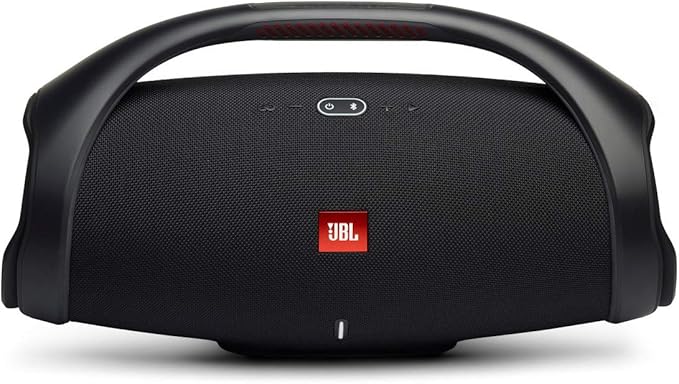
JBL vs Ultimate Ears: Overview
Comparing JBL and Ultimate Ears helps you determine which brand is best suited for your needs in Speakers. Both brands offer strong choices depending on your budget and key feature requirements.
Key Features & Comparison
Evaluate factors such as build quality, warranty, customer satisfaction, and total value before making your final purchase choice between JBL and Ultimate Ears.
Product Selection
When evaluating product selection, JBL commands an overwhelmingly broader and more diverse audio ecosystem compared to Ultimate Ears’ highly focused, specialized portfolio. JBL operates across virtually every consumer and semi-professional acoustic vertical, offering ultra-compact micro-transducers (the Go and Clip series), core cylindrical portables (Flip and Charge), heavy-duty boomboxes (Xtreme and Boombox), and high-output commercial-grade party speakers (the PartyBox line). Furthermore, JBL extends its engineering into stationary home audio, retro-styled Wi-Fi smart systems (the Authentics series), multi-channel Dolby Atmos soundbars, and studio-grade monitors. In contrast, Ultimate Ears (UE) deliberately restricts its catalog to battery-powered, outdoor-centric Bluetooth speakers, organized linearly by scale and output: the ultra-portable Wonderboom, the flagship Boom and Megaboom, the rugged outdoor Epicboom, and the high-SPL Hyperboom. While this targeted strategy ensures exceptional brand identity, consumers seeking multi-room Wi-Fi integration, TV audio solutions, or niche analog connectivity options will find UE’s lineup distinctly limited.
From an acoustic engineering and feature-set perspective, JBL’s sprawling catalog allows for targeted acoustic architectures optimized for specific environments rather than a one-size-fits-all approach. JBL implements dedicated woofer-and-tweeter bi-amplification setups in mid-tier speakers like the Charge and Xtreme to maximize dynamic headroom and directional stereo imaging, while equipping its PartyBox units with analog quarter-inch inputs for microphones and instruments, dynamic light shows, and high-wattage mains power capability. Ultimate Ears, conversely, doubles down on structural durability and omnidirectional acoustic dispersion across its entire range. UE engineers uniform 360-degree driver arrays with passive radiators into cylindrical, floatable enclosures rated at IP67, reinforced with custom fabrics originally designed for firefighter uniforms. While this delivers predictable drop resistance, water buoyancy, and spatial sound dispersion across the board, UE sacrifices hardware versatility; its units lack wired aux inputs on smaller tiers, offer no integrated power-bank charging until the Megaboom, and omit modern Wi-Fi casting protocols entirely.
The practical trade-off between these brands hinges on catalog versatility versus curated consistency. JBL offers an unmatched selection where buyers can pinpoint an exact match for granular technical needs—such as prioritizing low-frequency extension via large passive radiators, securing Auracast multi-speaker broadcast capabilities, or bridging portable sound with home network streaming. The drawback is potential decision paralysis and slight inconsistencies in software integration, as different JBL sub-lines often rely on distinct control apps and incompatible legacy pairing protocols (such as PartyBoost versus Auracast). Ultimate Ears eliminates buyer confusion through an intuitive, tier-based progression where every speaker guarantees identical usability pillars: rugged tactile controls, the proprietary Magic Button for playlist cycling, and unified app functionality via PartyUp. Ultimately, while Ultimate Ears masters the premium rugged lifestyle niche, JBL decisively wins the product selection category by delivering superior form-factor variety, input flexibility, and acoustic scalability across both consumer and prosumer domains.
Affordability
When evaluating affordability across the portable speaker landscape, JBL holds a decisive market advantage through sheer portfolio diversity and granular price tiering. JBL caters to nearly every budget segment, providing entry-level access points such as the ultra-compact JBL Go and Clip series—often priced well under fifty dollars—before scaling progressively into mid-tier standards like the Flip and Charge, and topping out with prosumer PartyBox hardware. By contrast, Ultimate Ears (UE) largely ignores the ultra-budget sub-$80 bracket. Their entry-level gateway begins with the Wonderboom series, while their core lineup (Boom, Megaboom, and Hyperboom) strictly occupies the premium mid-to-high price tiers. For consumers seeking immediate, low-barrier audio solutions without a steep financial commitment, JBL offers a substantially wider acoustic and physical choice tailored strictly to what the buyer is willing to spend.
The technical trade-offs between the two brands further contextualize their cost-to-value propositions. JBL optimizes affordability by maximizing functional utility per dollar; for instance, the JBL Charge series doubles as an external power bank to charge mobile devices while utilizing asymmetric, high-excursion racetrack drivers that deliver potent bass efficiency relative to its price point. Furthermore, JBL's market saturation facilitates aggressive seasonal discounting and widespread refurbished availability. Ultimate Ears justifies its higher pricing floor through specialized enclosure engineering and industrial durability. UE speakers feature uniform 360-degree omnidirectional acoustic projection, bespoke acoustic fabrics tested against heavy drop-impacts, and buoyant, IP67-rated construction that floats in water. While UE requires a higher baseline investment, that cost directly funds rugged outdoor longevity rather than secondary multimedia features.
Ultimately, the practical definition of affordability between the two hinges on upfront expenditure versus long-term lifecycle value. JBL is the undisputed winner for direct affordability, enabling consumers to acquire capable, bass-forward sound on a strict budget without being forced into an aspirational price bracket. Conversely, Ultimate Ears operates as a higher-tier lifestyle investment; while the initial financial friction is greater, their exceptional structural resilience and resistance to elemental wear can yield a lower cost of ownership over multiple years of harsh outdoor use. For standard consumer use cases where budget constraints govern the purchasing decision, JBL remains the categorically more accessible and economically versatile brand.
Quality/Durability
Ultimate Ears (UE) and JBL both represent the gold standard of consumer-grade ruggedization, yet their engineering philosophies approach physical durability from distinct mechanical perspectives. Ultimate Ears constructs its speakers—most notably the Wonderboom, Boom, and Megaboom lines—around a monolithic, shock-absorbing unibody architecture. Wrapped in an ultra-dense, custom-engineered acoustic fabric derived from ripstop and fire-hose materials, UE units are capped with thick vulcanized rubber and rigorously drop-tested to survive repeated impacts onto solid concrete from heights of up to five feet (1.5 meters). In contrast, JBL employs a reinforced cylindrical chassis featured prominently in its Flip, Charge, and Xtreme series, utilizing heavy-duty fabric and thick rubberized bumpers. While JBL's structural rigidity and assembly quality feel premium and robust, its acoustic design heavily relies on exposed, dual-opposing external passive radiators. Although these side-mounted radiators produce deep bass, their flexible rubber surrounds remain vulnerable to punctures, pinches, or damage from sharp debris, an operational hazard that UE circumvents entirely by securing all drivers and internal radiators beneath a continuous, impact-resistant protective cage.
From an environmental resilience standpoint, both manufacturers adhere to the gold standard of IP67 ingress ratings across their contemporary lineups, ensuring complete dust-tight sealing and waterproofing capable of withstanding submersion in one meter of fresh water for up to 30 minutes. However, UE holds a distinct practical engineering advantage in aquatic environments: models like the Wonderboom and Megaboom are natively buoyant and intentionally balanced to float upright, preventing loss in open water, whereas heavier models like the JBL Charge and Xtreme will sink. In terms of component longevity, JBL benefits from sophisticated hardware integration, such as exposed, chemically treated waterproof USB-C ports that eliminate the need to fuss with fragile rubber port flaps that can degrade or tear over time. UE mitigates wear points by embedding its controls directly beneath the acoustic skin, minimizing moving mechanical parts that could jam with sand or grit. Ultimately, while JBL produces exceptionally solid, weather-hardened speakers that easily withstand conventional outdoor abuse, Ultimate Ears engineers a more uncompromising, impact-tolerant product built to endure severe drops, punctures, and complete outdoor mishaps without compromising structural or acoustic integrity.
Sound Quality
When evaluating acoustic engineering, JBL and Ultimate Ears (UE) approach portable sound design with distinctly different philosophies. JBL leans into its heritage of concert sound with its proprietary "JBL Original Pro Sound" tuning, characterized by an energetic, slightly V-shaped acoustic profile. By pairing high-excursion racetrack drivers with dual opposing passive bass radiators, JBL models like the Flip, Charge, and Boombox deliver exceptional low-frequency extension and visceral mid-bass impact that defy their enclosure sizes. In contrast, Ultimate Ears prioritizes spatial consistency through true 360-degree audio dispersion in staples like the Boom and Megaboom. UE’s acoustic architecture utilizes symmetrically placed drivers to radiate audio evenly in all directions, delivering a more neutral, mid-forward balance with pristine vocal clarity and crisp treble, though smaller UE enclosures deliberately rein in ultra-deep sub-bass to prevent acoustic distortion at elevated volumes.
In terms of digital signal processing (DSP) and high-volume performance, JBL holds an advantage in outdoor dynamics and raw headroom. JBL's DSP algorithms are tuned to preserve low-end punch even as the volume escalates, preventing the soundstage from flattening out in open-air environments where low frequencies typically dissipate. However, this directional tuning means JBL speakers exhibit clear off-axis treble roll-off, requiring intentional placement toward the listener. Ultimate Ears counters this limitation with superior omnidirectional coherence; moving around a room or patio yields practically zero tonal shift. Furthermore, UE’s companion app offers more granular, multi-band graphic EQ adjustments compared to JBL’s historically basic bass-mid-treble sliders, allowing audiophiles to tame UE's occasionally bright highs or push upper-bass response to their liking.
The practical trade-off in sound quality ultimately hinges on your typical listening environment and genre preferences. For bass-heavy genres such as hip-hop, EDM, and modern pop, JBL delivers a more authoritative, tactile low-end and superior dynamic punch that cuts through ambient noise with authority. Conversely, if you prioritize balanced acoustic reproduction, natural vocal clarity for podcasts and acoustic tracks, and uniform room-filling sound that doesn't require precise speaker angling, Ultimate Ears offers a refined, fatigue-free listening experience that excels in casual, social settings.