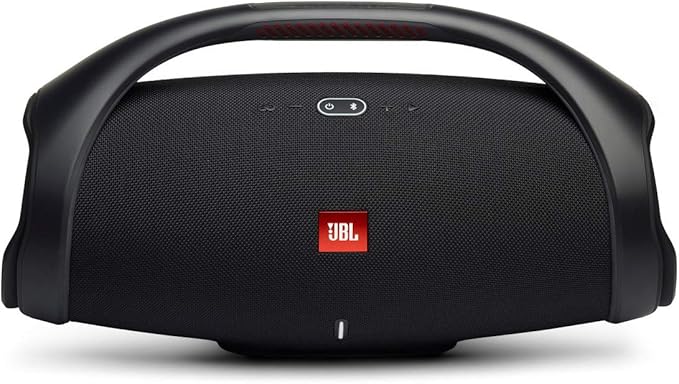
JBL vs Logitech: Overview
Comparing JBL and Logitech helps you determine which brand is best suited for your needs in Speakers. Both brands offer strong choices depending on your budget and key feature requirements.
Key Features & Comparison
Evaluate factors such as build quality, warranty, customer satisfaction, and total value before making your final purchase choice between JBL and Logitech.
Product Selection
When examining product selection, JBL and Logitech diverge significantly in their engineering focus and intended use cases. JBL, a subsidiary of Harman International, concentrates heavily on portable lifestyle audio, party speakers, home cinema, and professional sound reinforcement. Its catalog ranges from ultra-compact clip-on Bluetooth devices like the JBL Clip series to massive battery-powered PA systems like the PartyBox lineup, alongside soundbars, architectural audio, and studio reference monitors. This wide array allows consumers to select speakers tailored precisely to dynamic listening environments, outdoor sports, high-decibel gatherings, or critical music production.
Conversely, Logitech's audio engineering is inherently tied to personal computing, workplace productivity, and desktop gaming ecosystems. While Logitech does encompass the Ultimate Ears (UE) brand for rugged consumer Bluetooth portables, its core namesake lineup focuses on desktop 2.0 and 2.1 multimedia setups, compact USB conference speakers, and high-end 5.1 THX-certified surround systems such as the Z906. Logitech lacks JBL's depth in standalone pro-audio and home theater soundbars, but it completely outmatches JBL in purpose-built PC audio solutions featuring integrated desktop controls, multi-device USB/3.5mm switching, and PC software integration like Logitech G HUB.
Affordability
In terms of cost-to-performance ratio and absolute pricing, Logitech generally occupies a more accessible segment of the consumer audio market. A significant portion of Logitech’s core desktop portfolio consists of budget-friendly stereo speakers engineered with high-efficiency, cost-effective components that provide solid utility for basic home offices and school workstations under the fifty-dollar mark. Even Logitech's higher-end offerings, such as their flagship multimedia and gaming configurations, emphasize maximum functional value by bundling multiple satellite drivers, dedicated subwoofers, and control pods at price points that undercut dedicated home theater gear.
JBL positions itself within the mid-to-premium consumer bracket, often demanding a higher financial investment across comparable size categories. The brand's entry-level portable speakers typically carry a price premium over generic or PC-centric alternatives due to integrated proprietary passive radiators, advanced Bluetooth codecs, ruggedized materials, and high-capacity lithium-ion cells designed for sustained high-volume playback. While JBL’s larger PartyBox units and specialized soundbars require substantial capital outlay, the premium is offset by higher total system wattage, superior transducer engineering, and professional-grade DSP voicing that entry-level audio manufacturers cannot replicate.
Quality/Durability
The mechanical engineering and material durability of these two brands are fundamentally aligned with their target operating environments. JBL sets the standard for physical resilience in the outdoor and consumer Bluetooth space, utilizing ruggedized rubberized end-caps, heavy-duty thermoplastic chassis, and durable fabric grilles. The majority of JBL's portable portfolio boasts certified IP67 or IPX7 ingress protection ratings, meaning the internal acoustic cavities and surface-mounted electronic components are fully sealed against fine dust, pressurized water jets, and even temporary submersion, making them virtually impervious to drops and weather exposure.
Logitech approaches durability from an indoor, stationary perspective, favoring rigid ABS plastic enclosures, stamped metal grilles, and vibration-damped medium-density fiberboard (MDF) cabinets for its subwoofers. While Logitech desktop speakers lack liquid ingress protection and are not engineered to withstand impacts, drops, or abrasive outdoor conditions, they exhibit exceptional long-term electronic reliability when maintained in static environments. Their switches, potentiometers, and auxiliary ports are rated for thousands of duty cycles, ensuring a prolonged operational lifecycle on work desks without degradation of internal soldering or driver suspension surrounds.
Sound Quality
Acoustic performance between JBL and Logitech highlights fundamentally distinct sound signatures and acoustic goals. JBL leans on decades of Harman acoustic research, delivering an energetic, consumer-pleasing V-shaped or balanced-bass profile characterized by articulate highs and proprietary passive radiators that extract authoritative low-end punch from compact enclosures. JBL’s integrated digital signal processing (DSP) dynamically manages peak excursion to prevent clipping and compression artifacts even at maximum output, ensuring clear, full-bodied musicality that cuts through ambient outdoor environments or fills large social spaces without sounding hollow.
Logitech tunes its drivers primarily for nearfield desktop monitoring, dialogue intelligibility, and cinematic multimedia dispersion. Its desktop 2.0 and 2.1 systems prioritize midrange vocal clarity—crucial for video conferencing, web content, and video games—often supported by a dedicated bandpass or ported subwoofer that supplies deep sub-bass frequencies. However, Logitech's smaller desktop satellite drivers can suffer from a slightly scooped upper-bass response and less refined high-frequency air compared to JBL's dedicated silk dome tweeters and precision-engineered cross-overs, making Logitech more suited for casual entertainment and media consumption than critical acoustic listening.