





Harman Kardon vs Creative: Overview
Comparing Harman Kardon and Creative helps you determine which brand is best suited for your needs in Speakers. Both brands offer strong choices depending on your budget and key feature requirements.
Key Features & Comparison
Evaluate factors such as build quality, warranty, customer satisfaction, and total value before making your final purchase choice between Harman Kardon and Creative.
Product Selection
Harman Kardon focuses its product catalog primarily on upscale home audio, striking lifestyle speakers, and refined wireless solutions. Renowned for design-forward hardware like the transparent SoundSticks and the iconic Onyx Studio and Aura series, their lineup prioritizes living spaces, multi-room setups, and executive aesthetics. While they offer home theater soundbars and select portable Bluetooth options, their catalog remains intentionally curated, avoiding low-end budget entries to protect their positioning as a premium, design-centric audio brand.
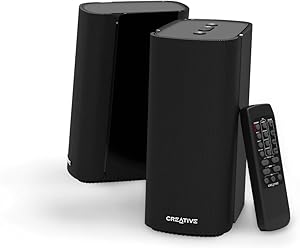
In contrast, Creative provides a substantially broader and more utility-driven selection across multiple computing and personal entertainment verticals. Originating in desktop PC audio with the Sound Blaster legacy, Creative covers everything from ultralight desktop speakers (Pebble series) and gaming soundbars (Katana series) to portable rugged Bluetooth drivers and studio-grade monitoring solutions. While Harman Kardon captures consumers looking for interior centerpiece audio, Creative dominates desk setups, gaming stations, and compact personal audio, offering specialized connectivity like USB audio DACs, optical inputs, and software-driven sound customization.
Affordability
From a cost-to-entry standpoint, Creative is decidedly the more accessible brand, dominating entry-level and mid-range audio with aggressive value propositions. Products like the Creative Pebble series offer remarkably capable desktop sound for under fifty dollars, while their higher-tier Sound Blaster Katana soundbars remain competitively priced against mainstream gaming gear. Creative achieves high price-to-performance ratios by focusing on cost-effective acoustic materials, high-yield plastic enclosures, and internal digital signal processing to extract maximum acoustic output without driving up raw material costs.
Harman Kardon positions itself firmly in the upper mid-range to luxury consumer price tier. Even entry-level portable speakers from Harman Kardon typically retail well above Creative’s standard product lineup, reflecting their higher-grade materials, complex aesthetic tooling, and premium brand cachet. Consumers investing in Harman Kardon are paying for bespoke industrial design, heavy-duty metal and fabric integration, and prestige engineering; however, for budget-conscious buyers seeking practical audio utility or high connectivity per dollar, Harman Kardon represents a noticeably steeper financial investment.
Quality/Durability
Harman Kardon excels in industrial design, material craftsmanship, and structural heft. Their products frequently incorporate weighted aluminum frames, acoustically transparent woven textiles, and thick, sculpted acrylic domes that lend a tactile, premium feel. Because they are engineered predominantly as stationary home fixtures, their durability is centered around longevity in controlled environments, resilient passive radiators, and high-tolerance internal components. However, delicate cosmetic surfaces—such as the high-gloss transparent reservoirs on the SoundSticks or Aura lines—are susceptible to visible dust accumulation and micro-scratching if not maintained carefully.
Creative approaches quality through utilitarian reliability, robust structural plastics, and electronics-level endurance. While their entry-level offerings use lighter, injection-molded plastics that lack the luxurious tactile presence of Harman Kardon, their engineering is built to withstand everyday desk clutter, transport in backpacks, and continuous computing duty cycles. Products like the Muvo series even integrate dedicated water and dust ingress protection ratings (IP-ratings) that surpass Harman Kardon's lifestyle offerings, making Creative’s portable models structurally more rugged for outdoor use, despite lacking the high-end interior finish of their competitor.
Sound Quality
Acoustically, Harman Kardon targets a sophisticated, room-filling sound profile characterized by warm tonality, smooth midrange articulation, and deep, resonant low-end extension. Leveraging their extensive acoustic research, Harman Kardon drivers produce a wide, non-fatiguing dispersion pattern that complements contemporary music genres, jazz, and vocal-heavy tracks. Subwoofers in systems like the SoundSticks or Soundbars utilize downward-firing architectures to generate authoritative sub-bass without intrusive cabinet vibration, delivering an immersive, audiophile-leaning consumer soundstage that excels in medium-to-large listening rooms.
Creative delivers a more direct, analytical, and punchy acoustic signature optimized for nearfield listening, gaming dynamics, and desktop clarity. Their hardware often features sharp treble extension, distinct dialog clarity, and fast transient response to highlight in-game cues, positional audio, and media details. Furthermore, Creative separates itself with extensive digital signal processing (DSP) suites and proprietary Sound Blaster software, giving users precise parametric EQ tuning, virtual surround sound rendering, and dynamic range compression. While Creative might lack the natural, warm room dispersion of Harman Kardon, its clinical clarity and user-adjustable acoustic profile make it technically superior for localized, multi-purpose computer setups.