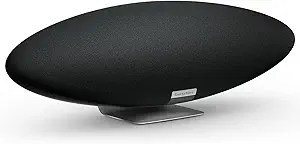
Bowers & Wilkins vs Triangle: Overview
Comparing Bowers & Wilkins and Triangle helps you determine which brand is best suited for your needs in Speakers. Both brands offer strong choices depending on your budget and key feature requirements.
Key Features & Comparison
Evaluate factors such as build quality, warranty, customer satisfaction, and total value before making your final purchase choice between Bowers & Wilkins and Triangle.
Product Selection
Bowers & Wilkins presents a comprehensive and technologically diverse portfolio that spans across high-end consumer hi-fi, high-resolution wireless ecosystems, architectural integrations, and premium mobile audio. From their flagship 800 Series Diamond studio monitors to their popular 600 and 700 series passive speakers, B&W covers critical price tiers while maintaining a unified acoustic philosophy. Furthermore, the British manufacturer has aggressively expanded into modern smart audio with its Formation wireless series, active soundbars like the Panorama 3, premium wireless noise-canceling headphones, and elite automotive audio partnerships with brands like BMW and McLaren.
In contrast, France's Triangle focuses more traditionally on stereo hifi and home theater configurations, structured around distinct lines like Borea, Esprit Ez, Signature, and their ultra-luxury Magellan series. While Triangle may not compete in automotive systems or standalone personal headphones, they have excelled in modernizing traditional hi-fi through their active connected collections, notably the Borea Active (BR02/BR03 BT) and AIO series streaming systems, which combine vinyl-friendly phono stages with digital inputs. Triangle's catalog is tighter and more purist-oriented toward living room music listening, whereas Bowers & Wilkins offers an ecosystem-wide reach catering to lifestyle, smart home, and traditional audiophile sectors alike.
Affordability
When analyzing the cost of ownership, Triangle clearly positions itself as the more accessible and value-oriented brand across entry and mid-tier audiophile spaces. Triangle’s entry-level Borea range has frequently set class-leading standards for cost-to-performance efficiency, delivering full-range, engaging musicality at prices well within reach of budget-conscious audiophiles. Even stepping up into the Esprit Ez line, Triangle provides high-end acoustic design, proprietary horn tweeters, and cellulose drivers at price points that significantly undercut Bowers & Wilkins' comparable mid-tier tiers.
Bowers & Wilkins commands a steep luxury premium, positioning its equipment toward upper-middle to ultra-high-end consumers. Even its entry-point 600 Series sits higher on the price spectrum than Triangle's budget offerings, while the step-up 700 Series quickly enters territory requiring substantial financial investment alongside high-current amplification. At the apex, B&W’s 800 Series Diamond commands prices equivalent to luxury automobiles, justified by immense proprietary R&D, bespoke materials, and prestige manufacturing. For consumers prioritizing strict acoustic bang-for-the-buck, Triangle offers higher accessibility, while B&W remains an investment in luxury engineering and industrial design.
Quality/Durability
Bowers & Wilkins demonstrates peerless industrial engineering, employing advanced materials science that ensures exceptional mechanical longevity and resonance-free cabinet integrity. Their flagship models feature the iconic Turbine Head machined from solid aluminum blocks, reverse-wrap cabinet architecture formed from multi-layered curved beech wood, and diamond vapor-deposition dome tweeters. Even their more accessible ranges utilize the proprietary Continuum cone, which resists age degradation far better than conventional paper or polypropylene cones. The fit, finish, and structural mass of B&W speakers reflect heavy-duty construction designed to endure decades of mechanical stress.
Triangle approaches durability with traditional French artisanal craftsmanship, relying on heavy MDF cabinetry reinforced with proprietary internal bracing systems, such as their DVAS (Driver Vibration Absorption System). Triangle opts for natural materials, prominently using untreated cellulose pulp (paper) for its midrange cones and titanium for its horn-loaded compression tweeters. While beautifully constructed with exquisite real-wood veneers and piano lacquer finishes, paper-based cones can theoretically be more susceptible to atmospheric fluctuations and physical damage than B&W’s synthetic Continuum composite. Nevertheless, Triangle’s mechanical execution, durable surrounds, and robust crossover networks ensure reliable, long-lasting performance.
Sound Quality
The sonic signature of Bowers & Wilkins is defined by surgical precision, analytical micro-detail, and dynamic authority. B&W aims for studio monitor transparency, utilizing decoupled Carbon Dome or Diamond Dome tweeters alongside Continuum midrange drivers to deliver an expansive soundstage, razor-sharp imaging, and remarkable speed. Bass response is typically deep, controlled, and articulate, thanks to Aerofoil profile drivers and Flowport technology. However, this clinical revealing nature means B&W speakers can occasionally sound bright or unforgiving with poorly mastered source material, and they strictly demand robust, high-current amplification to achieve proper acoustic tonal balance.
Triangle counters with a signature characterized by effervescent energy, rhythmic immediacy, and lifelike midrange expressiveness. Utilizing horn-loaded titanium tweeters with phase plugs paired with lightweight paper midrange cones, Triangle speakers deliver exceptional transient speed and articulate vocal realism that sounds remarkably open and airy. Their presentation is dynamic and emotive, bringing live recordings to life with micro-dynamic punch even at lower listening volumes. Because they feature high sensitivity ratings, Triangle speakers are significantly easier to drive than B&W models, pairing synergistically with lower-powered or tube amplifiers, though their forward treble can tilt toward brightness in highly reflective rooms.