Bowers & Wilkins vs Bang & Olufsen: Overview & Brand Philosophy
When navigating the high-end audio landscape, few names command as much respect as Bowers & Wilkins (B&W) and Bang & Olufsen (B&O). While both reside in the premium sector, their design philosophies originate from fundamentally different traditions. British marque Bowers & Wilkins, founded in 1966, was born out of an uncompromising pursuit of acoustic transparency. The brand's driving ethos has always been to reproduce sound exactly as the recording artist intended, with as little coloration as possible. This studio-first heritage has made their loudspeakers a fixture in legendary production environments such as London's Abbey Road Studios.
Conversely, Danish heritage brand Bang & Olufsen, established in 1925, approaches high fidelity as a holistic fusion of acoustic performance, industrial design, and sensory luxury. Rather than utilitarian enclosures, B&O creates architectural statement pieces meant to integrate seamlessly into sophisticated living spaces. While acoustic engineering remains paramount, the brand places equal emphasis on the emotional experience of the product—how materials feel, how controls respond, and how the speaker enhances the visual aesthetic of the modern interior.
Ultimately, this creates a fascinating dynamic for luxury audio consumers: Bowers & Wilkins appeals primarily to the discerning audiophile seeking sonic precision, dynamic authority, and traditional acoustic rigor, whereas Bang & Olufsen captures the consumer who views audio equipment as bespoke interior art that must deliver both modern streaming convenience and immersive sound.
Key Differences & Technological Comparison
The technical differentiation between these two titans lies predominantly in transducer development, cabinet engineering, digital processing, and smart connectivity:
- Acoustic Transducers and Driver Material: Bowers & Wilkins invests heavily in bespoke material science. Their proprietary Continuum cone—replacing their iconic yellow Kevlar design—delivers low-resonance midrange purity. Their higher-tier speakers feature diamond dome tweeters mounted decoupled in solid aluminum "Tweeter-on-Top" housings to eliminate cabinet resonance and achieve airy, undistorted high frequencies. Bang & Olufsen, while employing high-spec neodymium drivers, relies extensively on Acoustic Lens Technology (ALT) licensed from Sausalito Audio. This distinctive saucer-like lens disperses high frequencies horizontally across a 180-degree plane, ensuring broad sound dispersion regardless of where the listener sits in the room.
- Digital Signal Processing (DSP) and Amplification: B&O relies heavily on active systems powered by high-efficiency Class-D ICEpower amplification paired with advanced DSP. Technologies like Active Room Compensation measure room acoustic anomalies and adjust the speaker's EQ profile automatically. Furthermore, B&O's Beam Width Control allows users to toggle between focused listening (narrow beam) and party listening (wide beam). B&W also offers active DSP-driven speakers in their Formation and wireless lines, but their foundational reputation rests on passive, analog loudspeaker engineering where mechanical cabinet tuning takes precedence over software correction.
- Build Materials and Aesthetics: Bang & Olufsen is globally recognized for its mastery of anodized aluminum, sourced and processed in their dedicated Factory 5 in Struer, Denmark. They blend this metalwork with responsibly sourced European oak, walnut, and tactile Kvadrat wool textiles. The result is Scandinavian minimalism embodied in unconventional silhouettes (e.g., the circular Beosound Edge or sculptural Beolab 28). Bowers & Wilkins favors classic acoustic geometry, utilizing curved multilayered ply cabinets, polished metal accents, and luxurious composite finishes designed primarily to reinforce internal rigidity and defeat standing waves.
- Ecosystem and Connectivity: Bang & Olufsen leads in modern wireless integration with its Mozart software platform, a modular system designed to allow future hardware and connectivity upgrades as networking standards evolve. They native-support AirPlay 2, Chromecast, and Beolink Multiroom with zero friction. Bowers & Wilkins offers comprehensive wireless capability across its Formation series and active wireless speakers, utilizing their dedicated Bowers & Wilkins Music App, though their ecosystem is comparatively more focused on traditional Hi-Res audio streaming protocols (aptX Adaptive, 24-bit/96kHz) rather than lifestyle smart-home integration.
Pros & Cons Comparison
Bowers & Wilkins
- Pros:
- Exceptional acoustic accuracy with class-leading midrange transparency and treble extension.
- Legendary passive speaker lines (such as the 600, 700, and flagship 800 Diamond series) offering upgradeable, lifetime-tier components.
- Deep roots in professional recording studios ensure reference-grade fidelity.
- Superior dynamic impact and authoritative bass response on traditional stereo setups.
- Cons:
- Passive models require separate, expensive high-current amplification to perform optimally.
- Traditional industrial design may feel conservative or bulky in contemporary designer spaces.
- Mobile and wireless companion apps are functional, but lack some of the lifestyle elegance and modular future-proofing found in competitors.
Bang & Olufsen
- Pros:
- Exceptional industrial design and ultra-premium materials (milled aluminum, genuine wood, bespoke textiles).
- Active, all-in-one architectures require no external amplifiers or visible speaker wire runs.
- Advanced acoustic beam shaping and active room compensation make placement forgiving.
- Mozart software platform enables long-term modular hardware serviceability and seamless multiroom streaming.
- Cons:
- Significant price premium for aesthetics, craftsmanship, and lifestyle branding.
- Audiophile-grade pure stereo imaging can sometimes be softened by wide-dispersion acoustic lenses.
- Integrated electronics and DSP mean less flexibility for users who prefer mixing and matching individual DACs and power amplifiers.
Performance, Durability & Value Analysis
From an acoustic performance standpoint, the two brands cater to distinct expectations. Bowers & Wilkins consistently wins the battle of raw analytical performance. Their speakers deliver a holographic soundstage, precise instrument localization, and an unvarnished dynamic range. If an audio track has flaws, a B&W speaker will reveal them; if the recording is pristine, the experience is transcendent. Bang & Olufsen, by contrast, crafts an intentionally lush, room-filling sound signature. Thanks to their automated room sensing and wide-dispersion lenses, B&O speakers sound remarkably consistent no matter where you move within a living room, making them far better suited for social entertaining and open-concept architectural spaces.
When evaluating durability and long-term value, both brands score well above industry averages, but via different lifecycles. Bowers & Wilkins passive loudspeakers can last for decades with virtually no technological obsolescence; a pair of 800-series cabinets bought today will sound just as magnificent thirty years from now when driven by clean power. Bang & Olufsen counters potential wireless obsolescence with their Cradle-to-Cradle certification approach and the modular Mozart platform, which allows physical connectivity boards to be replaced down the road. While B&O commands a higher entry price relative to raw driver size, their products retain substantial value on the secondary market due to their standing as mid-century and modern design classics.
Final Verdict: Which Brand Should You Choose?
Your choice between Bowers & Wilkins and Bang & Olufsen comes down to whether your primary priority is studio-grade acoustic performance or luxurious lifestyle design integrated with cutting-edge active wireless audio.
Choose Bowers & Wilkins if:
- You identify as an audiophile who values critical listening, vocal clarity, and surgical sonic separation above all else.
- You want to build or expand a dedicated two-channel Hi-Fi or reference home theater system with discrete component amplification.
- You prefer classic loudspeaker aesthetics and demand studio-proven engineering (such as the 700 or 800 Series).
Choose Bang & Olufsen if:
- You want high-performance sound housed in breathtaking, museum-quality design that complements architectural home decor.
- You prefer an active, all-in-one setup that eliminates messy cables, racks of preamps, and complicated calibration routines.
- You host often and need speakers that deliver consistent, non-fatiguing sound across wide, open rooms rather than a single pinpoint "sweet spot."
Product Selection
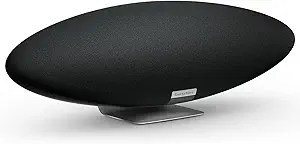
When evaluating product selection between Bowers & Wilkins and Bang & Olufsen, consumers are presented with two divergent design philosophies that reflect fundamentally different target audiences. Bowers & Wilkins anchors its portfolio in high-performance acoustic engineering, tracing a direct line from reference-grade stereo reproduction to modern multi-room setups. Their speaker lineup spans from elite, passive floor-standing monitors—such as the flagship 800 Series Diamond featuring decoupled Diamond Dome tweeters and Continuum cones—down through the versatile 700 and 600 Series, custom architectural installations, dedicated home theater arrays, and consumer wireless models like the Formation Wedge and Zeppelin. B&W's strength lies in this hierarchical scalability; an audiophile can construct a unified acoustic environment spanning entirely analog hi-fi rigs, home cinema bi-amplified configurations, and standalone active streaming units that consistently prioritize low distortion and neutral sound profiling.
Conversely, Bang & Olufsen curates an ecosystem where avant-garde luxury, sculptural interior aesthetics, and lifestyle mobility take precedence over traditional hi-fi stacking. Rather than focusing heavily on passive, multi-tier passive component speakers, B&O’s catalog thrives in active, software-driven, and architectural speaker formats. The Danish brand covers everything from rugged, go-anywhere ultra-portables (like the Beosound A1) and contemporary home statement pieces (the monolithic Beosound Balance and motorized Beolab 50) to transformational, wall-mounted acoustic mosaics like the modular Beosound Shape. B&O places heavy engineering focus on integrated active amplification, automatic room-sensing beam width control, and forward-looking digital longevity via replaceable streaming modules (the Mozart platform), resulting in a portfolio that is inherently more portable, design-focused, and functionally dynamic across varied domestic settings.
The practical trade-offs regarding product selection ultimately hinge on whether a listener requires traditional acoustic scaling or integrated lifestyle versatility. Bowers & Wilkins offers superior breadth for modular home theater and conventional hi-fi enthusiasts, providing a vast array of passive form factors, center channels, and subwoofers that pair seamlessly with third-party amplification. However, their ultra-portable and all-in-one wireless selection remains relatively narrow. Bang & Olufsen surrenders ground in the traditional passive stereo component market to dominate active, design-forward audio, offering consumers unmatched variety in finishes, wall-mounted installations, and smart, battery-powered portables. For purist audiophiles building a dedicated listening room, B&W’s product ecosystem is technically unmatched, whereas B&O delivers a vastly more comprehensive catalog for luxury consumers demanding seamless decor integration, streaming flexibility, and mobility.
Affordability
When evaluating affordability between Bowers & Wilkins (B&W) and Bang & Olufsen (B&O), consumers are looking at two distinct definitions of luxury audio pricing. Bowers & Wilkins anchors its value proposition in traditional acoustic engineering, offering a wider spectrum of entry points that provide genuine audiophile performance per dollar. The brand’s 600 Series passive speakers and Formation or Zeppelin wireless units deliver precision-engineered Continuum cone drivers and decoupled double dome tweeters at competitive price brackets, often ranging from mid-tier consumer to entry-level high fidelity. While flagship lines like the 800 Series Diamond command astronomical prices, B&W’s core lineup balances acoustic R&D with accessible, standardized cabinet manufacturing, giving budget-conscious audiophiles a tangible return on investment centered purely on sound staging and sonic transparency.
Conversely, Bang & Olufsen approaches pricing from an haute-couture and avant-garde industrial design perspective, which pushes their overall affordability index significantly lower. Even B&O's entry-level portable speakers, such as the Beosound A1 or Explore, sit at a noticeable premium compared to spec-equivalent competitors, largely due to high-grade pearl-blasted aluminum, genuine leather accents, and artisanal Danish manufacturing processes. At the higher end, systems like the Beolab series easily exceed the cost of comparable B&W setups without necessarily offering superior acoustic output. Instead, B&O justifies its cost through lifestyle integration, proprietary RoomSense calibration, motorized physical transformations, and modular longevity designed for aesthetic interior harmonizing rather than raw acoustic value.
Ultimately, the practical trade-off between the two brands hinges on where the consumer's capital is allocated. Bowers & Wilkins offers superior acoustic affordability, funneling manufacturing budgets into crossover designs, driver materials, and resonance reduction, making their speakers an optimal high-value investment for pure listening experiences. Bang & Olufsen, while technically capable, levies a heavy "luxury and design tax" that renders their speaker catalog inherently less affordable on a performance-per-dollar metric. Buyers prioritizing maximum acoustic fidelity for their budget will find Bowers & Wilkins the much more cost-effective choice, whereas Bang & Olufsen remains an indulgence where acoustic performance is secondary to visual art and premium tactile materials.
Quality/Durability
When evaluating build quality and long-term durability, Bowers & Wilkins (B&W) and Bang & Olufsen (B&O) represent the pinnacle of audio craftsmanship, though their engineering philosophies diverge significantly. Bowers & Wilkins approaches quality through the lens of traditional acoustic integrity and mechanical precision. Renowned for its rigid, inert cabinet designs—exemplified by the Matrix bracing and Continuum cone technologies derived from its flagship 800 Series—B&W emphasizes physical robustness that eliminates resonance. Materials such as solid-body carbon, die-cast aluminum, and heavy composite housings are chosen primarily to withstand intense internal acoustic pressures, resulting in speakers that suffer virtually zero microphonic degradation over decades. However, this heavy, performance-first engineering often means the internal electronics and app ecosystems of their wireless lifestyle lines (like the Formation series) lag behind in software sustainability, rendering their physical hardware more durable than their digital interfaces.
Conversely, Bang & Olufsen approaches durability from an avant-garde industrial design and longevity-by-design framework. Renowned for their peerless metalwork, B&O crafts housings from high-grade anodized pearl-blasted aluminum, sustainably sourced hardwoods, and bespoke acoustic textiles produced by Kvadrat. Where B&O distinctly outpaces B&W is in mechanical and digital future-proofing. Through initiatives like their Mozart platform, B&O equips speakers like the Beosound Level and Beolab series with modular, replaceable streaming and processing boards. This architecture directly addresses the planned obsolescence typical of active wireless speakers, allowing users to upgrade Wi-Fi modules and battery packs decades down the line. While B&O's delicate finishes and touch-sensitive interfaces can be more prone to surface scratching and cosmetic wear compared to the dense, utilitarian surfaces of passive B&W enclosures, their proactive engineering against digital aging is unmatched in the smart-speaker ecosystem.
Ultimately, the choice between the two regarding quality and durability rests on whether you prioritize physical acoustic longevity or digital lifecycle resilience. Bowers & Wilkins produces virtually indestructible, reference-grade hardware whose acoustic components will reliably perform for generations, provided you are dealing with passive configurations or accept eventual obsolescence in their wireless software. Bang & Olufsen trades a fraction of pure acoustic heft for unparalleled luxury tactile engineering and unprecedented modular repairability, making them the superior long-term investment for active, wireless installations. Both manufacturers showcase exceptional quality control, but B&W wins on sheer acoustic-mechanical endurance, while B&O takes the lead in holistic, modern product sustainability.
Sound Quality
When evaluating sound quality between Bowers & Wilkins (B&W) and Bang & Olufsen (B&O), listeners are choosing between two distinct acoustic philosophies: uncompromising, studio-grade analytical fidelity versus an expansive, design-forward lifestyle tuning. Bowers & Wilkins grounds its engineering in pure audiophile pedigree, utilizing proprietary acoustic innovations derived from decades of professional reference monitoring. Technologies such as their Continuum cone midrange drivers, Decoupled Double Dome tweeters, and signature "Tweeter-on-Top" mechanical isolation deliver an exceptionally revealing, neutral, and precise soundstage. Highs are crystalline without becoming fatiguing, mid-frequencies reveal micro-textures in vocals and acoustic instruments, and the low-end is tightly controlled, fast, and authoritative. This clinical accuracy ensures that tracks are rendered precisely as the mixing engineer intended, though it can ruthlessly expose the flaws in lower-bitrate sources and poorly mastered recordings.
Conversely, Bang & Olufsen emphasizes a warm, room-filling, and psychoacoustically optimized sonic signature known as "Bang & Olufsen Signature Sound." B&O excels in active digital signal processing (DSP) and computational acoustics, utilizing features like Active Room Compensation to automatically map boundaries and calibrate bass response based on speaker placement. A hallmark of B&O engineering is their deployment of Acoustic Lens Technology, which disperses high frequencies horizontally in a 180-degree arc to eliminate the traditional "sweet spot," providing a consistent, omnidirectional sound field regardless of where the listener stands in the room. Bass performance is notably lush and punchy, often engineered to sound larger than the speaker's physical footprint suggests. While this lush tuning creates an emotionally engaging and fatigue-free experience tailored to casual living-space listening, it deliberately trades away the absolute surgical transparency, phase precision, and pinpoint stereo imaging championed by B&W.
Ultimately, the practical trade-off between the two audio heavyweights comes down to listening intent and environment. Bowers & Wilkins is the superior acoustic choice for critical listeners who prioritize dynamic range, transient speed, and exact spatial placement within a dedicated, seated listening position. Bang & Olufsen, while technically capable of high-fidelity output, prioritizes lifestyle flexibility, intelligent DSP adaptability, and ambient dispersion that sounds universally rich throughout dynamic, multi-use rooms. While a discerning audiophile will likely favor the authentic, uncolored presentation of Bowers & Wilkins, those seeking an effortless, powerful, and forgiving sonic performance that seamlessly adapts to modern living spaces will find Bang & Olufsen exceptionally well-tuned to their needs.