






Bose vs Creative: Overview
Comparing Bose and Creative helps you determine which brand is best suited for your needs in Speakers. Both brands offer strong choices depending on your budget and key feature requirements.
Key Features & Comparison
Evaluate factors such as build quality, warranty, customer satisfaction, and total value before making your final purchase choice between Bose and Creative.
Product Selection
When examining product selection, Bose and Creative diverge significantly in their target markets and ecosystem designs. Bose focuses primarily on lifestyle audio, premium portable Bluetooth speakers, home theater soundbars, and commercial public address solutions. Their flagship lines, such as the SoundLink family, Portable Smart Speaker, and Smart Ultra Soundbar, are engineered to deliver cohesive, room-filling sound within a minimalist aesthetic. Bose deliberately keeps its catalog streamlined, emphasizing high-margin, polished wireless products designed to integrate effortlessly into multi-room Wi-Fi networks and smart-home ecosystems via Apple AirPlay 2, Spotify Connect, and voice assistants.
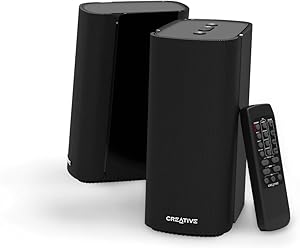
In contrast, Creative caters extensively to desktop computer users, PC gamers, and budget-conscious audiophiles with a diverse hardware lineup. Creative’s catalog encompasses everything from ultra-compact desktop monitors (Pebble series) and modular 2.1 or 5.1 PC sound systems to high-performance gaming soundbars (Sound Blaster Katana) and multi-channel external DAC/amp solutions. While Creative does produce portable Bluetooth units like the Muvo series, their engineering ethos is rooted in PC multimedia, customizable RGB lighting, hardware connectivity options (such as USB-C audio, optical inputs, and AUX), and proprietary audio processing chips. Consequently, Creative offers vastly superior variety for desktop workspaces, while Bose reigns supreme in living rooms and portable outdoor settings.
Affordability
Affordability represents one of the starkest contrasts between Bose and Creative, defining two entirely different consumer tiers. Bose operates firmly in the premium-to-luxury consumer electronics space, with product pricing reflecting substantial research and development, industrial design, and global brand equity. Entry-level offerings from Bose, such as their smallest SoundLink Micro, generally start well above the median price of standard portable speakers, while their smart soundbars and subwoofers regularly climb into four-figure territory. Consumers investing in Bose are paying for proprietary acoustic wave technologies, premium build finishes, and a high-status audio brand, which leaves very little room for cost-conscious shoppers.
Creative, by comparison, has built a dominant reputation as one of the best value-for-money manufacturers in consumer audio. Their entry-tier desktop systems, such as the Creative Pebble, provide an astonishingly capable sound upgrade for computer setups at a fraction of the cost of any Bose accessory. Even Creative’s flagship gaming soundbars with external subwoofers—packed with Dolby decoding, dedicated DSPs, and multichannel arrays—retail at price points comparable to Bose’s entry-level standalone units. While Creative does use more plastic components to hit these aggressive targets, their cost-to-performance ratio is exceptionally high, making high-fidelity audio accessible to gamers and everyday PC users on strict budgets.
Quality/Durability
Bose approaches quality and durability through rigorous industrial design tailored to both indoor luxury and harsh outdoor environments. Portable units like the SoundLink Flex and SoundLink Max boast robust silicone finishes, powder-coated steel grilles, and IP67 ratings that make them dustproof, waterproof, and even buoyant. Bose invests heavily in impact testing, ensuring their portable enclosures resist corrosion, UV degradation, and accidental drops. In their home theater products, Bose utilizes seamless anodized aluminum grilles, tempered glass tops, and precision-molded plastics that exude longevity, ensuring the physical hardware remains as resilient as it is visually sophisticated over years of continuous use.
Creative emphasizes functional, utilitarian durability that excels in desktop and controlled home environments rather than rugged outdoor settings. The build quality of Creative speakers involves high-grade plastics, reinforced metal speaker grilles on premium lines like the Katana, and solid MDF enclosures for their separate subwoofer cabinets. While Creative’s desktop speakers do not need the water or dust resistance ratings of outdoor Bluetooth gear, they feature reliable internal soldering, sturdy volume potentiometers, and robust power delivery circuitry engineered for continuous desktop operation. The trade-off lies in tactile materials; Creative products feel more industrial and plastic-heavy compared to the luxurious, weighted, soft-touch materials standard in Bose's portfolio.
Sound Quality
The acoustic signature of Bose is defined by psychoacoustic engineering, dynamic equalization, and expansive sound dispersion. Bose engineers tune their systems to provide rich, pleasing, and fatigue-free audio regardless of volume level. By leveraging proprietary technologies like dual-opposing passive radiators and specialized acoustic waveguides, Bose speakers generate deep, articulate bass and an unexpectedly wide soundstage from remarkably compact physical enclosures. The mid-range is typically smooth, prioritizing vocal clarity and acoustic instrumentation, though purist audiophiles sometimes criticize Bose for applying aggressive digital signal processing (DSP) that colors the sound and suppresses the micro-dynamics found in uncompressed hi-fi tracks.
Creative adopts a fundamentally different, user-customizable approach to sound quality rooted in its legacy Sound Blaster DSP heritage. Creative speakers, particularly the Katana soundbars and high-end desktop monitors, emphasize rapid transient response, crisp treble detail, and punchy, discrete low-end separation enabled by dedicated multi-driver configurations and separate subwoofers. Through the Creative app, users gain deep control over parametric EQ, acoustic dialogue enhancement, and virtual surround-sound algorithms tailored specifically for positional gaming and cinema. While Creative’s baseline out-of-the-box tuning can sound slightly bright or midrange-recessed compared to the warm, effortless character of Bose, its transparency, tweakability, and channel separation make it technically superior for gaming clarity and directional audio cues.