Bose vs Bowers & Wilkins: Overview
Comparing Bose and Bowers & Wilkins helps you determine which brand is best suited for your needs in Speakers. Both brands offer strong choices depending on your budget and key feature requirements.
Key Features & Comparison
Evaluate factors such as build quality, warranty, customer satisfaction, and total value before making your final purchase choice between Bose and Bowers & Wilkins.
Product Selection
Bose approaches product selection through a consumer-first philosophy, focusing on lifestyle versatility, portable designs, and all-in-one domestic audio systems. Their portfolio emphasizes compact Bluetooth speakers such as the SoundLink family, versatile smart home speakers, active outdoor gear, and TV soundbars equipped with intuitive voice assistance. Bose excels at engineering unified ecosystems where active noise cancellation, wireless multi-room streaming, and rugged water-resistant builds dominate the technical architecture, catering directly to consumers who prioritize seamless everyday use, mobility, and plug-and-play simplicity.
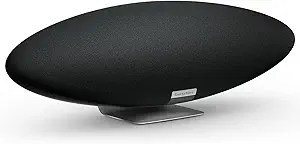
In stark contrast, Bowers & Wilkins structures its product catalog around traditional high-fidelity engineering and luxury acoustic performance. While the British manufacturer has expanded into premium smart speakers and soundbars via the Formation and Panorama lines, its core identity rests upon passive and active hi-fi floorstanding towers, bookshelf monitors, and architectural custom installations like the legendary 800 and 700 Series. Bowers & Wilkins offers fewer ultra-portable, rugged choices than Bose, instead serving discerning audiophiles, dedicated home theater builders, and luxury interior spaces where acoustic volume and aesthetic craftsmanship take precedence over outdoor utility.
Affordability
When analyzing price-to-performance metrics, Bose occupies the accessible-to-premium consumer tier, positioning its speakers within reach of mainstream audio enthusiasts. Entry-level portable speakers often start around the hundred-dollar threshold, while their flagship smart soundbars and subwoofers sit within the mid-three-figure to low-four-figure bracket. Bose achieves cost efficiency by utilizing lightweight composite polymers and digital signal processing rather than expensive exotic materials, making their hardware a practical financial choice for listeners seeking dependable performance without investing in supplementary amplifiers, preamps, or dedicated audio infrastructure.
Bowers & Wilkins operates largely in the luxury and high-end audio realms, commanding a significant price premium that reflects its boutique engineering and heritage manufacturing. Even their entry-level wireless speakers and soundbars are priced at or above Bose’s high-end flagship offerings, while their passive reference speakers can easily escalate into tens of thousands of dollars. The long-term cost of ownership for Bowers & Wilkins is also magnified by the frequent need for separate, high-current amplification, quality cabling, and treated listening environments, representing a major financial commitment targeted toward committed audiophiles rather than casual listeners.
Quality/Durability
Bose designs its speakers with functional resilience and everyday durability at the forefront, emphasizing physical survivability over ornate luxury. Many of their portable offerings feature IP-rated waterproof, dustproof silicone enclosures, cast-aluminum grilles, and shock-resistant bumpers capable of withstanding outdoor drops, pool splashes, and heavy transit wear. Internally, Bose relies heavily on robust proprietary digital signal processing (DSP) and active equalization circuitry to protect drivers from over-excursion and distortion, delivering dependable, maintenance-free operation across years of varied use.
Bowers & Wilkins approaches build quality through artisanal fine-furniture craftsmanship, aerospace-grade industrial design, and metallurgical innovation. The brand’s enclosures feature real-wood veneers, multi-layer lacquers, Continuum cones, and decoupled carbon dome or diamond tweeters housed within solid-aluminum turbine heads. While these structural choices yield exceptional internal resonance damping and inert acoustic characteristics, they lack the outdoor ruggedness and impact resistance of Bose. Bowers & Wilkins hardware is engineered to endure as generational, heirloom audio furniture kept in climate-controlled indoor listening rooms rather than tossed into a travel bag.
Sound Quality
The Bose sound profile is defined by sophisticated psychoacoustics and heavy digital signal processing engineered to produce a remarkably expansive soundstage from compact enclosures. Bose prioritizes a warm, consumer-friendly tonal curve characterized by punchy low-frequency resonance and smooth, fatigue-free midranges that hide imperfections in low-bitrate streaming tracks. While this sculpted acoustic tuning sounds full and engaging at moderate volumes in noisy living spaces, purists often note a roll-off in upper treble detail, compressed dynamic range at peak outputs, and a slight lack of transparency compared to uncompressed reference monitors.
Bowers & Wilkins delivers an analytical, audiophile-grade acoustic signature that emphasizes crystalline clarity, micro-detail retrieval, and impeccable dynamic transients. Utilizing proprietary decoupled double-dome tweeters and stiff composite drivers, their speakers render precise spatial imaging, natural vocal articulation, and tight, controlled bass extension that reveals the true nuances of high-resolution master recordings. The trade-off lies in the brand's uncompromising honesty: lower-quality audio tracks and poorly mastered recordings can sound harsh or unforgiving, demanding high-grade source material and careful room positioning to unlock their full sonic potential.