Anker vs Sony: Overview
Comparing Anker and Sony helps you determine which brand is best suited for your needs in Speakers. Both brands offer strong choices depending on your budget and key feature requirements.
Key Features & Comparison
Evaluate factors such as build quality, warranty, customer satisfaction, and total value before making your final purchase choice between Anker and Sony.
Product Selection
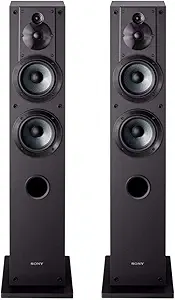
Sony boasts an extraordinarily expansive and technologically diverse speaker portfolio that spans multiple market tiers and distinct use cases. The legacy brand covers everything from miniature ultra-portables like the SRS-XB100 to room-shaking high-power party towers in the XV series, alongside architectural multi-channel home theater setups, high-fidelity soundbars, and neckband speakers. This breadth allows Sony to leverage proprietary technologies like 360 Reality Audio, LDAC streaming codecs, and modular party-pairing across wildly different form factors, catering to casual listeners, home cinema enthusiasts, and prosumer audiophiles alike.
Anker, operating primarily through its dedicated Soundcore audio sub-brand, adopts a more focused, consumer-centric approach emphasizing portable, desktop, and lifestyle audio. While Anker's selection is not as wide as Sony's when factoring in high-end home theater systems or professional AV gear, its Soundcore lineup is exceptionally dense within the personal audio space. From the rugged pocket-sized Motion and Flare lines to the powerful Boom series and smart party speakers like the Rave, Anker provides tailored options that address specific real-world niches, such as floating pool speakers or versatile outdoor PA-style units, with precision and modern feature sets.
Affordability
Affordability is the foundational pillar of Anker's market strategy, offering consumers an aggressive price-to-performance ratio that legacy manufacturers struggle to match. Anker regularly integrates premium hardware features—such as titanium dynamic drivers, IPX7 waterproofing, and customizable multi-band equalizer apps—into products priced significantly below the industry average. By operating a direct-to-consumer model and streamlined distribution channels, Anker minimizes overhead, enabling consumers on strict budgets to acquire dependable, feature-rich speakers without paying an extraneous brand premium.
Sony positions itself primarily within the mid-tier to premium segments, resulting in a higher cost barrier across nearly all product categories. While entry-level models exist, such as the compact XB-series units, they generally carry higher retail pricing than comparable Soundcore alternatives while often offering fewer spec-sheet features out of the box. Sony's price structure reflects its immense investment in continuous research and development, proprietary DSP tuning, upscale industrial materials, and a globally established retail network, making it a sound long-term investment for discerning buyers but less practical for strict budget shoppers.
Quality/Durability
Sony showcases superior mechanical engineering, refined industrial design, and comprehensive environmental protection ratings across its product lines. Utilizing heavy-duty impact-resistant polymers, treated acoustic textiles, and precisely sealed rubberized gaskets, Sony's rugged speakers often carry high-tier IP67 dust and water resistance ratings, alongside shock testing to survive drops onto hard surfaces. The structural integrity and longevity of internal electronics, particularly lithium-ion battery management systems that safeguard against capacity degradation, highlight Sony’s multi-decade mastery in consumer hardware fabrication.
Anker’s Soundcore speakers have earned an outstanding reputation for real-world resilience, defying their modest price points with robust, utilitarian construction. Many models feature thick silicone bumpers, fully waterproof enclosures that can float on water, and sealed interface ports capable of enduring beach sand and torrential rain. While the tactile finish and visual refinement of Anker's materials may not always exude the polished luxury of Sony's higher-end offerings, their resilience against drops, weathering, and daily abuse is exceptional, making them trusted workhorses for outdoor adventures and rugged use.
Sound Quality
Sony holds an undeniable technical advantage in pure acoustic reproduction, driven by advanced digital signal processing and decades of audio engineering pedigree. By deploying proprietary X-Balanced speaker units, dual passive radiators, and high-resolution Bluetooth transmission through their in-house LDAC codec, Sony delivers deeply textured, articulate bass alongside clear, uncompromised midranges. Sony's acoustic signature typically favors a warm, rich low-end without masking subtle harmonic details, providing an expansive soundstage that performs exceptionally well across complex musical genres and cinematic soundscapes.
Anker counters with a dynamic, punchy acoustic profile optimized for modern popular music and high-volume projection, predominantly powered by its proprietary BassUp algorithmic tuning. While Soundcore speakers generally rely on standard SBC and AAC codecs—and occasionally LDAC on premium units like the Motion+ or Motion X600—they deliver remarkably clear highs and forceful bass that exceed expectations for their footprint. However, compared to Sony, Anker's soundstage can feel slightly more directional, and the frequency separation may struggle with subtle dynamic layering during high-complexity orchestral or acoustic tracks at maximum volume levels.