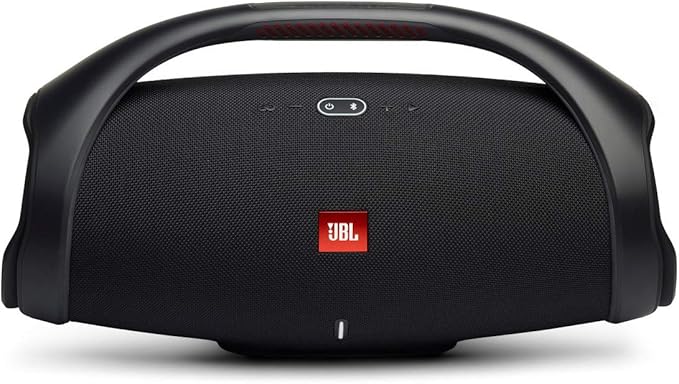
Anker vs JBL: Overview
Comparing Anker and JBL helps you determine which brand is best suited for your needs in Speakers. Both brands offer strong choices depending on your budget and key feature requirements.
Key Features & Comparison
Evaluate factors such as build quality, warranty, customer satisfaction, and total value before making your final purchase choice between Anker and JBL.
Product Selection
JBL offers one of the most comprehensive catalogs in the global audio market, spanning ultra-compact lifestyle speakers to massive professional-grade sound reinforcement systems. Within their consumer lineup, JBL segments its portfolio into distinct form factors, including pocket-sized clip speakers, mid-sized cylindrical travel speakers like the Flip and Charge series, and colossal high-output transportable units under the PartyBox banner. Beyond portable Bluetooth units, JBL heavily engineers dedicated smart home voice-assistant speakers, premium Dolby Atmos-enabled soundbars, waterproof marine audio, and high-fidelity studio reference monitors, giving them immense vertical reach across multiple audio applications.
Anker approaches product selection with a more streamlined, consumer-focused strategy under its Soundcore sub-brand. While Anker lacks JBL's pro-audio, architectural, and commercial equipment lines, it covers mainstream consumer needs effectively with robust portable speakers, desk-friendly Bluetooth models, outdoor adventure units, and budget-to-midrange television soundbars. Anker frequently iterates on successful form factors, offering multiple feature variations such as 360-degree sound dispersers, LED beat-driven light rings, and floating waterproof builds. While its overall catalog depth cannot rival JBL's industrial-to-consumer spectrum, Anker provides an accessible, precisely targeted assortment designed to cover roughly ninety percent of everyday consumer listening scenarios.
Affordability
Affordability is the core pillar of Anker's market proposition, consistently outmaneuvering established legacy brands on price-to-performance metrics. Across every size category, Anker Soundcore speakers regularly undercut JBL equivalents by thirty to fifty percent while offering comparable, if not superior, on-paper hardware specifications. Anker maximizes cost efficiency through lean direct-to-consumer distribution channels and highly optimized manufacturing processes, allowing them to bundle high-capacity batteries, multi-driver configurations, and customizable app support into devices priced firmly within entry-level to mid-tier budgets.
JBL commands a noticeable price premium, reflecting its century-long acoustic heritage, premium branding, and extensive global retail distribution. While the company provides accessible entry-level options like the JBL Go and Clip series, its larger portable speakers and PartyBox towers sit at the higher end of consumer pricing tiers. Buyers of JBL hardware pay for rigorous acoustic research, bespoke transducers, and dependable structural engineering. However, for cost-conscious consumers comparing pure acoustic wattage, battery runtime, and ancillary tech features per dollar spent, JBL routinely trails behind Anker's aggressive value positioning.
Quality/Durability
JBL has set the benchmark for ruggedization in consumer portable audio, engineering its speakers to survive extreme environmental abuse. Most modern JBL portables feature certified IP67 ingress ratings, indicating total protection against fine particulate ingress and the ability to withstand complete submersion in water. Structurally, JBL utilizes thick, dual-injection molded rubberized end-caps coupled with a heavy-gauge, tightly woven acoustic fabric wrapping that resists abrasion, UV degradation, and blunt impacts. Internal mechanical isolation protects dynamic drivers and passive radiators from drop shocks, making JBL units exceptionally reliable for job sites, hiking expeditions, and waterside use.
Anker constructs durable hardware that easily satisfies typical domestic and outdoor demands, frequently matching JBL with IPX7 or IP67 ratings across its adventure-oriented Soundcore speakers. Anker relies primarily on impact-resistant ABS plastics, textured silicone wraps, and matte rubberized chassis finishes that offer decent drop protection and splash resistance. However, over extended lifecycles, Anker's silicone coatings and port-sealing flaps can show wear, scuffing, or cosmetic degradation faster than JBL's ruggedized textile exteriors. While Anker provides dependable, weather-resistant assemblies well beyond its price point, JBL retains an advantage in long-term chassis resilience and structural survivability under harsh conditions.
Sound Quality
JBL's acoustic engineering is grounded in the proprietary Harman target curve, which aims for an optimal balance of perceived frequency neutrality, clarity, and controlled bass impact. JBL speakers excel at delivering articulate, tight low-frequency response via finely tuned dual external passive radiators that minimize internal cabinet standing waves. The mid-range reproduction on JBL hardware is notoriously clean and forward, ensuring vocal articulation remains intelligible even in noisy outdoor environments, while high-frequency tweeters offer crisp extension without harsh sibilance. At elevated volumes, JBL's digital signal processing (DSP) intervenes smoothly, preserving dynamic headroom and preventing acoustic compression or harmonic distortion.
Anker leans heavily toward a crowd-pleasing, energetic sound profile with its proprietary BassUp technology, which dynamically amplifies lower frequencies to create a visceral, punchy low-end presence. While this tuning works brilliantly for modern pop, hip-hop, and electronic music, mid-range neutrality and critical vocal separation can occasionally suffer, leading to a somewhat veiled or boomy profile out of the box. Anker compensates for this by providing a comprehensive, multi-band parametric EQ within the Soundcore companion app, allowing users to sculpt the soundstage manually. Nevertheless, JBL maintains the technical edge in raw driver quality, transient response, and acoustic refinement straight from the factory floor.