Anker vs Denon: Overview
Comparing Anker and Denon helps you determine which brand is best suited for your needs in Speakers. Both brands offer strong choices depending on your budget and key feature requirements.
Key Features & Comparison
Evaluate factors such as build quality, warranty, customer satisfaction, and total value before making your final purchase choice between Anker and Denon.
Product Selection
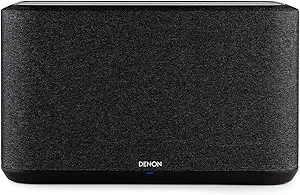
Denon and Anker cater to fundamentally different audio ecosystems, reflecting their distinct brand heritages. Denon focuses heavily on premium home audio, multi-room streaming, and home theater integration. Its speaker catalog revolves primarily around the Denon Home series of wireless streaming speakers, high-performance soundbars, subwoofers, and architectural solutions, all integrated via the proprietary HEOS network platform. Furthermore, Denon leverages decades of AV receiver dominance to offer speakers that mesh seamlessly with intricate multi-channel surround setups, targeting dedicated listening rooms and modern living spaces that demand networked audio distribution.
Conversely, Anker—primarily operating through its Soundcore sub-brand—dominates the portable, personal, and lifestyle speaker markets. Anker’s catalog is expansive within the Bluetooth domain, featuring ultra-compact pocket speakers, rugged outdoor cylinders, floating pool speakers, and high-output party speakers equipped with integrated LED light shows. While Anker has expanded into desktop speakers and spatial audio models like the Motion X600, it intentionally bypasses the traditional home theater and multi-room AV receiver market. Consumers choosing between the two will find Denon superior for stationary, unified home entertainment, whereas Anker offers far greater diversity in battery-operated, on-the-go form factors.
Affordability
The price spectrum between Denon and Anker highlights the difference between premium home audio investments and high-value consumer electronics. Anker built its reputation on disruptive pricing, providing feature-rich Bluetooth speakers that frequently retail anywhere from under $30 for basic travel models to around $200 for advanced spatial audio party units. By minimizing production overhead and optimizing direct-to-consumer distribution, Anker ensures that features such as multi-driver arrays, long battery lifespans, and waterproof certifications are accessible to budget-conscious buyers without substantial financial strain.
In stark contrast, Denon commands premium price tags commensurate with its hi-fi audio pedigree. Entry-level wireless smart speakers in the Denon Home line often start near or above the top end of Anker’s entire product catalog, with high-end soundbars and wireless subwoofers reaching into several hundreds or thousands of dollars. While this pricing reflects complex engineering, uncompressed network streaming capabilities, and top-tier digital-to-analog converters, it positions Denon strictly as an aspirational or luxury brand. For sheer utility per dollar, Anker is the uncontested victor, whereas Denon justifies its cost to discerning listeners who prioritize acoustic fidelity over economical convenience.
Quality/Durability
From an engineering and durability perspective, the brands diverge based on the intended deployment of their hardware. Anker’s Soundcore speakers are built specifically to endure the physical rigors of transport and outdoor use. Most models feature robust shock-absorbing rubberized bumpers, sealed ports, and aggressive ingress protection ratings ranging from IPX7 water resistance to IP67 dustproof standards. Internally, Anker incorporates resilient lithium-ion battery packs that sustain high-cycle counts and extensive playtime, making their hardware resilient against drops, outdoor exposure, and continuous outdoor handling.
Denon emphasizes aesthetic craftsmanship, acoustic cabinet tuning, and premium stationary architecture over rough-and-tumble resilience. Built largely from acoustic-grade composites, weighted aluminum, and refined textile grilles, Denon speakers are engineered to minimize internal cabinet resonance and look elegant on bookshelves or credenzas. While Denon hardware boasts exceptional component longevity, heat dissipation, and internal electrical isolation, it is not engineered for mobile abuse and largely lacks ingress protection against moisture or debris. Anker delivers unmatched physical toughness for active environments, while Denon excels in stationary engineering tolerances and refined industrial design.
Sound Quality
When evaluating acoustic performance, Denon occupies an elevated tier rooted in high-fidelity sound reproduction. Denon’s acoustic engineering prioritizes tonal balance, low harmonic distortion, transparent midranges, and expansive dynamic range. By utilizing high-resolution audio codecs (such as 24-bit/192kHz FLAC, ALAC, and DSD), precision crossover networks, and clean internal amplification, Denon speakers reveal intricate details in complex musical arrangements and vocal tracks. Bass response is tight and controlled rather than artificially inflated, making Denon the preferred choice for critical listening and balanced home theater audio.
Anker’s Soundcore hardware delivers strong performance within its class, generally tuned for mainstream appeal with consumer-friendly, energetic sound profiles. Leveraging proprietary BassUp digital signal processing, Anker speakers emphasize low-end punch and volume capability to compensate for smaller enclosure sizes and ambient outdoor noise. While higher-tier models incorporate dual neodymium drivers and hi-res LDAC support, they inherently lack the acoustic staging, absolute driver linearity, and subtle midrange transparency produced by Denon’s larger, mains-powered enclosures. Denon delivers authentic audiophile-grade fidelity, whereas Anker provides an exciting, bass-forward sound signature optimized for casual and outdoor listening.