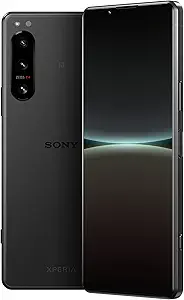
Sony vs Motorola: Overview
Comparing Sony and Motorola helps you determine which brand is best suited for your needs in Smartphones. Both brands offer strong choices depending on your budget and key feature requirements.
Key Features & Comparison
Evaluate factors such as build quality, warranty, customer satisfaction, and total value before making your final purchase choice between Sony and Motorola.
Affordability
When analyzing the value proposition across pricing tiers, Motorola holds a decisive advantage over Sony in terms of accessibility and market reach. Motorola has systematically dominated the budget and mid-range categories with its prolific Moto G and Moto E lineups, which routinely deliver core smartphone functionality, dependable battery life, and competent modern features at price points under $300. Even within its premium and foldable portfolios—anchored by the Edge and Razr series—Motorola aggressively undercuts tier-one competitors, offering high-refresh-rate displays and high-wattage fast charging at substantial savings compared to industry averages. This broad spectrum of accessible price brackets makes Motorola the premier choice for price-conscious consumers and pragmatic buyers seeking maximum utility per dollar.
In stark contrast, Sony deliberately positions its Xperia line as high-end, luxury hardware targeted at niche professionals, creators, and discerning multimedia enthusiasts. The flagship Xperia 1 series frequently commands prices exceeding $1,300, while the more compact Xperia 5 and mid-tier Xperia 10 iterations still carry steep premiums relative to their hardware specifications. Sony seldom engages in aggressive price cutting, discount strategies, or carrier promotions, viewing its smartphones as specialized creative instruments rather than mass-market volume movers. Consequently, prospective buyers face an uncompromising financial barrier with Sony, receiving specialized audio-visual features at top-tier prices, whereas Motorola offers comprehensive democratized technology that comfortably fits virtually any household budget.
Quality/Durability
Sony showcases an exceptional standard of industrial design, prioritizing rigorous build standards and weatherproofing that outclasses most of the consumer electronics industry. Xperia smartphones universally boast dual-rated IP65 and IP68 water and dust ingress protection, ensuring resilience against both powerful water jets and sustained submersion. Structurally, Sony employs premium materials such as aluminum frames and the latest Corning Gorilla Glass Victus variants across both the front and back of its flagship chassis. Additionally, Sony retains a distinctive, functional aesthetic characterized by flat screens, narrow physical bezels that eliminate the need for display cutouts, and reinforced physical components such as dedicated two-stage camera shutter buttons, resulting in a robust, meticulously engineered piece of hardware built to withstand harsh physical environments.
Motorola approaches quality and durability through a pragmatic, cost-effective framework that yields mixed results depending on the tier. While flagship devices like the Motorola Edge+ feature premium aluminum alloys and IP68 ratings, a substantial portion of Motorola's high-volume portfolio relies heavily on polycarbonate construction and basic water-repellent P2i nano-coatings rather than fully sealed submersion ratings. These plastic unibodies provide remarkable impact resistance against drops and everyday scuffs—often outperforming fragile glass backs in real-world falls—but they inherently lack the luxurious, precision-machined feel of Sony’s construction. While Motorola produces remarkably resilient, utilitarian workhorses that handle daily abuse well, Sony represents the superior benchmark for premium fit, finish, and all-weather operational durability.
Performance
Motorola delivers an exceptionally fluid user experience driven by its lightweight, near-stock software interface, historically known as My UX and Hello UX. By eschewing heavy system skins, Motorola ensures that even devices powered by modest MediaTek or mid-tier Qualcomm Snapdragon processors operate with minimal frame drops and snappy UI responsiveness. On its flagship Edge series, Motorola equips its phones with top-tier silicon, high-speed LPDDR5X RAM, and segment-leading display refresh rates reaching up to 144Hz or 165Hz. This optimization yields outstanding responsiveness for everyday productivity, multitasking, and casual gaming, though Motorola's thermal management can occasionally exhibit minor throttling under sustained synthetic benchmarks due to slimmer chassis designs.
Sony matches this tier of top-end performance on its flagship Xperia models by leveraging the latest flagship Snapdragon processors paired with clean, unobtrusive software, but it heavily customizes the underlying subsystem to favor technical creatives. Xperia devices feature sophisticated thermal mitigation enhancements specifically tuned for sustained 4K HDR 120fps video capture, extensive gaming overlays, and bypass charging—a feature that powers the phone directly from the wall outlet without routing through the battery, drastically cutting heat generation during heavy compute sessions. While both brands champion clean, bloatware-free software environments, Sony provides higher technical ceilings for sustained professional workloads, whereas Motorola delivers a hyper-responsive, fluid daily performance optimized for broad commercial efficiency.
Camera Quality
Sony’s camera philosophy is radically divergent from the rest of the mobile industry, drawing direct architectural and software lineage from its award-winning Alpha interchangeable lens division. Xperia flagships avoid heavy computational smoothing and aggressive artificial saturation, choosing instead to output naturalistic colors, authentic dynamic range, and accurate skin tones. Sony equips its flagship devices with cutting-edge Exmor T for Mobile stacked sensors, true continuous optical zoom lenses (such as 85mm to 170mm focal lengths without digital degradation), and real-time Eye AF and object tracking capable of tracking subjects at up to 30 frames per second. However, unlocking this brilliance demands manual proficiency; while automated point-and-shoot results have improved, Sony rewards technical knowledge via its complex Photography Pro and Video Pro manual interfaces, making it a dream camera for enthusiasts and an unforgiving setup for casual shooters.
Motorola pursues a mainstream, algorithm-driven photographic methodology aimed at delivering instantly shareable imagery straight out of the camera roll. Utilizing high-megapixel primary sensors (often 50MP or 200MP) that employ aggressive pixel binning, Motorola utilizes robust computational algorithms to automate HDR processing, enhance low-light exposures through dedicated night modes, and amplify color vibrance. The resulting images are punchy, sharp, and tailored for social media consumption with minimal user effort. However, Motorola struggles in challenging high-motion environments, where shutter lag can result in motion blur, and its digital telephoto cropping cannot rival Sony's authentic periscope optics. For the average consumer seeking a reliable point-and-shoot snapshot, Motorola is effortless and rewarding, but for professional creative control, natural color science, and optical sophistication, Sony remains completely peerless.