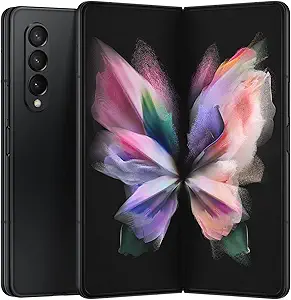

Samsung vs ZTE: Overview
Comparing Samsung and ZTE helps you determine which brand is best suited for your needs in Smartphones. Both brands offer strong choices depending on your budget and key feature requirements.
Key Features & Comparison
Evaluate factors such as build quality, warranty, customer satisfaction, and total value before making your final purchase choice between Samsung and ZTE.
Affordability
When evaluating affordability, ZTE consistently undercuts Samsung by prioritizing aggressive price-to-spec ratios, particularly in the entry-level to mid-tier categories. ZTE’s portfolio, which includes budget-centric lines like the Blade series and performance-focused gaming brands like Nubia and RedMagic, frequently integrates premium hardware specifications—such as fast-refresh displays and high-wattage charging—at price points substantially lower than traditional flagships. By trimming secondary features like formal IP ratings, wireless charging, and extensive global marketing budgets, ZTE delivers accessible raw performance that targets cost-conscious enthusiasts and emerging markets seeking maximum hardware value per dollar.
Conversely, Samsung approaches affordability through a broader, more structured ecosystem strategy reflected in its ubiquitous Galaxy A and Galaxy M series. While Samsung devices generally carry a higher price tag relative to their core internal hardware compared to ZTE equivalents, the premium cost accounts for substantial software longevity, comprehensive regional warranty networks, and tighter quality assurance. Consumers investing in budget Samsung smartphones benefit from enterprise-grade Knox security and prolonged Android OS update commitments, which soften the initial financial trade-off by offering superior long-term residual value and prolonged product lifecycles compared to ZTE's shorter software maintenance cycles.
Quality/Durability
Samsung holds a clear competitive edge in physical durability and systemic engineering refinement, standardizing high-end materials and rigorous environmental protections across its catalog. Its premium Galaxy S and Z foldables feature custom Armor Aluminum frames, Gorilla Glass Victus 2, and enterprise-leading IP68 water and dust ingress resistance, alongside carefully developed structural hinge tolerances. Even within its mid-range Galaxy A series, Samsung frequently equips devices with IP67 ratings and high-grade composites, resulting in a cohesive build quality engineered to withstand prolonged mechanical wear, environmental exposure, and accidental drops over years of daily utilization.
ZTE displays commendable manufacturing execution, particularly through its industrial gaming chassis in the RedMagic lineup and the sleek, minimalist aesthetics of its flagship Nubia devices, but structural compromises remain evident. While Nubia flagships frequently showcase edge-to-edge displays and aviation-grade aluminum rails, comprehensive water and dust ingress resistance is rarely standardized across the portfolio due to thermal ventilation vents or cost-saving measures. Additionally, ZTE's budget-oriented devices rely heavily on unreinforced polycarbonate unibodies and older generations of hardened glass, making them more susceptible to structural fatigue, micro-abrasions, and impact damage relative to Samsung's sturdier, better-sealed alternatives.
Performance
In raw hardware performance and specialized compute capabilities, ZTE often trades blows with or surpasses Samsung at identical price tiers, predominantly through its RedMagic and Nubia hardware. RedMagic gaming devices actively integrate internal cooling fans, vapor chambers, and overclocked Qualcomm Snapdragon chipsets alongside high-bandwidth LPDDR5X RAM and UFS 4.0 storage. This relentless focus on thermal mitigation allows ZTE smartphones to maintain sustained peak clock speeds without the aggressive thermal throttling that often limits conventional glass-sandwich smartphones during intensive gaming or prolonged compute workloads.
Samsung counters by delivering a more holistic, balanced performance profile optimized for versatility, productivity, and ecosystem cohesion. Leveraging a mix of proprietary Exynos chips and customized 'Snapdragon for Galaxy' processors, Samsung optimizes its hardware for seamless multitasking via Samsung DeX, machine-learning-driven photo processing, and long-term background app stability. While a flagship Galaxy device may throttle maximum synthetic benchmarks slightly sooner than a cooling-fan-equipped ZTE gaming phone, Samsung’s One UI provides a far more stable, feature-complete, and predictable user experience, supported by seamless integration with peripheral hardware and cloud ecosystems.
Camera Quality
Samsung is widely recognized as an imaging powerhouse, setting the benchmark for consumer smartphone photography through advanced sensor hardware, sophisticated optical designs, and cutting-edge computational algorithms. Top-tier Galaxy devices leverage massive 200MP wide-angle sensors coupled with dedicated dual-telephoto periscope configurations, providing unprecedented optical versatility from macro levels up to 10x and 100x digital zoom. Samsung’s image signal processor (ISP) pipeline excels in multi-frame HDR synthesis, dynamic range preservation, and natural low-light computational rendering, yielding polished, reliable outputs across diverse lighting conditions with industry-standard 8K and 4K video stabilization.
ZTE takes an innovative and unorthodox engineering approach to mobile imaging, particularly through its Nubia brand, which frequently utilizes unique 35mm primary focal-length lenses tailored for authentic street photography and balanced perspective distortion. In addition, ZTE is a pioneer in under-display camera (UDC) technology, prioritizing an unblemished, notch-free viewing experience over selfie optical fidelity. However, while ZTE's primary sensors can capture striking, highly detailed photographs under optimal lighting, its computational imaging algorithms lack the consistency, shadow recovery, and video stabilization refinement seen in Samsung’s ecosystem, resulting in higher frame-to-frame variance in demanding photographic environments.