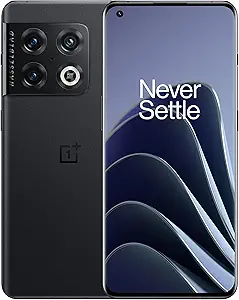







Asus vs OnePlus: Overview
Comparing Asus and OnePlus helps you determine which brand is best suited for your needs in Smartphones. Both brands offer strong choices depending on your budget and key feature requirements.
Key Features & Comparison
Evaluate factors such as build quality, warranty, customer satisfaction, and total value before making your final purchase choice between Asus and OnePlus.
Affordability
When analyzing affordability, Asus and OnePlus adopt distinctly different pricing methodologies that cater to separate market sub-segments. Asus maintains a tightly curated portfolio primarily divided between its compact Zenfone line and the high-end ROG Phone series. The Zenfone traditionally enters the upper-midrange to entry-flagship price tier, offering high-tier silicon in a smaller chassis, but Asus largely concedes the budget and mid-tier smartphone segments entirely. The ROG Phone series occupies an uncompromising ultra-premium tier, carrying high price tags justified by specialized cooling hardware, dual charging ports, and auxiliary trigger mechanisms, resulting in a niche but expensive value proposition.
Conversely, OnePlus leverages a broader pricing continuum anchored by its flagship 'number' series and the aggressively priced Nord lineup. The flagship devices undercut traditional tier-one competitors while offering near-parity in processing power and display technology, preserving OnePlus's legacy as a 'flagship killer.' Down-market, the Nord sub-brand successfully targets mid-range and budget-conscious buyers, providing high refresh-rate AMOLED panels and rapid charging at accessible price points. Consequently, OnePlus offers far superior overall portfolio affordability and accessible entry-level options compared to Asus’s premium, enthusiast-exclusive approach.
Quality/Durability
The structural integrity and long-term durability of both brands reflect their targeted use-cases, with Asus prioritizing rugged, gamer-centric hardware and OnePlus emphasizing refined elegance. Asus constructs its devices with robust aluminum frames and modern Gorilla Glass, though earlier iterations of the ROG Phone experienced mixed results in structural stress testing due to multiple interior antennas, dual-panel designs, and side ports that created localized weak points. However, recent generations of both the Zenfone and ROG Phone have incorporated official IP68 dust and water resistance, substantially bolstering their daily environmental survivability alongside premium industrial finishes.
OnePlus emphasizes structural cohesion with streamlined unibody-style frames, curved glass backs, and high tactile rigidity. While historically inconsistent with official IP ingress ratings to keep retail costs lower, recent flagship models consistently feature IP65 through IP68 certifications, protecting internal components against liquid immersion and particulates. In terms of software longevity and system reliability—a critical pillar of long-term durability—OnePlus holds an advantage, committing to extended software update lifecycles across its higher-tier devices, whereas Asus historically lags behind with relatively brief two-year major OS support windows.
Performance
Performance benchmarks showcase the apex of mobile computing for both manufacturers, though Asus pushes mobile silicon to unprecedented thermal and architectural limits. Asus's ROG Phone line is engineered explicitly for sustained peak throughput, utilizing binned flagship processors, advanced vapor chambers, graphite sheet layering, and attachable active Peltier cooling units. Through its proprietary Armoury Crate software, Asus allows granular control over CPU and GPU governor settings, thermal thresholds, and clock speeds, enabling sustained high frame-rates in gaming benchmarks without the throttling typical of conventional smartphones.
OnePlus balances peak processing power with energy efficiency and real-world fluidity, utilizing flagship Qualcomm Snapdragon processors alongside rapid LPDDR5X RAM and high-speed UFS storage. OxygenOS features robust background memory management and intelligent frame interpolation algorithms, delivering consistently fluid UI transitions and immediate app launch times. However, under synthetic stress tests and prolonged thermal loads, OnePlus prioritizes battery longevity and surface chassis temperature by throttling peak performance earlier than Asus. While OnePlus excels in daily responsiveness and heat mitigation, Asus reigns supreme for sustained, enthusiast-grade computational output.
Camera Quality
In the optical arena, OnePlus delivers a significantly more comprehensive and color-accurate photography experience. Through its multi-year engineering collaboration with Hasselblad, OnePlus employs custom-tuned color science, large modern Sony primary sensors, and specialized natural color calibration profiles. Its flagship telephoto periscope configurations capture rich detail at variable optical focal lengths, while advanced multi-frame HDR algorithms cleanly resolve high-contrast scenes. While its mid-range Nord models make optical compromises, OnePlus flagships compete convincingly with mainstream photographic heavyweights in dynamic range and portrait rendering.
Asus adopts a pragmatic, hardware-first approach to imaging that yields mixed results depending on the product line. The Zenfone series relies heavily on an integrated 6-axis hybrid gimbal stabilization system, making it exceptional for action-oriented videography, run-and-gun shooting, and sharp handheld long-exposure captures. However, Asus's computational photography software tends toward aggressive digital sharpening and oversaturated color profiles. Furthermore, the ROG line treats cameras as secondary utilities, often employing dated sensor arrays and omitting dedicated telephoto lenses, making OnePlus the far more versatile and polished imaging platform overall.