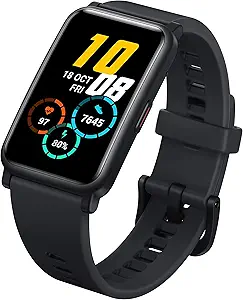







One Plus vs Honor: Overview
Comparing One Plus and Honor helps you determine which brand is best suited for your needs in Smart Watch. Both brands offer strong choices depending on your budget and key feature requirements.
Key Features & Comparison
Evaluate factors such as build quality, warranty, customer satisfaction, and total value before making your final purchase choice between One Plus and Honor.
Battery Life
When evaluating endurance, OnePlus and Honor approach power management from slightly different engineering paradigms, though both prioritize longevity over power-hungry full wear-OS architectures in their flagship sport wearables. OnePlus, particularly with devices like the OnePlus Watch 2, has revolutionized battery life through an innovative Dual-Engine Architecture. By pairing a high-performance Qualcomm Snapdragon W5 chipset with an ultra-efficient BES2700 co-processor running RTOS alongside Wear OS, OnePlus can deliver up to 100 hours of standard use in Smart Mode and up to 12 days in Power Saver Mode. This intelligent switching ensures that basic background tasks sip micro-power while resource-intensive features have full computing power on demand. Furthermore, OnePlus leverages its proprietary VOOC fast-charging technology, enabling a full day's battery replenishment in merely ten minutes.
Honor, conversely, relies on a deeply streamlined, RTOS-first philosophy in wearables like the Honor Watch 4 and Watch GS 3, optimizing proprietary firmware to extract remarkable uptime from modest battery capacities. Under typical usage conditions, Honor devices readily yield between 10 to 14 days of battery life without requiring complex dual-processor switching. However, when demanding features such as standalone GPS tracking, e-SIM connectivity, or continuous blood oxygen monitoring are engaged, Honor watches experience a steeper percentage drop in runtime compared to the regulated efficiency of OnePlus's hybrid platform. While Honor provides exceptionally reliable, set-it-and-forget-it endurance for routine smart tracking, OnePlus offers a superior technical balance for users who require genuine high-drain smartwatch features without sacrificing multi-day longevity.
Build Quality & Durability
In terms of structural integrity and premium finishes, OnePlus targets an executive-meets-rugged aesthetic that excels in structural resilience. Modern OnePlus timepieces often utilize high-grade stainless steel chassis complemented by 2.5D sapphire crystal glass displays, a technical choice that offers unmatched scratch resistance against daily abrasion. The tactile feel is dense and substantial, backed by rigorous MIL-STD-810H military-grade shock and thermal certifications alongside 5ATM and IP68 water and dust ingress ratings. OnePlus's industrial design language emphasizes sweeping ergonomic curves that protect the physical buttons from accidental actuation during intense workouts, creating a timepiece that feels equally at home in a boardroom or on a mountain trail.
Honor focuses on refined minimalism, leaning into ultra-lightweight luxury and sleek ergonomics. Devices like the Honor Watch GS 3 feature 316L low-carbon stainless steel that is meticulously polished to a mirror shine, paired with soft curve-edged tempered glass and genuine leather or fluoroelastomer straps. While visually striking and remarkably comfortable for 24/7 wear—often weighing considerably less than equivalent OnePlus models—Honor wearables are marginally more prone to micro-scratches on their non-sapphire screen surfaces under harsh outdoor conditions. While Honor models reliably achieve 5ATM water resistance suitable for open-water swimming, they generally skip the reinforced military-grade drop certifications found on top-tier OnePlus devices, positioning Honor slightly more toward the lifestyle and urban-fitness demographic than extreme rugged endurance.
Health & Fitness Tracking
Biometric monitoring is a fiercely contested domain between these two manufacturers, with each utilizing distinct algorithmic strategies to interpret vital signs. OnePlus equips its smartwatches with advanced optical photoplethysmography (PPG) sensors that capture dual-wavelength photoplethysmographic signals, alongside an integrated dual-frequency GPS system (L1 + L5). This multi-frequency satellite support ensures that runners and cyclists achieve surgical trajectory mapping even under dense canopy or within high-rise urban canyons. Integrated with the OHealth platform, OnePlus provides exhaustive metrics including VO2 Max, running dynamics (ground contact time, vertical oscillation, and balance), sleep stage tracking, and continuous SpO2 analysis. However, OnePlus's health ecosystem can feel somewhat analytical and raw, prioritizing actionable data logs over prescriptive health coaching.
Honor leverages an advanced 8-channel PPG heart rate sensor module driven by proprietary AI-enabled noise-cancellation algorithms, designed specifically to filter out motion artifacts during rapid arm movements like HIIT or racket sports. This hardware-software fusion results in exceptionally smooth, highly accurate resting and active heart rate curves that rival dedicated chest straps. Honor’s companion software, the Honor Health app, excels in holistic wellness translation, turning complex telemetry into accessible metrics like detailed sleep scoring, stress assessments, and breathing guidance. Where Honor falls slightly behind OnePlus is in satellite precision during extreme tracking, as many Honor watches stick to single-frequency GNSS arrays. Nevertheless, for day-to-day cardiovascular monitoring, sleep consistency analysis, and everyday fitness, Honor’s signal processing is remarkably refined.
Smart Features & Connectivity
The smart software experience represents the most definitive divergence point between the two brands. OnePlus, notably via the OnePlus Watch 2, runs Google's full Wear OS 4 platform (underlaid with RTOS for efficiency). This grants users complete access to the Google ecosystem, including the Google Play Store for thousands of third-party apps, Google Maps for turn-by-turn navigation directly on the wrist, Google Wallet for contactless NFC payments, and Google Assistant for smart home voice control. The ability to dictate full SMS and WhatsApp replies using an on-screen QWERTY keyboard or voice recognition gives OnePlus a decisive advantage as a true standalone wrist computer, providing deep bilateral integration with all modern Android smartphones.
Honor takes a far more lightweight, tethered approach with its proprietary MagicOS-for-wearables ecosystem. While select Honor models support eSIM for standalone LTE calling and independent music streaming, the software ecosystem is inherently sandboxed. There is virtually no expansive third-party application store, and interaction with incoming notifications is predominantly one-way; users can view alerts and send canned, pre-set quick replies, but they cannot engage in nuanced messaging or complex app-driven tasks. Bluetooth call quality on Honor is stellar thanks to high-gain speakers and dual-microphone noise reduction, but the overall functional depth remains closer to a glorified fitness band interface than a rich computing platform. OnePlus unequivocally wins on app ecosystem and contextual smart utility, while Honor provides a streamlined, lag-free, notification-centric experience.