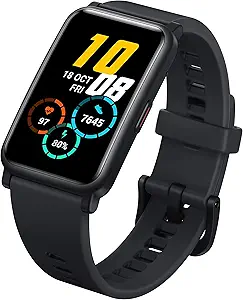
Honor vs Xiaomi: Overview & Brand Philosophy
The smartwatch market has witnessed immense disruption from Chinese technology powerhouses that challenge traditional luxury and premium tech brands by delivering high-end specifications at accessible price points. Among the forefront of this movement are Honor and Xiaomi, two brands with divergent lineage but overlapping ambitions. Honor, having emerged from the shadow of its former parent company Huawei, brings a pedigree steeped in refined industrial design, sophisticated health algorithms, and an aspiration toward the premium lifestyle market. Honor's philosophy centers on bridging the gap between traditional horology and modern digital utility, prioritizing craftsmanship, aesthetics, and specialized fitness tracking.
Conversely, Xiaomi operates under a sweeping philosophy driven by ecosystem integration and aggressive disruption. Known worldwide for offering maximum feature density per dollar spent, Xiaomi views its smartwatches not merely as standalone luxury accessories, but as critical command centers for its sprawling AIoT (Artificial Intelligence of Things) ecosystem. From ultra-budget fitness bands to full-fledged Wear OS flagships, Xiaomi's approach is functional, expansive, and tech-centric. While Honor focuses on targeted, refined iterations of its product lines, Xiaomi deploys a broad matrix of devices designed to capture market share across every demographic tier.
Key Differences & Technological Comparison
When assessing the core technologies powering these wearables, the divide between Honor and Xiaomi becomes immediately apparent in operating systems, sensor arrays, and manufacturing materials.
In terms of display and industrial design, Honor consistently punches above its weight class. Many of its flagship wearables, such as the Honor Watch GS series, feature aerospace-grade materials, sapphire crystal glass faces, and high-nit AMOLED panels with subtle bezels. Xiaomi matches this display quality in brightness and touch responsiveness—particularly on its modern Watch S series—but frequently defaults to more utilitarian aluminum alloys and fluororubber straps in its mid-tier to keep production costs lean.
The software landscape highlights the most profound technological difference between the two manufacturers:
- Operating System & App Ecosystem: Xiaomi has increasingly embraced Google's Wear OS for its premium offerings (such as the Xiaomi Watch 2 series), granting users access to the Google Play Store, third-party apps, interactive notifications with full reply capabilities, and Google Wallet. In contrast, Honor relies heavily on proprietary RTOS (Real-Time Operating System) or MagicOS solutions. While this limits third-party app installations and interactive messaging, it eliminates software bloat.
- Battery Architecture: Because Honor avoids the power-draining overhead of a complex multi-tasking operating system, its watches regularly achieve between 10 to 14 days of battery life on a single charge under moderate-to-heavy usage. Xiaomi's Wear OS devices, while feature-rich, require charging every 48 to 65 hours, though Xiaomi's RTOS-based models (like the Xiaomi Watch S3 or Smart Band series) remain competitive with multi-week battery performance.
- Health and Biometrics: Honor leverages its inherited TruSeen-style sensor architecture, providing exceptionally reliable dynamic heart rate tracking, continuous SpO2 monitoring, and clinical-grade sleep phase analysis. Xiaomi utilizes multi-channel PPG sensors calibrated closely with its proprietary Mi Fitness suite, excelling in rapid metric aggregation, stress tracking, and broad multi-sport data points, though it occasionally exhibits minor variance during high-intensity interval training (HIIT).
Pros & Cons Comparison
Honor Smartwatches
- Pro: Exceptional battery longevity, routinely exceeding 10 to 14 days without sacrificing continuous biometric monitoring.
- Pro: Premium industrial design utilizing high-grade stainless steel, ceramic backs, and scratch-resistant glass.
- Pro: Mature, medically oriented sleep tracking and dynamic heart-rate algorithms.
- Con: Limited third-party application ecosystem due to proprietary RTOS limitations.
- Con: Restricted actionable notification features (e.g., canned responses only, no comprehensive keyboard inputs on iOS/Android).
Xiaomi Smartwatches
- Pro: High feature versatility, with top-tier models offering true Wear OS integration and broad app support.
- Pro: Unmatched value proposition across entry-level and mid-range price categories.
- Pro: Seamless integration into the broader Xiaomi Smart Home and Mi Fitness environment.
- Con: Shorter battery life on Wear OS-powered variants requiring frequent recharges.
- Con: Companion software (Mi Fitness) can experience sporadic cloud-sync delays across non-Xiaomi host smartphones.
Performance, Durability & Value Analysis
From an engineering standpoint, both manufacturers deliver robust construction capable of surviving standard 5ATM immersion and rigorous environmental exposure. Honor’s outdoor-focused lines—such as the GS Pro line—pass rigorous MIL-STD-810G durability testing, making them impervious to thermal shock, low pressure, and salt fog. This structural integrity ensures that an Honor smartwatch maintains its physical finish and water seals over multiple years of strenuous use. Xiaomi matches this resilience in its dedicated sports models, though its budget-tier lines feature polycarbonate frames that are more prone to micro-abrasions over sustained use.
When analyzing long-term value, your purchase decision hinges on software support versus physical longevity. Xiaomi delivers aggressive hardware-to-price ratios, offering advanced capabilities like dual-frequency GNSS and NFC payments at price points where competitors only provide basic accelerometers. However, Honor watches frequently exhibit superior battery degradation curves; because their charge cycles occur bi-weekly rather than every other day, the physical lithium-ion cells suffer far less stress over a typical three-to-four-year lifespan, ensuring sustained daily performance without rapid battery depletion.
Final Verdict: Which Brand Should You Choose?
The choice between Honor and Xiaomi ultimately comes down to whether you prioritize a self-contained, long-lasting wellness companion or a connected wrist computer integrated with digital services.
Choose Honor if: You value refined, traditional watch aesthetics, prioritize multi-week battery life, and require highly dependable biometric accuracy for sleep, heart rate, and endurance fitness. Honor is the superior choice for users who want their smartwatch to work quietly, reliably, and without the anxiety of daily charging cables.
Choose Xiaomi if: You want maximum utility, access to third-party apps, interactive communication, and integration with an expansive smart home ecosystem. If you are comfortable charging your device every couple of days in exchange for true Wear OS capabilities, or if you are looking for the absolute most cost-effective entry point into fitness tracking, Xiaomi remains the undisputed champion of value.
Battery Life
When evaluating battery architecture, both Honor and Xiaomi leverage dual-chipset designs and highly optimized lightweight operating systems to maximize endurance, yet they approach energy management with distinct engineering philosophies. Honor smartwatches, notably the Watch GS and Watch 4 series, utilize an efficient low-power co-processor alongside an application processor, driven by MagicOS. This setup is paired with high silicon-density battery cells that yield exceptional stamina in baseline tracking states. In typical usage scenarios—including continuous heart rate tracking, sleep monitoring, and standard notification forwarding—Honor devices reliably achieve between 10 to 14 days of uptime on a single charge. When active dual-frequency GNSS tracking is engaged for outdoor workouts, Honor's aggressive background thread management and dynamic refresh rate scaling effectively curb thermal-induced battery bleed, delivering sustained GPS operation that consistently outlasts expectations for mid-tier wearables.
Conversely, Xiaomi exhibits a broader variance in battery longevity due to its bifurcated product portfolio, which spans budget-oriented RTOS models and feature-heavy Wear OS flagships. Devices running Xiaomi's HyperOS, such as the Watch S3 series, rival or occasionally exceed Honor's endurance metrics, pushing up to 15 days of conventional use thanks to a low-overhead microkernel architecture. However, Xiaomi's flagship tiers—like the Xiaomi Watch 2 Pro, which utilizes Qualcomm’s Snapdragon W5+ Gen 1 platform running full Wear OS—trade extended battery life for rich app ecosystems and advanced multitasking. In these high-performance models, runtime drops precipitously to 48 to 65 hours. To offset this operational penalty, Xiaomi integrates superior fast-charging protocols, utilizing proprietary pogo-pin pucks that can deliver a full day’s power in roughly 10 minutes, outpacing Honor's standard-speed charging infrastructure.
From a consumer trade-off perspective, the technical divergence centers on functional consistency versus operational flexibility. Honor delivers a homogenous, set-it-and-forget-it endurance curve across its entire lineup, avoiding the stark battery drops associated with full-fledged smart operating systems; the sacrifice is a more rigid, closed software environment with limited third-party application autonomy. Xiaomi grants users a wider choice between ultralong battery life with its HyperOS devices and desktop-grade smart features with its Wear OS options, though the latter demands a frequent, disciplined charging schedule. Ultimately, Honor maintains a marginal edge in dependable, real-world endurance with constant health sensors active, while Xiaomi excels in versatile charging speeds and granular power-saving modes that permit users to aggressively throttle connectivity to stretch the final 10% of cell capacity.
Build Quality & Durability
When evaluating build quality and structural durability, Honor smartwatches lean into premium, aerospace-grade engineering designed to emulate classic, robust chronographs. Honor frequently incorporates materials such as titanium alloy bezels, sapphire crystal glass displays, and ceramic casebacks—particularly evident in their flagship Watch GS and Watch Pro lines. The structural integration in their rugged series (like the GS Pro) undergoes rigorous MIL-STD-810G thermal, shock, and corrosion resistance testing, offering superior protection against extreme outdoor environments. The tolerances around the bezel and the tactical tactile feedback of their physical buttons demonstrate meticulous machining, reducing ingress vectors for dirt and moisture, and typically yielding 5 ATM resistance ratings backed by exceptional torsional rigidity.
Conversely, Xiaomi prioritizes minimalist, modern industrial design paired with lightweight versatility, spanning a broader portfolio from ultra-budget wearables to refined flagships like the Xiaomi Watch S-series. Xiaomi heavily utilizes high-tensile 316L stainless steel and aviation-grade aluminum alloys, paired with fluororubber or composite leather straps. While their premium tier features scratch-resistant sapphire glass, Xiaomi's mass-market offerings often employ tempered Gorilla Glass or curved reinforced glass, which, while impact-resistant, exhibits higher susceptibility to micro-abrasions over time compared to Honor’s standard sapphire implementations. Xiaomi matches the standard 5 ATM water resistance, making both brands suitable for pool swimming, but Xiaomi’s physical casing designs prioritize a sleeker, lower-profile wrist presence over heavy-duty physical armor.
The practical trade-offs between the two ecosystems center on intended use-cases versus daily comfort. Honor represents the superior engineering choice for consumers operating in harsh outdoor conditions or those seeking resilient, luxury-adjacent timepieces that withstand direct impacts, albeit at the expense of added weight and bulk. Xiaomi, meanwhile, excels at delivering structurally sound, aesthetically versatile smartwatches with excellent finish uniformity that seamlessly transition into business-casual settings, though users operating in rugged, abrasive environments will experience faster cosmetic wear on Xiaomi's high-polish frames compared to Honor’s reinforced, matte-finished enclosures.
Health & Fitness Tracking
When evaluating the health and fitness tracking capabilities of Honor and Xiaomi smartwatches, consumers are essentially choosing between clinical algorithmic precision and broad, sensor-rich utility. Honor, heavily leveraging its legacy R&D roots, prioritizes physiological accuracy and actionable insights through its TruSeen sensor suites and TruSleep monitoring systems. Models like the Honor Watch GS and Watch 4 series utilize multi-channel photoplethysmography (PPG) arrays paired with advanced AI algorithms that excel in filtering out motion noise during high-intensity interval training. Their continuous heart rate and SpO2 metrics demonstrate remarkable consistency against medical-grade chest straps and pulse oximeters. Honor’s sleep architecture tracking is another standout, providing granular sleep stage delineation, rapid eye movement (REM) tracking, and respiratory rate monitoring that yields practical, non-gimmicky recovery scores for wellness-oriented users.
Conversely, Xiaomi adopts an aggressive, feature-dense approach driven by its expansive ecosystem and iterative hardware design. Flagship wearables such as the Xiaomi Watch S series and the high-end Mi Watch lineups incorporate robust multi-system GNSS (featuring dual-band L1+L5 positioning) that generally outperforms Honor in outdoor route mapping and satellite acquisition speeds. Xiaomi also leans heavily on athletic-specific partnerships and licensing, frequently incorporating Firstbeat-derived algorithms to provide professional training metrics, including VO2 Max, training load, and complete recovery time estimates. Furthermore, Xiaomi often leads in integrating cutting-edge sensor hardware at competitive price tiers, such as bioelectrical impedance analysis (BIA) for body composition scanning and, in select models, integrated ECG or peripheral blood pressure estimation features.
The practical trade-offs center around software implementation, data fidelity, and ecosystem synergy. Honor's accompanying health app offers a polished, focused user interface that prioritizes reliable trend analysis and passive well-being monitoring, though it sometimes lags in third-party integrations, limiting seamless data exports to platforms like Strava. Xiaomi, through the Mi Fitness platform, provides a more versatile and customizable fitness dashboard that caters well to active endurance athletes, but it can suffer from algorithmic over-smoothing during rapid heart rate spikes and occasional data inconsistencies across software updates. Ultimately, buyers seeking refined, highly reliable baseline metrics with superior sleep intelligence will lean toward Honor, while users demanding comprehensive athletic telemetry, faster GPS locking, and bleeding-edge fitness sensors will find superior value in Xiaomi’s offerings.
Smart Features & Connectivity
When evaluating smart features and connectivity, Xiaomi and Honor adopt distinctly different engineering philosophies that cater to varying tiers of the wearable market. Xiaomi has achieved a more mature, interconnected ecosystem, particularly through its transition to HyperOS on its flagship wearables like the Xiaomi Watch S series. This software architecture delivers superior smart home integration, allowing users to control Mi Home appliances, access fluid third-party app stores, and leverage standalone GNSS chips alongside optional eSIM/LTE connectivity for phone-free communication. Honor, drawing heavily from its previous Huawei lineage via its MagicOS for solutions, prioritizes core communication reliability. Its technical strength lies in exceptionally stable Bluetooth 5.2/5.3 handshakes, low-latency audio transmission for crisp wrist-based Bluetooth calling, and deep integration with Honor smartphones for native calendar synchronization and notification handling, though it lacks an equivalent independent app ecosystem.
In practical daily usage, this engineering divide exposes noticeable functional trade-offs for consumers. Xiaomi excels as a genuine multi-functional extension of a smartphone, offering richer interaction models such as NFC payments across diverse regions, customizable quick replies, and advanced voice assistant integration with Amazon Alexa or its native system. Conversely, Honor limits its operational scope primarily to a display-and-relay dynamic; while notification push speeds are instantaneous and incoming call clarity is top-tier due to sophisticated noise-canceling dual-microphone arrays, interactive capabilities like typing out custom replies or installing dynamic standalone utilities are either heavily restricted or entirely absent outside of select Chinese market variants.
Ultimately, connectivity performance tilts in favor of Xiaomi for power users seeking independent functionality, robust companion app support (via Mi Fitness on both Android and iOS), and expansive smart feature modularity. Honor’s platform remains the better choice for minimalist consumers prioritizing zero-friction Bluetooth stability, lower standby power consumption, and reliable basic notification delivery over complex on-wrist computing. While Xiaomi pushes the envelope toward full-fledged smartwatch capability at competitive price points, Honor deliberately restricts smart functionality to preserve the streamlined, reliable performance characteristic of extended-life wearables.