Fitbit vs Withings: Overview
Comparing Fitbit and Withings helps you determine which brand is best suited for your needs in Smart Watch. Both brands offer strong choices depending on your budget and key feature requirements.
Key Features & Comparison
Evaluate factors such as build quality, warranty, customer satisfaction, and total value before making your final purchase choice between Fitbit and Withings.
Battery Life
When examining battery endurance, Withings holds a decisive architectural advantage over Fitbit, fundamentally stemming from its hybrid design philosophy. By utilizing mechanical hands combined with low-power monochrome sub-displays, flagships like the Withings ScanWatch 2 require minimal continuous power, reliably achieving between 25 and 30 days of standard operation on a single charge. Even when users activate specialized continuous monitoring or intensive nocturnal respiratory tracking, power draw remains exceptionally low, supplemented by a secondary reserve mode that keeps basic analog time ticking for up to an additional 20 days. This architectural efficiency frees consumers from the persistent charging anxiety inherent to traditional consumer smartwatches.
Fitbit devices, such as the Sense 2, Versa 4, and Charge 6, offer commendable battery longevity compared to conventional full-screen wearables like the Apple Watch, typically delivering between 5 and 7 days per charge cycle. However, this relies on ambient display timeouts; enabling the always-on AMOLED display (AOD) or running continuous GPS tracking rapidly diminishes uptime down to 2 to 3 days, or roughly 5 to 10 hours under direct satellite navigation. Fitbit relies heavily on proprietary magnetic fast chargers, which can restore a full day of capacity in roughly 12 minutes, making daily management relatively painless. Nonetheless, for users who prioritize true "wear and forget" endurance, Withings outclasses Fitbit by an entire order of magnitude.
Build Quality & Durability
Withings approaches smartwatch engineering through the lens of traditional horology, resulting in an exceptionally refined, premium aesthetic. Devices like the ScanWatch 2 and ScanWatch Horizon incorporate high-grade surgical stainless steel cases (316L), anti-reflective sapphire crystal glass, and intricately machined dials with brass mechanical hands. The Horizon variant takes durability even further with a diving-style stainless steel rotating bezel and a remarkable 10 ATM (100 meters) water resistance rating, far outperforming mainstream fitness trackers. This material selection ensures superior resistance to everyday abrasions, screen shattering, and chemical degradation from chlorine or saltwater, making Withings devices indistinguishable from classic luxury timepieces.
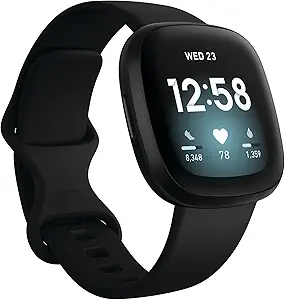
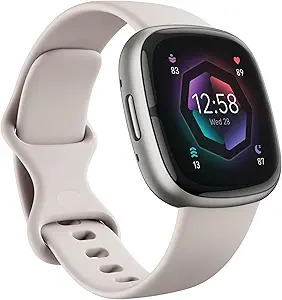
Fitbit constructs its hardware around modern sports-utility and ergonomics rather than classic horology. Flagship models such as the Sense 2 and Versa 4 utilize lightweight anodized aluminum housings paired with custom curved Corning Gorilla Glass 3. While this design minimizes wrist fatigue and maximizes comfort during sleep and high-intensity interval training, the aluminum remains susceptible to micro-dents and cosmetic scratching over extended use. Fitbit models uniformly carry a 5 ATM (50 meters) water resistance rating, which is fully sufficient for lap swimming and showering, but falls short of Withings' robust diving tolerances. For buyers seeking boardroom-ready durability and timeless heirloom materials, Withings clearly eclipses Fitbit's practical, fitness-centric industrial design.
Health & Fitness Tracking
Both brands deliver clinical-grade health diagnostics, but they emphasize entirely different physiological priorities. Withings positions itself as a preventive medical health platform, boasting medically certified multi-lead electrocardiogram (ECG) technology, SpO2 pulse oximetry, and baseline body temperature variation sensors engineered in partnership with clinical researchers. The Withings Health Mate ecosystem seamlessly consolidates data into actionable PDF clinical reports that can be directly shared with physicians. However, Withings treats high-intensity athletics as a secondary objective; while it tracks standard workouts and VO2 max, its metrics focus on broad metabolic health rather than micro-level athletic conditioning or granular split pacing.
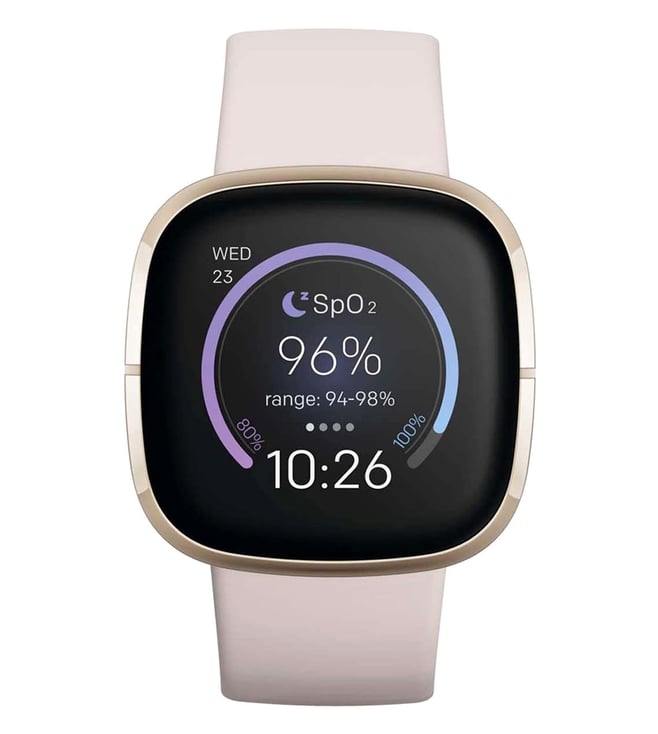
Fitbit excels as an all-encompassing lifestyle fitness companion and behavioral motivator. Powered by Google's health algorithms, devices like the Charge 6 and Sense 2 feature continuous heart rate tracking, an electrodermal activity (cEDA) sensor for real-time stress detection, and a superior sleep architecture engine that scores sleep stages with market-leading accuracy. Additionally, Fitbit offers a vastly superior workout ecosystem with dedicated sport profiles, integrated continuous GPS on select models, and Active Zone Minutes. The trade-off is that Fitbit gates its most detailed trend data, readiness scores, and deep sleep profiles behind a paid Fitbit Premium subscription, whereas Withings provides nearly all core clinical health metrics free of recurring paywalls.
Smart Features & Connectivity
In the realm of smart functionality, Fitbit leverages its integration into the Google software ecosystem to provide a vastly more interactive experience. Recent Fitbit watches run a modern touch-driven operating system capable of displaying rich app notifications, handling rapid text replies (on Android), and interfacing directly with Google Maps turn-by-turn navigation and Google Wallet for seamless contactless payments. Devices like the Versa 4 and Sense 2 also house integrated microphones and speakers, enabling wrist-based Bluetooth voice calls and access to voice assistants. For consumers seeking a functional digital bridge between their wrist and their smartphone, Fitbit delivers an intuitive, full-featured modern smartwatch interface.
Withings deliberately minimizes smart connectivity to prioritize tranquility and battery preservation. The embedded PMOLED or OLED sub-display shows basic phone notifications, caller ID, and calendar alerts via simple scrolling text, but lacks touch interaction, native keyboards, or interactive reply mechanics. There is no support for third-party application stores, onboard audio playback, voice assistance, or NFC mobile payments on most models. While Withings reliably synchronizes data in the background via Bluetooth Low Energy to iOS and Android, its smart connectivity serves merely as an unobtrusive notification alert system rather than an interactive productivity tool. Users who need on-wrist productivity will find Withings overly spartan compared to Fitbit's connected software suite.