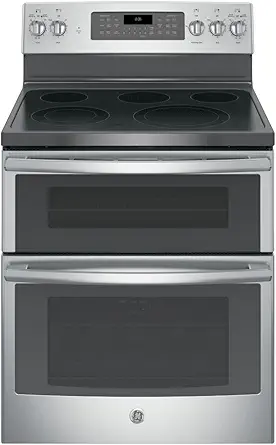
Samsung vs GE: Overview
Comparing Samsung and GE helps you determine which brand is best suited for your needs in Ranges. Both brands offer strong choices depending on your budget and key feature requirements.
Key Features & Comparison
Evaluate factors such as build quality, warranty, customer satisfaction, and total value before making your final purchase choice between Samsung and GE.
Features
Samsung consistently leads the mass-market appliance tier in feature density and smart integration, often introducing flagship innovations into mid-tier models before competitors. Highlights include their Flex Duo technology, which employs a removable ceramic divider to transform a single high-capacity oven into two independently controlled cooking zones with distinct convection fans. Furthermore, Samsung ranges heavily feature integrated Air Fry modes, ambient illuminated LED burner knobs, built-in Wi-Fi across almost all price bands, and intuitive touchscreen control panels that allow deep recipe programming and remote monitoring that genuinely caters to connected households.
GE counters Samsung’s digital prowess with utility-driven culinary features engineered through decades of ergonomic refining. Signature GE technologies include heavy-duty, synchronized multi-ring burners capable of spanning griddle zones, true European convection systems (convection with a dedicated third heating element), and specialized Chef Connect functionality that automatically pairs range cooktops with over-the-range microwaves via Bluetooth. While GE’s higher trims feature sophisticated guided cooking through the SmartHQ platform, their basic feature set is rooted in tactile practicality—featuring edge-to-edge continuous cast-iron grates, steam-clean oven baselines, and no-preheat air frying, catering to intuitive workflow rather than smartphone reliance.
Performance
From a culinary performance standpoint, GE holds a distinct advantage in raw power, temperature consistency, and heating element responsiveness. In gas configurations, GE ranges frequently provide dual-flame stacked burners that achieve high-searing outputs reaching up to 21,000 BTU while seamlessly attenuating down to a true low-temperature 140-degree simmer. On the electric and induction side, GE's thermal management systems distribute heat evenly throughout the oven cavity, avoiding the hot spots and localized scorching that often plague entry-level appliances, resulting in superior baking uniformity and reliable browning across multi-rack setups.
Samsung delivers formidable cooking capability, particularly with their rapid-boil induction elements and dual-power gas burners, which compete admirably in high-heat output benchmarks. However, Samsung's thermal stability can exhibit greater internal temperature fluctuations during extended baking cycles, largely due to algorithmic calibration intended to minimize energy consumption. While their dual-convection platforms manage airflow effectively in standard cooking scenarios, heavy multi-tier baking can reveal slight discrepancies from front to back, placing Samsung just a half-step behind GE's time-tested thermodynamics and heavy-gauge burner components.
Design
In visual aesthetics and exterior styling, Samsung adopts an unmistakably sleek, minimalist architectural language. Their ranges emphasize seamless, modern European cabinetry integration, offering edge-to-edge glass cooktops, deeply recessed cooktop basins, and smudge-resistant stainless steel, black stainless, and custom Bespoke glass panels with customizable colorways. Samsung’s elimination of bulky analog controls on their slide-in models yields an ultra-clean, flush countertop profile that instantly modernizes any open-concept kitchen, making it the preferred aesthetic choice for design-led renovations.
GE’s design idiom is substantially more traditional and industrial, prioritizing tactile feedback, mechanical robustness, and commercial-inspired profiles. GE ranges employ heavy, weighted die-cast metal knobs, thick tubular pro-style handles, and prominently framed glass window assemblies that communicate commercial-grade utility. While less aggressively modern than Samsung’s Bespoke portfolio, GE's slide-in and freestanding designs are universally timeless, blending harmoniously into traditional, transitional, and farmhouse kitchen palettes without dating itself as electronic trends shift.