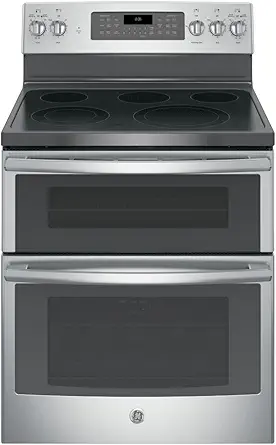
GE vs LG: Overview
Comparing GE and LG helps you determine which brand is best suited for your needs in Ranges. Both brands offer strong choices depending on your budget and key feature requirements.
Key Features & Comparison
Evaluate factors such as build quality, warranty, customer satisfaction, and total value before making your final purchase choice between GE and LG.
Features
In terms of feature sets, LG excels at integrating cutting-edge culinary trends directly into their primary product lines. Technologies such as Air Fry, Air Sous Vide, and ProBake Convection are standard across much of the catalog, appealing to adventurous home cooks seeking multi-functional versatility without cluttering countertops with small appliances. LG's ThinQ ecosystem is arguably the most mature smart platform in the appliance sector, offering proactive customer care diagnostics, remote monitoring, and preheat integrations with recipe platforms. The brand also innovates on the user interface with tactile features like the InstaView window, allowing users to knock twice on the glass to illuminate the interior without dropping the cavity temperature.
GE counters with deeply functional, chef-informed utilities, particularly within its GE Profile and Café sub-brands. GE's flagship cooking suites incorporate precision cooking probes, synchronized elements for griddles, and high-performance tri-ring burners that adapt from high-output boiling to delicate simmering. Through SmartHQ, GE matches modern connectivity expectations, providing over-the-air (OTA) updates that have historically added entirely new cooking modes to ovens post-purchase. While LG leans into lifestyle-oriented and experimental features, GE focuses heavily on functional precision, offering specialized features like true European convection with reverse-air circulation and heavy-duty, roller-glide oven racks designed to handle commercial-weight cookware.
Performance
Thermal performance reveals critical engineering differences between the two brands across gas, electric, and induction platforms. LG's signature engineering hallmark is its ProBake Convection system, which relocates the primary heating element from the bottom of the cavity to the rear wall, paired with a dual-speed fan. This mimics commercial convection ovens, resulting in exceptionally uniform heat distribution that virtually eliminates hot spots across multiple racks, though users must occasionally adjust to faster-than-average bake times. LG’s induction cooktops offer rapid boil metrics and high responsiveness, while their gas burners deliver competitive BTU outputs capable of aggressive searing.
GE's performance metrics are defined by stability, raw thermal power, and predictable repeatability. GE gas ranges frequently dominate boiling and high-heat benchmarks courtesy of their dual-flame stacked burners and massive power outputs (reaching up to 20,000+ BTUs on upper-tier models), while maintaining exceptionally low simmer thresholds without flame instability. In electric and induction, GE utilizes calibrated power management systems that maintain rock-steady simmering without cyclical surging. The baking cavities in GE ranges, powered by their advanced True European Convection with DirectAir, circulate air downward from the ceiling rather than just horizontally, producing consistently superior results for delicate pastries and heavy roasts.
Design
Aesthetically, LG embodies a clean, minimalist, and contemporary design language heavily influenced by modern architectural trends. Their ranges emphasize seamless integration, featuring ultra-smooth ceramic glass, edge-to-edge cooktop surfaces, and flush, integrated touch-control consoles. A signature design flourish is LG's vibrant, cobalt blue porcelain interior, which not only elevates the visual presentation when the oven door is opened but also enhances visibility and light reflectivity. LG's slide-in models are engineered with shallow depths and zero-clearance profiles, providing a high-end, custom built-in aesthetic without requiring extensive cabinetry modification.
GE emphasizes architectural heft, physical presence, and customizable luxury, especially as one ascends through its product tiers. While base GE models maintain practical, time-tested ergonomics, the GE Profile and Café portfolios showcase superior industrial design. Café models in particular lead the industry in personalization, offering matte white, matte black, and stainless steel finishes paired with interchangeable commercial-grade hardware in brushed bronze, copper, brass, and black. GE controls often favor substantial, die-cast metal knobs with weighted tactile feedback over full-touch panels, appealing to cooks who prefer tactile physical inputs to digital capacitive screens.