







ViewSonic vs YABER: Overview
Comparing ViewSonic and YABER helps you determine which brand is best suited for your needs in Projectors. Both brands offer strong choices depending on your budget and key feature requirements.
Key Features & Comparison
Evaluate factors such as build quality, warranty, customer satisfaction, and total value before making your final purchase choice between ViewSonic and YABER.
Product Selection
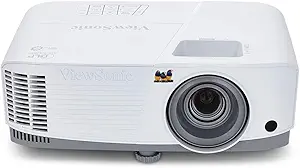
ViewSonic offers an exceptionally broad and technologically sophisticated catalog that caters to virtually every tier of the projection market, ranging from enterprise installations and educational classrooms to dedicated 4K home theaters and portable smart projectors. Their portfolio leverages established display technologies such as high-output lamp systems, advanced solid-state LED arrays, and phosphor lasers, spanning models that deliver anywhere from a few hundred lumens to over 6,000 ANSI lumens. Furthermore, ViewSonic develops specialized hardware including ultra-short throw (UST) laser projectors, high-refresh-rate gaming projectors with low input latency, and interactive touch-enabled models designed for collaborative corporate environments.
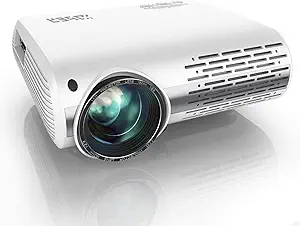
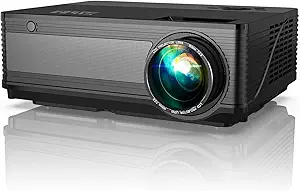
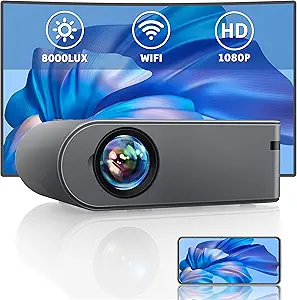
In contrast, YABER strategically focuses on the entry-level consumer and portable lifestyle projector segments, curating a catalog dominated by single-panel LCD projectors alongside a smaller selection of DLP smart units. While YABER has successfully diversified within its niche by offering battery-powered outdoor projectors, compact bedroom units, and lifestyle models with integrated streaming operating systems like Google TV, it lacks presence in commercial, high-lumen, or native professional-grade cinema spaces. Consumers seeking high-end specifications—such as true optical zoom, extensive physical lens shifting, or massive commercial lumen outputs—will find YABER's lineup limited compared to the comprehensive, enterprise-to-enthusiast scope provided by ViewSonic.
Affordability
Affordability represents YABER's primary competitive advantage, as the brand specializes in lowering the barrier of entry to big-screen entertainment through cost-effective engineering. By primarily utilizing single-panel LCD engines paired with commodity LED light sources, YABER produces projectors that retail for a fraction of the cost of traditional home theater hardware. Budget-conscious consumers, college students, and casual backyard movie enthusiasts can acquire a native 1080p YABER projector with modern smart features for roughly the price of an entry-level television, making it an exceptionally accessible option for users with strict financial limits.
ViewSonic operates across a much wider price spectrum, with its entry-level units typically priced higher than YABER's flagship consumer models due to the use of more expensive DLP chipsets, superior optical glass, and robust cooling architectures. While ViewSonic offers strong value within the prosumer and professional brackets—often undercutting legacy competitors like Epson or BenQ on a per-lumen or per-feature basis—it rarely attempts to compete in the sub-$200 bargain tier where YABER thrives. Consequently, while ViewSonic represents strong long-term value for performance-driven buyers, YABER is the undisputed victor for pure upfront cost savings and tight budget constraints.
Quality/Durability
ViewSonic maintains a significant edge in overall manufacturing standards, thermal management, and long-term durability. Built to withstand continuous operation in demanding environments like corporate boardrooms and higher education lecture halls, ViewSonic projectors incorporate heavy-duty industrial plastics, premium optical elements, and sealed optical engines that protect critical components against dust accumulation (often certified with IP5X ingress protection). Furthermore, their solid-state LED and laser engines are engineered to deliver up to 20,000 to 30,000 hours of consistent performance without the optical degradation or thermal stress commonly seen in cheaper units.
YABER has made commendable progress in build quality over recent generations, transitioning from rudimentary plastic enclosures to modern, aesthetically pleasing lifestyle designs that frequently incorporate sealed optical paths and quieter cooling systems. However, their reliance on single-panel LCD technology inherently introduces durability compromises, such as potential LCD panel burn-in or polariser degradation over extended daily usage at high brightness levels. While perfectly adequate for casual weekly viewing or intermittent outdoor use, YABER projectors generally feature lighter internal chassis components, basic internal heat sinks, and plastic lenses that do not match the rigorous operational lifespan of ViewSonic's engineered hardware.
Customer Support & Warranty
ViewSonic provides an enterprise-tier customer service and warranty framework that reflects its decades-long standing as an established global technology manufacturer. Most ViewSonic home cinema and business projectors come standard with a generous three-year limited warranty covering parts and labor, often accompanied by dedicated lamp coverage and expedited replacement services in key international markets. Customers benefit from localized telephone support networks, corporate IT ticketing systems, comprehensive online driver/firmware repositories, and readily available certified repair facilities, providing substantial peace of mind for both institutional buyers and consumers.
YABER handles customer service primarily through direct-to-consumer digital channels, relying on email ticketing, social media platforms, and e-commerce marketplace messaging systems. The company generally offers a standard one-year warranty, occasionally extendable through product registration, and has developed a positive reputation for swiftly replacing defective units rather than requiring prolonged physical repairs. However, YABER lacks the localized phone infrastructure, extensive authorized third-party service centers, and robust long-term firmware update ecosystem that ViewSonic maintains, making post-warranty repairs or complex technical troubleshooting significantly more challenging.
Picture Quality
Picture quality is an area where ViewSonic demonstrates superior optical performance, color science, and image processing. Leveraging Texas Instruments DLP technology alongside proprietary advancements like SuperColor, ViewSonic projectors produce deep contrast ratios, exceptional motion clarity, and broad color space coverage, including high compliance with Rec.709 and DCI-P3 standards. ViewSonic's high native ANSI lumen outputs ensure that images retain vibrancy, dynamic range, and accurate saturation even in rooms with moderate ambient lighting, while premium glass lenses guarantee edge-to-edge sharpness without distracting chromatic aberration.
YABER delivers commendable image quality for casual viewing environments, offering crisp 1080p native resolution and decent color fidelity in completely darkened rooms. However, the technical limitations of budget single-panel LCD technology mean that YABER models struggle with black levels, often rendering deep shadows as dark gray, and typically exhibit noticeable brightness roll-off toward the corners of the projected frame. While contemporary YABER units feature convenient auto-focus and auto-keystone software that aids quick alignment, their digital correction processes often introduce artifacts and reduce native pixel clarity, trailing the refined optical zoom, true 4K pixel-shifting, and advanced video processing found throughout ViewSonic's lineup.