







ViewSonic vs DBPOWER: Overview
Comparing ViewSonic and DBPOWER helps you determine which brand is best suited for your needs in Projectors. Both brands offer strong choices depending on your budget and key feature requirements.
Key Features & Comparison
Evaluate factors such as build quality, warranty, customer satisfaction, and total value before making your final purchase choice between ViewSonic and DBPOWER.
Product Selection
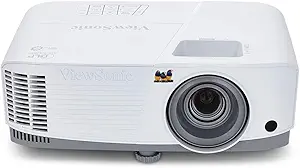
ViewSonic offers an extensive, enterprise-grade catalog that spans virtually every segment of the projection market, catering to corporate boardrooms, educational lecture halls, high-end home theaters, and portable lifestyle use. Their portfolio includes high-lumen commercial lamp projectors, solid-state laser installation models, 4K UHD home cinema units (such as the popular X and PX series), and ultra-portable LED projectors equipped with integrated Harman Kardon sound. This breadth allows consumers and AV integrators to select devices based on highly specific installation needs, throw ratios, lens shift capabilities, and ambient light tolerances.
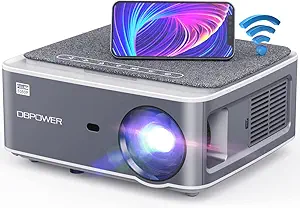
In stark contrast, DBPOWER operates primarily within the budget-conscious consumer niche, focusing almost exclusively on entry-level mini and portable LED projectors. Their product catalog consists of compact, lightweight units designed for casual backyard movie nights, dorm rooms, and spontaneous multimedia streaming. While DBPOWER does offer variations featuring modern convenience tech like integrated Wi-Fi screen mirroring, Bluetooth audio transmitters, and rudimentary keystone correction, their lineup lacks specialized hardware tiers such as ultra-short throw (UST) units, high-output laser engines, or high-refresh gaming projectors, significantly narrowing their appeal for demanding projection environments.
Affordability
When evaluated strictly on upfront hardware acquisition costs, DBPOWER dominates the affordability spectrum by providing ultra-budget projection solutions accessible to almost any consumer. Most DBPOWER models are aggressively priced well under the $200 mark, making them popular impulsive purchases or secondary entertainment displays for children and travelers. This low financial barrier to entry allows users to experiment with large-scale projection without committing to the multi-hundred or multi-thousand-dollar investments typical of legacy home theater equipment.
ViewSonic commands a notably higher price tag across the board, with baseline models typically starting around the price ceiling of DBPOWER's most advanced offerings and scaling upward into premium enthusiast territory. However, ViewSonic delivers a much higher long-term value proposition when evaluated through the lens of performance-per-dollar, total cost of ownership, and light engine efficiency. While buyers pay a clear premium for ViewSonic, that investment yields verified ANSI lumen ratings, precision optical assemblies, and superior energy efficiency, whereas ultra-low-cost alternatives like DBPOWER often trade optical fidelity and hardware longevity to meet razor-thin retail price targets.
Quality/Durability
ViewSonic demonstrates high-tier engineering standards characterized by robust chassis designs, advanced thermal management systems, and precision-engineered optics. Their projectors utilize either high-grade DLP chips paired with specialized color wheels or high-efficiency 3LCD/laser engines designed to endure thousands of hours of continuous duty in demanding enterprise or classroom settings. Sealed optical engines in their laser and LED lineups prevent dust ingress—the primary cause of projector degradation and optical spotting—ensuring consistent, artifact-free performance across the product's extended operational lifecycle.
DBPOWER builds their devices primarily with lightweight plastic housings and single-panel LCD projection architectures, which are inherently more susceptible to environmental and thermal wear. In these single-LCD configurations, the intense heat generated by the LED backlight can gradually cause optical degradation, LCD burn-in, or yellowing over sustained operational sessions if internal airflow is compromised. While DBPOWER units are perfectly adequate for intermittent, casual viewing, their overall mechanical tolerance, focus wheel rigidity, and long-term durability remain far behind the industrial-grade resilience engineered into ViewSonic hardware.
Customer Support & Warranty
ViewSonic establishes substantial consumer trust through a well-developed, enterprise-backed warranty framework that typically provides two- to three-year limited warranties on hardware, alongside dedicated support coverage for lamp or light engine components. In addition to long warranty durations, ViewSonic provides a dedicated domestic support infrastructure, express exchange programs for enterprise clients, and an exhaustive database of firmware updates, downloadable user manuals, and optical throw calculators. This professional support architecture gives buyers peace of mind, particularly for commercial or fixed ceiling-mount installations.
DBPOWER adheres to a direct-to-consumer e-commerce customer service model, relying primarily on platform-based messaging (such as Amazon support portals), online ticketing systems, and basic email correspondence. While DBPOWER generally offers responsive replacement or refund services within the initial 30- to 90-day return window and often provides a standard one-year warranty, long-term post-warranty repairs, out-of-warranty component sourcing, and technical firmware support are virtually non-existent. Consumers must weigh the disposable, easily replaceable nature of DBPOWER's support model against ViewSonic’s formalized, long-term technical accountability.
Picture Quality
ViewSonic delivers visually superior imagery characterized by calibrated color accuracy, high native contrast, and true high-definition to 4K UHD resolutions. Incorporating technologies like SuperColor and Cinema SuperColor+ with wide color gamut coverage (often exceeding 100% Rec.709), ViewSonic projectors reproduce movies and presentations with cinematic fidelity, smooth tonal gradients, and deep shadow detail. Moreover, ViewSonic provides certified, realistic ANSI lumen metrics, ensuring their units have the optical punch to cut through ambient light while maintaining sharp focus across the entire projected frame via precision glass lens elements.
DBPOWER provides acceptable picture quality for informal viewing, but its visual output reflects the fundamental technical limitations of budget single-LCD projection. While many DBPOWER models advertise '1080p Supported' or native Full HD, their optics frequently suffer from edge softening, chromatic aberration, and noticeable barrel distortion that requires careful positioning. Furthermore, their non-standard lumen claims (often reported in marketing terms like 'Lux' rather than standardized ANSI lumens) mask modest real-world light output, resulting in low contrast, muted color saturation, and washed-out visuals in anything other than pitch-black viewing conditions.