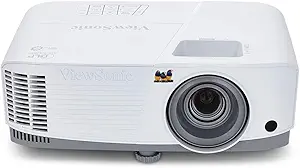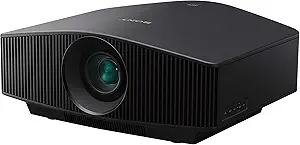





Sony vs ViewSonic: Overview & Brand Philosophy
In the display technology landscape, few rivalries highlight market divergence as clearly as Sony and ViewSonic. Sony operates at the pinnacle of high-end home cinema and professional projection, channeling decades of broadcast, cinema-grade camera, and display heritage into its units. The Japanese conglomerate treats projectors not merely as presentation tools, but as precision optical instruments engineered to reproduce director-intent cinematic imagery. Its philosophy prioritizes native resolution, uncompromised contrast, and proprietary processing power, catering to affluent cinephiles, custom AV integrators, and commercial digital cinema.
Conversely, ViewSonic built its reputation on democratization, visual utility, and computer display peripherals. Originating in the CRT and desktop monitor space, the California-headquartered brand approaches projection through the lens of versatility, accessible pricing, and cross-functional performance. ViewSonic's brand philosophy centers on delivering high lumens-per-dollar, flexible form factors, and solid color accuracy across educational classrooms, enterprise boardrooms, casual living spaces, and budget-to-midrange home theaters. Rather than pursuing boutique perfection, ViewSonic focuses on market adaptability and technological accessibility.
This fundamental philosophical difference establishes clear consumer boundaries. While Sony dedicates the majority of its research and development toward heavy, high-cost, native 4K laser engines designed for dedicated light-controlled environments, ViewSonic champions agile solid-state illumination (LED and laser), ultra-short-throw options, and portable lifestyle devices. Understanding each brand's operational DNA is the first step in determining which manufacturer aligns with your visual demands and installation infrastructure.
Key Differences & Technological Comparison
The technological divide between Sony and ViewSonic is rooted in imaging engine architecture: Sony's proprietary SXRD (Silicon X-tal Reflective Display) versus ViewSonic's reliance on Texas Instruments' DLP (Digital Light Processing) technology.
Sony's SXRD panels are liquid crystal on silicon (LCoS) variations that deliver true native 4K (4096x2160 or 3840x2160) resolutions without pixel shifting. Because SXRD blocks light on an analog plane rather than using pivoting micro-mirrors, Sony projectors achieve exceptional native black levels, deep intra-scene contrast ratios, and complete elimination of the DLP "rainbow effect" (color-breakup artifacts). Furthermore, Sony incorporates its proprietary "X1 for Projector" and "Cognitive Processor XR" image engines, which execute real-time frame-by-frame HDR tone mapping, reality creation upscaling, and digital focus optimization that set the industry benchmark for video processing.
ViewSonic relies on single-chip DLP technology, which utilizes millions of microscopic mirrors toggling at high speeds. In its 4K offerings, ViewSonic typically deploys XPR (Expanded Pixel Resolution) pixel-shifting technology, rapidly moving a native 1080p or 0.47-inch DMD chip diagonally to project an eight-million-pixel image onto the screen. While this method yields tack-sharp edge-to-edge convergence and avoids the alignment errors possible with three-chip designs, it cannot match Sony's deep native contrast or shadow detail. However, ViewSonic excels in light transmission efficiency, dynamic color via its Cinema SuperColor+ technology, and incredibly low input lag for competitive gaming, frequently reaching 4.2ms at 240Hz on select models—a metric where traditional high-end cinema projectors lag behind.
Build quality and optical hardware also separate the two brands. Sony projectors are large, reference-grade chassis fitted with multi-element motorized glass lens assemblies capable of expansive lens shift, powered zoom, and lens memory for varying aspect ratios (like 2.35:1 Cinemascope). ViewSonic focuses on compact, lightweight form factors often utilizing hybrid plastic-glass lenses, manual zoom dials, and limited vertical-only lens shift or automated keystone correction, designed for fast tabletop setup, ceiling mounting, or on-the-go media consumption.
Pros & Cons Comparison
Sony Projectors
- Pros:
- Industry-leading native 4K SXRD panels with zero pixel-shifting artifacts.
- Class-leading native contrast, deep black levels, and shadow detail fidelity.
- Advanced real-time HDR processing and dynamic tone mapping via custom XR silicon.
- Premium, fully motorized glass optics with extensive horizontal and vertical lens shift.
- Whisper-quiet thermal architecture engineered for low-noise cinema environments.
- Cons:
- Exorbitant entry-level price point (units routinely start in the multi-thousand dollar range).
- Large, heavy physical footprint requires dedicated mounting hardware and spatial planning.
- Lack of integrated smart streaming platforms or high-output onboard speakers.
ViewSonic Projectors
- Pros:
- Exceptional value proposition offering high lumen output and 4K capability at budget-friendly price points.
- Extensive product variety, including high-brightness office, ultra-short throw, portable LED, and dedicated gaming models.
- DLP optics provide sharp image convergence without panel degradation or alignment drift over time.
- Ultra-low input latency options specifically optimized for console and PC gaming.
- Solid-state (LED/Laser) light engines providing instant on/off and up to 30,000 hours of low-maintenance operation.
- Cons:
- Single-chip DLP architecture is susceptible to rainbow artifacts for motion-sensitive viewers.
- Significantly lower native contrast ratios resulting in elevated black levels (grayish blacks in dark rooms).
- Limited optical zoom ranges and minimal/non-existent physical lens shift require precise placement.
Performance, Durability & Value Analysis
From an absolute visual performance metric, Sony operates in an entirely different tier than ViewSonic. In a dedicated, light-controlled theater room, a Sony laser projector delivers depth, dimensional shading, and cinematic plasticity that low-to-midrange DLP units simply cannot reproduce. Sony's superior lens quality ensures sharp corner-to-corner focus without chromatic aberration, and its optical coatings effectively minimize light scatter. However, this high performance commands a steep premium. In terms of mechanical durability, Sony's laser phosphor mechanisms are rated for roughly 20,000 hours of maintenance-free use, though repair costs out of warranty for optical blocks and mainboards can be substantial due to the bespoke nature of the components.
From a cost-per-lumen and utility perspective, ViewSonic leads the value equation. While its black floor cannot compete with Sony in dark rooms, a ViewSonic 3,500+ lumen projector can effortlessly battle ambient light in living rooms, meeting spaces, or backyards—scenarios where an expensive Sony would be wasted. Durability across ViewSonic's DLP lineup is structurally high, as Texas Instruments DMD chips are resilient against heat degradation, and modern lamp-free (LED/laser) ViewSonic units routinely hit 20,000 to 30,000-hour operational lifespans with virtually zero upkeep. For users needing a versatile screen replacement rather than a custom reference theater, ViewSonic delivers superior return on investment per dollar spent.
Final Verdict: Which Brand Should You Choose?
Your choice between Sony and ViewSonic hinges almost entirely on your room environment, installation budget, and primary use case.
Choose Sony if: You are constructing a dedicated home theater or media room with total ambient light control, paired with a high-end projection screen. If your goal is pristine, cinematic movie watching with true native 4K resolution, reference-grade black levels, perfect color rendition, and advanced anamorphic aspect ratio handling, Sony's SXRD projectors are worth the steep investment. It is the connoisseur's choice where image quality supersedes cost constraints.
Choose ViewSonic if: You are shopping on a realistic budget, need an all-around multi-purpose display, or plan to project in rooms with uncontrolled ambient light. ViewSonic is the ideal choice for family living rooms, console and PC gaming setups requiring rapid refresh rates, portable backyard movie nights, or professional office presentations. If your budget is sub-$2,000 and you demand low-maintenance solid-state performance, ViewSonic is the sensible, feature-rich brand to select.
Product Selection
Sony and ViewSonic adopt fundamentally opposing philosophies regarding their projector product selections, catering to starkly different tiers of the consumer and commercial display markets. Sony executes a hyper-focused, prestige-oriented strategy, largely abandoning the entry-level and mid-range consumer spaces to dominate the native 4K, ultra-premium home cinema and specialized professional installation segments. Its catalog is populated primarily by flagship laser projectors—such as the acclaimed Bravia Projector and SXRD (Silicon X-tal Reflective Display) lines—alongside heavy-duty venue hardware. This razor-sharp focus allows Sony to push the envelope in engineering quality, integrating proprietary X1 and XR processing chips that deliver peerless contrast ratios, exceptional color volume, and industry-standard HDR tone mapping. However, this narrow product spectrum represents a massive barrier to entry; buyers looking for sub-$5,000 solutions, portable form factors, or budget classroom workhorses will find zero options within Sony’s contemporary lineup.
Conversely, ViewSonic champions broad-spectrum versatility, boasting one of the most exhaustive and democratized product portfolios in the entire projection industry. Their catalog systematically addresses nearly every conceivable consumer and commercial niche, spanning ultra-portable battery-powered smart projectors (the M-series), sub-4K and 4K budget gaming units (the PX and X series), ultra-short-throw home theater laser arrays, and rugged, high-lumen commercial installations. Rather than relying on expensive native liquid crystal matrices, ViewSonic heavily utilizes cost-effective, high-yield DLP (Digital Light Processing) technology paired with solid-state LED and laser phosphors. This manufacturing methodology allows them to provide modern feature sets—such as low input lag for competitive gaming, integrated Harman Kardon audio, built-in smart TV streaming interfaces, and USB-C connectivity—at exceptionally aggressive, accessible price tiers.
Ultimately, the choice between these two brands comes down to technical specialization versus portfolio agility. Sony’s product selection is technically uncompromised, engineered specifically for dedicated black-out home theaters and high-end commercial integrators who demand true native resolution and cinematic color science regardless of cost. In contrast, ViewSonic’s immense product catalog excels in practical utility, offering versatile, real-world solutions for everyday consumers, hybrid-work professionals, and educational institutions. While ViewSonic sacrifices absolute black-level performance and high-end processing fidelity compared to Sony, its sheer breadth of hardware ensures that almost any user can find a display tailored to their specific space, ambient light conditions, and budget.
Affordability
When evaluating affordability in the projector market, Sony and ViewSonic represent fundamentally polarized pricing strategies and target demographics. ViewSonic is widely recognized as a market leader in budget-to-midrange value, offering an accessible entry point for home entertainment, classroom, and office environments. Their product lineup frequently leverages cost-effective DLP (Digital Light Processing) or affordable LED and solid-state lamp-free technology, allowing consumers to secure native 1080p and pixel-shifting 4K resolutions well under the four-figure mark. Conversely, Sony operates almost exclusively within the premium and ultra-high-end tier, primarily utilizing proprietary SXRD (Silicon X-tal Reflective Display) three-chip technology and specialized laser light engines. A baseline native 4K Sony projector typically starts at several thousand dollars, positioning the brand not as an economical choice, but as an aspirational luxury investment for dedicated home cinemas.
The technical trade-offs corresponding to these price points are profound, directly affecting what consumers receive per dollar spent. ViewSonic optimizes value engineering by packing impressive feature sets—such as low input lag for gaming, high ANSI lumen counts for unconditioned ambient light, and built-in Harman Kardon audio—into compact, highly portable chassis. However, this aggressive cost reduction often comes at the expense of optical precision, resulting in noticeable chromatic aberration, elevated fan noise, and limited native contrast with elevated black levels. Sony, on the other hand, directs its exorbitant cost into uncompromising cinematic performance. Buyers are paying for class-leading motorized glass lens assemblies, industry-standard X1 video processing, expansive dynamic range, and near-perfect out-of-the-box color accuracy that budget platforms simply cannot replicate.
Ultimately, the concept of affordability between these two manufacturers hinges on the distinction between initial purchase price and long-term cost-to-performance ratio. ViewSonic delivers exceptional utility for consumers seeking modern connectivity, low upfront investment, and versatile, all-in-one functionality for casual viewing. Sony offers virtually no traditional "affordability," but for discerning audiophiles and custom-install AV purists, its projectors provide commensurate value through unrivaled image fidelity and professional-grade longevity that budget alternatives cannot simulate. For the average buyer, ViewSonic wins on sheer financial accessibility, whereas Sony remains strictly reserved for high-budget, dedicated projection spaces.
Quality/Durability
When evaluating engineering quality and long-term durability in the projector market, Sony and ViewSonic operate in distinct echelons defined by their manufacturing philosophies and intended use-cases. Sony is synonymous with ultra-premium, cinema-grade engineering, heavily utilizing bespoke SXRD (Silicon X-tal Reflective Display) panels and laser-phosphor engines enclosed in robust, acoustically optimized chassis. The physical build of a Sony projector reflects its high-end positioning: motorized, all-glass lens assemblies prevent the thermal drift and optical degradation common in cheaper composites, while advanced internal air-filtration and cooling pathways protect sensitive imaging chips from dust ingress and heat fatigue. In contrast, ViewSonic focuses on cost-effective, high-reliability commercial, educational, and consumer spaces, typically leveraging Texas Instruments' DLP (Digital Light Processing) technology. ViewSonic's industrial design favors ruggedized, lightweight plastics, but benefits mechanically from the inherent durability of DLP’s sealed optical engines and solid-state micromirror arrays, which are virtually immune to the color degradation and panel burn-in that can historically plague liquid crystal architectures over continuous, high-brightness operation.
The technical trade-offs regarding durability center on component longevity versus precision maintenance. ViewSonic’s modern lineup, especially its 3rd-generation LED and laser models, is engineered for low-maintenance longevity, often boasting 20,000 to 30,000 hours of maintenance-free operation and IP5X-rated dust resistance that excels in high-traffic, imperfect environments. However, ViewSonic's consumer-tier units occasionally cut corners on internal components, utilizing plastic lens barrels prone to minor focus shift as the unit warms, alongside louder, budget-grade cooling fans that have a higher failure rate over 5–7 years of heavy use. Sony, on the other hand, engineers for exacting performance stability; its high-capacity fans run at lower, quieter RPMs while dissipating heat effectively across large internal heatsinks, significantly prolonging the life of power supplies and processing boards. The vulnerability for Sony lies in complexity: sophisticated motorized lens shifts, dynamic irises, and liquid-cooled laser blocks introduce more points of potential mechanical failure, making post-warranty repairs notoriously expensive compared to ViewSonic’s modular and readily serviceable designs.
Ultimately, your choice in durability hinges on whether you define quality as archival, high-precision cinematic integrity or rugged, fit-and-forget operational endurance. ViewSonic delivers exceptional durability-per-dollar, providing bulletproof reliability against harsh thermal conditions, dust, and daily commercial use, making it ideal for classrooms, gaming spaces, and living rooms where cost-to-lifespan ratio is paramount. Sony represents the pinnacle of luxury hardware craftsmanship, designed to anchor permanent, climate-controlled home theaters for a decade or more. For users seeking absolute perfection in optical alignment, premium chassis materials, and sustained native 4K image fidelity without component degradation, Sony justifies its high price of admission, while ViewSonic remains the utilitarian victor for practical, low-maintenance longevity.
Customer Support & Warranty
Sony and ViewSonic adopt fundamentally different warranty frameworks that reflect their distinct target demographics and manufacturing philosophies. Sony, which primarily serves the ultra-premium home cinema and specialized commercial AV markets, pairs its native 4K SXRD projectors with a robust three-year limited warranty. For select flagship models and authorized custom integration channels, Sony frequently includes dedicated concierge support and an advanced exchange service, minimizing downtime for high-end home theaters. In contrast, ViewSonic excels in providing aggressive, consumer-friendly protection across its extensive lineup of DLP and LED portable, education, and lifestyle projectors. ViewSonic standardizes a comprehensive three-year limited warranty covering parts and labor, paired with a remarkably generous one-year warranty on traditional lamp components, or a full three years for their solid-state LED and laser light engines. ViewSonic also includes an industry-leading Express Exchange service within the first year of ownership across most consumer and business models, offering a tangible safety net that is exceptionally rare at mainstream, entry-level price points.
The technical support workflows and customer service experiences showcase an engineering and structural trade-off between bespoke service and broad-scale accessibility. Sony’s support ecosystem is optimized around certified custom installers and enterprise distributors, which ensures that complex technical escalations—such as optical block calibration, advanced dynamic tone mapping anomalies, or custom automation integration via Control4 and Crestron—are routed to highly trained engineers. However, consumer-level Sony owners occasionally experience bureaucratic friction when initiating repairs independently through standard consumer portals, often facing prolonged repair turnaround times at regional authorized service centers. ViewSonic provides a more direct, frictionless support model tailored to general consumers, remote workers, and IT administrators. Their web ticketing, phone routing, and self-help repository are direct and responsive, with firmware updates regularly distributed via OTA (over-the-air) or straightforward USB installations, accompanied by clear change-logs.
Ultimately, the choice between Sony and ViewSonic regarding support and warranty hinges on user expectations and deployment complexity. For elite cinema enthusiasts investing five figures into an installation, Sony's infrastructure guarantees access to highly specialized optical repair facilities capable of precision laser module maintenance and SXRD panel alignment, which justifies the brand's formal, procedural support pathway. ViewSonic, conversely, is the undisputed leader in practical, everyday reliability for budget-to-midrange investments; their fast-turnaround depot service, accessible advance-replacement programs, and superior standard light-source coverage reduce the total cost of ownership and make resolving hardware failures remarkably low-stress for everyday users.
Picture Quality
When evaluating picture quality, Sony and ViewSonic operate in fundamentally different echelons of optical engineering and display philosophy. Sony is universally regarded as a titan in the high-end home theater space, leveraging its proprietary native 4K SXRD (Silicon X-tal Reflective Display) three-chip panel technology. This architecture delivers cinematic perfection, characterized by near-infinite contrast ratios, deeply inky black levels, and an absence of the motion artifacts or color breakup commonly found in single-chip designs. Powered by their X1 or Cognitive Processor XR projection engines, Sony projectors excel at real-time frame-by-frame HDR tone mapping, digital focus optimization, and upscaling, rendering textures and gradients with exceptional fidelity. ViewSonic, by contrast, relies primarily on single-chip DLP (Digital Light Processing) technology paired with solid-state LED or laser light sources. While DLP ensures razor-sharp pixel definition and avoids panel convergence alignment issues over time, it fundamentally struggles to match the deep black levels and dynamic range of Sony’s SXRD panels, often yielding elevated, grayish letterbox bars in dark-room theater environments.
Color fidelity and processing represent another significant divergence in technical capability. ViewSonic’s strength lies in punchy, high-brightness output calibrated for versatility through proprietary features like Cinema SuperColor+ technology, which routinely covers 125% of the Rec.709 color gamut and pushes into wide DCI-P3 spaces. Their laser and hybrid models produce vivid, saturated images capable of piercing through high ambient light, making them ideal for living rooms, media rooms, and classrooms. However, single-chip DLP projectors can suffer from the "rainbow effect" (color-strobing artifacts visible to sensitive viewers) and often sacrifice color accuracy to push peak lumens. Sony’s high-precision laser-phosphor sources (Z-Phosphor) maintain uncompromising color volume even at elevated brightness levels, delivering studio-grade DCI-P3 and BT.2020 tracking straight out of the box with virtually zero color banding, natural skin tones, and subtle shadow gradation that ViewSonic simply cannot resolve.
Ultimately, the practical trade-off between the two brands centers on ambient light tolerance versus dark-room cinematic mastery. A ViewSonic projector provides remarkable value, aggressive sharpness, and high-lumen HDR performance for casual, mixed-use environments where total light control is impractical, but it lacks the micro-contrast, localized black-floor depth, and advanced video processing required for a dedicated cinephile experience. Sony justifies its substantially higher price tag by delivering the gold standard of image purity, class-leading lens optics without chromatic aberration, and a filmic, native 4K rendering that accurately translates the director’s intent in a controlled theater setting.