Sony vs DBPOWER: Overview & Brand Philosophy
The projector landscape represents one of the widest spectrums in consumer electronics, spanning from budget-friendly novelty gadgets to high-end cinematic engineering. At opposite poles of this spectrum sit Sony and DBPOWER, two brands catering to entirely different market tiers, expectations, and use cases. Understanding their core philosophies is essential to making an informed buying decision, as comparing them is less about direct feature parity and more about matching technology to distinct consumer priorities.
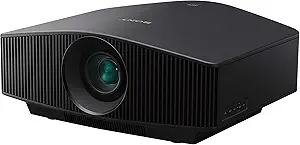
Sony is a titan of the audiovisual industry, boasting a legacy of optical innovation, cinema-grade imaging, and pioneering display technologies. In the projector space, Sony targets the premium home theater and commercial installation markets. Their philosophy revolves around absolute fidelity: delivering reference-grade color accuracy, deep native contrast, advanced motorized optics, and true native 4K resolution via proprietary silicon. Sony designs systems for dedicated, light-controlled spaces where image perfection, cinematic purism, and long-term performance justify substantial financial investments.
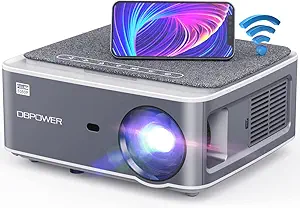
Conversely, DBPOWER operates firmly in the value-driven, direct-to-consumer segment. Originating as an e-commerce electronics brand, DBPOWER focuses on accessibility, utility, and ultra-low barriers to entry. Their philosophy centers on democratizing big-screen entertainment, offering compact, highly portable single-panel LCD projectors packed with practical modern conveniences like built-in Wi-Fi, Bluetooth, and screen-mirroring. Rather than engineering custom optical engines from the ground up, DBPOWER integrates cost-effective, off-the-shelf components to deliver functional, high-output projection for casual movie nights, dorm rooms, and backyard gatherings on a modest budget.
Key Differences & Technological Comparison
The technological divide between Sony and DBPOWER begins with the optical architecture. Sony exclusively deploys its proprietary SXRD (Silicon X-tal Reflective Display) technology in its modern home theater lineup. SXRD is an advanced liquid-crystal-on-silicon (LCoS) system utilizing three separate panels (Red, Green, Blue) paired with sophisticated laser light engines (Z-Phosphor). This configuration eliminates color wheel artifacts like the "rainbow effect" and delivers native 4K (4096 x 2160 or 3840 x 2160) resolution with exceptionally high native contrast and granular black levels. Furthermore, Sony integrates dedicated image processors, such as the "X1 for projector" or the "Cognitive Processor XR," which execute real-time frame-by-frame HDR tone mapping, digital focus optimization, and motion interpolation.
DBPOWER utilizes single-panel transmissive LCD technology paired with standard white LED lamp arrays. Light from a single LED passes through a compact LCD panel to project the image. While DBPOWER units frequently market "1080p Supported" or native 720p/1080p resolutions, the pixel fill factor is significantly lower than LCoS or 3-chip systems, leading to a more noticeable "screen-door" effect up close. Color reproduction on single-panel LCDs is typically tuned for brightness rather than chromatic accuracy, often resulting in oversaturated primaries and elevated, grayish black levels due to limited light-blocking capabilities within the budget optical block.
Optical flexibility and build quality also contrast sharply. Sony projectors are substantial, heavy chassis engineered with glass lens assemblies featuring extensive motorized vertical and horizontal lens shift, motorized zoom, and focus memory for multiple aspect ratios (e.g., 2.35:1 anamorphic screens). This allows lossless optical alignment without digital degradation. DBPOWER projectors rely predominantly on physical focus dials, minimal manual tilt adjustments, and digital keystone correction. While digital keystone aids quick setup, it achieves alignment by mathematically distorting and compressing pixels, which lowers overall image resolution and introduces digital artifacts along screen edges.
Pros & Cons Comparison
Sony Projectors
- Pros:
- Industry-standard SXRD (LCoS) panels offering true native 4K resolution and superior pixel density.
- Class-leading black levels, native contrast ratios, and dynamic tone mapping for authentic HDR10 and HLG playback.
- Advanced motorized optical assemblies with substantial horizontal and vertical lens shift.
- Long-lasting solid-state laser light sources delivering up to 20,000 hours of maintenance-free operation.
- Superior build quality, premium thermal management, and remarkably quiet acoustic output.
- Cons:
- Extremely high entry barrier, with prices ranging from several thousand to tens of thousands of dollars.
- Large, heavy chassis that require permanent ceiling mounts or dedicated equipment racks.
- Lack of built-in streaming platforms, requiring external media players and dedicated audio systems.
DBPOWER Projectors
- Pros:
- Highly affordable, making big-screen entertainment accessible for less than the cost of a budget television.
- Compact, lightweight designs that facilitate easy storage, transport, and temporary deployment.
- Integrated consumer-friendly connectivity, including Wi-Fi screen mirroring and bi-directional Bluetooth audio.
- Built-in speakers provide an all-in-one standalone entertainment unit out of the box.
- Simple, straightforward user interfaces suitable for non-technical users.
- Cons:
- Limited native contrast, resulting in washed-out dark scenes and elevated black levels.
- Reliance on digital keystone correction, which compromises edge-to-edge optical sharpness and resolution.
- Optical engines are susceptible to internal dust ingress over time, creating visible dark spots on screen.
- Higher fan noise relative to chassis size due to compact cooling solutions for the LED engine.
Performance, Durability & Value Analysis
When assessing long-term performance and durability, Sony operates under professional-grade manufacturing protocols. Their projectors utilize sealed optical blocks that prevent atmospheric dust, hair, and particulate matter from entering the light path, eliminating the common issue of burnt-on dust blobs. The liquid-cooled laser modules and oversized, slow-turning internal fans ensure internal components run well within safe thermal thresholds, preserving color uniformity over thousands of operating hours. From a pure capital expenditure standpoint, a Sony projector depreciates like an enthusiast component, but its durability and baseline performance remain stable over many years of rigorous daily use in optimized environments.
DBPOWER offers high value on an immediate, dollar-per-inch metric. For users seeking a 100-inch display for casual viewing, the initial return on investment is undeniable. However, durability expectations must be calibrated against the reality of entry-level components. Budget single-panel LCD units generally rely on open or semi-sealed optical pathways; over extended use, fine dust frequently bypasses internal filtration, settling onto the polarizing filters or LCD panel. Furthermore, thermal stress from continuous long sessions can cause thermal degradation on budget polarizing films, leading to image discoloration over time. While replacement costs are negligible compared to high-end hardware, long-term operational lifespan is correspondingly shorter.
Final Verdict: Which Brand Should You Choose?
Selecting between Sony and DBPOWER is a clear-cut decision dictated by budget, installation environment, and visual performance expectations.
Choose Sony if: You are constructing a dedicated home theater, media room, or professional screening environment where image quality cannot be compromised. If you require reference-grade 4K resolution, accurate cinematic color gamuts, deep black levels, and optical lens shift designed to integrate into complex home automation systems, Sony is the definitive, industry-standard choice.
Choose DBPOWER if: You want an affordable, plug-and-play solution for occasional entertainment. If your use cases include casual bedroom viewing, children's video gaming, portable backyard film screenings, or temporary setups where spending thousands of dollars is impractical, DBPOWER provides unmatched convenience, portability, and value for the price.
Product Selection
The contrast in product selection between Sony and DBPOWER highlights the vast divergence between high-end professional cinema engineering and budget-conscious consumer electronics. Sony curates a highly specialized, top-tier lineup predominantly anchored by its proprietary native 4K SXRD (Silicon X-tal Reflective Display) home theater and commercial laser projectors, alongside enterprise-grade high-lumen installation units. Rather than flooding the market with dozens of redundant iterations, Sony purposefully targets prosumers, audiophiles, and dedicated home theater architects. Their engineering prioritizes reference-grade color accuracy, motorized optical systems with extensive lens shift capabilities, and cutting-edge video processing powered by their "Cognitive Processor XR for Projector." Consequently, the trade-off with Sony’s portfolio is its sheer exclusivity; buyers looking for entry-level, highly portable, or sub-$1,000 entertainment options will find virtually nothing in Sony’s modern ecosystem, as its selection begins where most consumer budgets peak.
Conversely, DBPOWER approaches product selection through a high-turnover, accessibility-driven strategy that saturates the budget mini-projector and portable entertainment tier. Its catalog is populated by single-panel LCD projectors engineered specifically for casual outdoor movie nights, dormitory use, and starter media setups. DBPOWER differentiates its models through rapid integration of convenience features—such as built-in dual-band Wi-Fi, bidirectional Bluetooth, integrated basic stereo speakers, and native 720p to 1080p resolution with 4K decoding support—all positioned well below a standard entry-level price point. However, the engineering compromises across DBPOWER's product lineup are evident in their mechanical and optical limitations: lens systems are largely fixed with minimal digital keystone correction, thermal noise from compact cooling fans is pronounced, and their lumen ratings often reflect deceptive marketing specs rather than standardized ANSI or ISO luminance metrics.
Ultimately, the product selection trade-offs reflect two entirely distinct market objectives. Sony excels in depth of performance, longevity, and uncompromising visual fidelity, engineering a concise catalog of premium platforms where each tier is clearly delineated by lumen output, chassis ventilation design, and contrast capabilities. DBPOWER offers breadth within the extreme entry-level space, giving cost-conscious buyers dozens of lightweight, plug-and-play variants tailored for high utility and low capital risk. Consumers must decide whether their priority is a precision-engineered optical investment for permanent architectural installation (Sony) or a low-cost, expendable entertainment appliance prioritizing mobility and immediate convenience (DBPOWER).
Affordability
When evaluating affordability in the projector category, Sony and DBPOWER represent opposite ends of the pricing and engineering spectrum. DBPOWER firmly dominates the entry-level budget market, offering ultra-affordable, compact LCD projectors typically priced well under a few hundred dollars. This exceptional initial affordability democratizes big-screen entertainment, making projection accessible for casual backyard movie nights, dorm rooms, and spontaneous gaming. Conversely, Sony completely eschews the entry-level market, positioning itself as a premium manufacturer whose dedicated home theater units—driven by native 4K SXRD (Silicon X-tal Reflective Display) panels and laser phosphor light engines—routinely command prices extending into thousands, or even tens of thousands, of dollars. For the price of a single Sony lens assembly, a consumer could easily purchase several DBPOWER units, creating a profound gulf in baseline capital outlay.
The vast disparity in price directly reflects the fundamental engineering philosophies, component qualities, and feature sets of the two brands. DBPOWER achieves its disruptive cost-to-performance ratio through the use of single-panel LCD technology, simplified optical paths, and modest digital keystone processing. While these components deliver passable brightness and contrast for dimly lit environments, they involve substantial compromises in optical uniformity, color fidelity, and dynamic range. In stark contrast, Sony’s high-cost barrier to entry funds sophisticated optical engineering: precision multi-element glass lenses, motorized lens shifts, advanced HDR tone mapping powered by specialized cognitive processors, and high-lumen, long-life laser diodes. The technical strengths of Sony provide benchmark-level color accuracy, exceptional contrast, and true native 4K resolution, features fundamentally absent in the entry-level architecture employed by DBPOWER.
Ultimately, assessing affordability between these two brands comes down to the trade-off between upfront investment and the total cost of ownership weighed against performance expectations. For users seeking functional, casual media consumption without significant financial risk, DBPOWER offers unmatched economic practicality. However, these units feature limited repairability and shorter operational lifespans, essentially serving as consumable consumer electronics. Sony, while entirely unapproachable for budget-conscious buyers, delivers high-end durability, superior thermal management, and professional-grade support that amortizes its value over a decade or more of high-fidelity home cinema performance. Consequently, DBPOWER represents pure upfront affordability, whereas Sony offers investment-grade luxury where the return is measured in uncompromised audiovisual quality rather than low acquisition cost.
Quality/Durability
Sony occupies the apex tier of projector engineering, utilizing premium chassis construction, sealed optical engines, and commercial-grade cooling systems designed for sustained high-performance use. Their native 4K SXRD (Silicon X-tal Reflective Display) chips and precision-ground, motorized glass lenses are manufactured to rigorous industrial tolerances, preventing thermal drift and optical misalignment even during long viewing sessions. The implementation of high-efficiency laser light engines (Z-Phosphor) guarantees up to 20,000 hours of virtually maintenance-free operation with near-zero lumen degradation. Furthermore, Sony’s robust thermal management systems incorporate whisper-quiet intake and exhaust routing with specialized dust filtration, shielding sensitive internal components from environmental debris and thermal stress, which yields exceptional long-term reliability and an extended operational lifespan spanning a decade or more.
In stark contrast, DBPOWER targets the budget consumer segment, producing portable and entry-level LCD projectors that utilize plastic exterior bodies and single-panel LCD imaging tech paired with LED light sources. While these solid-state LEDs are rated for substantial lifespans (often advertised between 40,000 to 50,000 hours), the surrounding build quality and internal thermal architecture reflect heavy cost optimization. The optical assemblies frequently rely on acrylic lens elements and open or semi-sealed light paths, making them vulnerable to ambient dust infiltration that results in persistent internal blemishes or "burn-in" spots on the LCD panel over time. The cooling fans operate at higher acoustic levels to mitigate internal heat, and the mechanical components—such as manual focus dials and plastic keystone rings—lack the structural durability and tactile precision of Sony's motorized optics. Consequently, DBPOWER units provide accessible, short-term utility for casual viewing but lack the heavy-duty build quality, component longevity, and environmental resilience inherent to Sony's high-end home theater systems.
Customer Support & Warranty
When evaluating the projector landscape through the lens of post-purchase security and technical support, Sony and DBPOWER represent entirely divergent corporate philosophies. Sony, a legacy titan in the home theater and professional audiovisual space, engineers high-end native 4K SXRD laser projectors with institutional-grade reliability. This premium tier of hardware is backed by rigorous warranty frameworks, typically spanning three to five years depending on whether the unit falls under their consumer or professional AV divisions. Sony’s warranty provisions often include advanced replacement programs, localized repair hubs with genuine proprietary parts, and access to certified technicians adept at optical alignment and laser engine diagnostics. While their tiered enterprise support channels can sometimes involve bureaucratic navigation through complex service portals, the resolution quality remains gold-standard, protecting the user's substantial multi-thousand-dollar investment against critical optical or electronic failure.
Conversely, DBPOWER occupies the budget and portable entry-level segment, producing single-LCD, LED-lit projectors designed for casual media consumption. Consequently, their support infrastructure relies heavily on e-commerce logistics rather than dedicated technical servicing. DBPOWER generally offers a baseline one-year warranty, which can frequently be extended to two or three years via online product registration. Their support mechanism operates almost entirely through email or direct seller messaging on platforms like Amazon. Because these budget units lack modular or easily serviceable optical components, DBPOWER’s technical resolution path rarely involves component-level repairs; instead, their customer service strategy favors rapid, direct replacements or partial-to-full refunds when a device malfunctions. While their response times via digital channels are often fast and unencumbered by corporate red tape, users will find zero technical field support, no phone-based diagnostics, and little long-term availability for spare components like specialized cooling fans or internal power boards.
The practical trade-off between these brands underscores the disparity between professional longevity and disposable affordability. Buyers investing in a high-end Sony projector are paying not only for cutting-edge Silicon X-tal Reflective Display engineering but also for a global service network capable of maintaining a complex machine for nearly a decade. Conversely, a DBPOWER customer accepts a self-service paradigm where support is transactional and resolution equates to unit replacement rather than preservation. While DBPOWER’s frictionless refund policy may appeal to casual consumers seeking low-risk entertainment, high-performance cinema enthusiasts and institutional deployers require the accountability, comprehensive warranty clauses, and dedicated technical depth inherent to Sony's enterprise support ecosystem.
Picture Quality
When evaluating picture quality, Sony and DBPOWER represent opposite ends of the projector spectrum, driven by vastly different engineering philosophies and optical hardware. Sony dominates the premium home theater market through its proprietary native 4K SXRD (Silicon X-tal Reflective Display) microdisplay panels and advanced X1 processor. This engineering prowess yields pristine, cinema-grade imagery marked by true 3840 x 2160 native resolution, exceptional motorized lens precision, and dynamic tone mapping via algorithms like Object-based HDR Remaster. Conversely, DBPOWER operates in the budget lifestyle segment, primarily utilizing single-panel LCD technology with LED light sources. While modern DBPOWER units support 1080p native resolution (and 4K signal decoding), their optical sharpness is inherently limited by lower-grade plastic or hybrid glass lens arrays, which often introduce chromatic aberration and edge softness not found in Sony's high-grade multi-element optical assemblies.
The contrast, color fidelity, and dynamic range of both brands further define their target use-cases. Sony projectors excel in challenging home theater environments, leveraging high-grade laser light engines (Z-Phosphor) that deliver deep, inky blacks, ultra-high dynamic contrast ratios, and broad color gamuts that reliably cover up to 95% of the DCI-P3 space. In stark contrast, DBPOWER projectors rely on entry-level transmissive LCD setups where light leakage limits native contrast ratios to modest figures. While DBPOWER compensates by boosting saturation to make colors pop—yielding acceptable performance for casual backyard movie nights or brightly lit gaming sessions—they suffer from crushed shadow details and poor black uniformity. The practical trade-off boils down to purpose and budget: Sony demands a significant financial investment for reference-level color accuracy, motion clarity, and HDR rendering, whereas DBPOWER provides a cost-effective, plug-and-play viewing experience where absolute color fidelity and deep contrast are intentionally sacrificed for affordability.
Compare current retail pricing, active promotions, and verified stock availability directly from authorized stores: