Samsung vs YABER: Overview
Comparing Samsung and YABER helps you determine which brand is best suited for your needs in Projectors. Both brands offer strong choices depending on your budget and key feature requirements.
Key Features & Comparison
Evaluate factors such as build quality, warranty, customer satisfaction, and total value before making your final purchase choice between Samsung and YABER.
Product Selection
Samsung focuses on a curated, high-impact lineup tailored to modern lifestyle and premium home theater environments. Rather than flooding the market with dozens of minor variations, Samsung structures its projector portfolio around distinct consumer applications: ultra-short-throw (UST) living room centerpieces, such as The Premiere series, and ultra-portable lifestyle units like The Freestyle. These models are engineered with high levels of integration, incorporating ambient lighting modes, smart calibration, and built-in Tizen operating systems. While the sheer number of models is limited, each tier addresses a specific, high-demand segment with deeply engineered industrial designs, targeting users who want an aesthetic, all-in-one entertainment hub rather than just a standalone projection box.
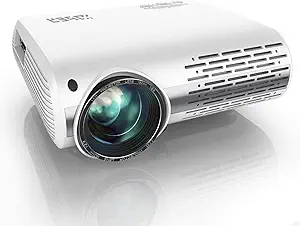
In contrast, YABER operates on an agile, broad catalog model typical of value-driven consumer electronics brands, offering a wide array of portable, outdoor, and entry-level home theater projectors. YABER’s product selection spans compact battery-powered mini projectors, mid-tier lifestyle units like the Ace and Pro series, up to higher-output LED and entry-level laser models. This expansive lineup allows buyers to choose projectors based on highly granular feature combinations—such as specific lumen thresholds, motorized focus, or auto-keystone capabilities—at narrow price intervals. However, YABER's catalog moves quickly with frequent product iterations, which can lead to rapid obsolescence of older models compared to Samsung's stable, multi-year product cycles.
Affordability
Affordability represents the most stark divergence between these two manufacturers, reflecting their opposing positions in the market hierarchy. Samsung occupies the premium and ultra-premium tiers, where entry-level portable units like The Freestyle command price tags that exceed the cost of most traditional flagship televisions. For their high-end ultra-short-throw models, consumers must be prepared to make a substantial financial investment comparable to custom architectural AV installations. Samsung's pricing model reflects the integration of proprietary silicon, advanced laser optical engines, and premium licensing costs, making them a significant capital expenditure rather than an impulse or casual purchase.
YABER, conversely, builds its entire market strategy on disruptive pricing and accessible home entertainment. The brand specializes in providing modern features—such as integrated streaming apps, Wi-Fi 6 connectivity, and auto-alignment sensors—at price points that represent a fraction of Samsung's entry cost. A consumer can acquire a high-brightness, feature-packed YABER projector for less than the cost of Samsung's basic mounting accessories or replacement parts. While this makes YABER exceptionally attractive for students, outdoor movie enthusiasts, and budget-conscious families, the trade-off is evident in the reliance on lower-cost single-panel LCD technology rather than the expensive DLP or laser arrays used in premium hardware.
Quality/Durability
From an engineering and build quality standpoint, Samsung applies the rigorous manufacturing standards associated with its top-tier television and appliance divisions. The chassis design, internal heat dissipation mechanics, and thermal management systems in Samsung projectors are built for longevity and continuous daily use. High-grade optical components, sealed light engines that prevent internal dust accumulation, and durable solid-state laser light sources ensure that models like The Premiere can operate for tens of thousands of hours without color drift or brightness degradation. The fit and finish feature premium textiles, soft-touch plastics, and precision-tooled mechanical parts that withstand environmental wear.
YABER has made significant strides in product durability, transitioning from basic budget plastic enclosures to more refined industrial aesthetics with improved cooling systems. Many of their latest offerings utilize sealed optical engines designed to combat the persistent issue of dust spots, which historically plagued budget LCD projectors. However, down-market cost optimization means YABER relies heavily on lightweight polycarbonates, internal cooling fans that may become louder over time, and optical lenses with higher rates of chromatic aberration along the edges. While perfectly resilient for weekend movie nights and casual indoor/outdoor use, YABER units generally lack the long-term thermal robustness and industrial resilience of Samsung’s hardware.
Customer Support & Warranty
Samsung leverages one of the world's most extensive customer support infrastructures, providing enterprise-grade post-purchase assurance. Consumers benefit from comprehensive multi-channel support including phone, live chat, dedicated mobile apps, and a worldwide network of authorized repair centers. Samsung’s standard manufacturer warranties provide clear terms and straightforward RMA processes, with the added benefit of in-home service availability for larger, premium units in many regions. Furthermore, Samsung consistently delivers over-the-air firmware updates and software maintenance over multi-year periods, maintaining security protocols and streaming application compatibility through the robust Tizen ecosystem.
YABER handles customer service primarily through direct digital channels, operating predominantly via e-mail ticketing, online customer portals, and direct messaging through major retail platforms. While YABER is often praised in user communities for being proactive, responsive, and quick to issue replacement units during the initial warranty window, the brand lacks physical service hubs or localized repair networks. Warranty fulfillment frequently involves shipping units back via courier or receiving a replacement rather than component-level servicing. Additionally, long-term software support and operating system updates can be less predictable, meaning users may eventually need to rely on external streaming sticks as onboard software ages.
Picture Quality
Samsung’s visual output is defined by cutting-edge optical engineering, industry-standard color science, and sophisticated onboard processing. Employing advanced single- and triple-laser projection technologies paired with Texas Instruments DLP chips, Samsung delivers exceptional dynamic contrast, true-to-life DCI-P3 and BT.2020 wide color gamuts, and precise HDR10+ tone mapping. Even in the compact Freestyle, Samsung's proprietary processors optimize sharpness, eliminate motion judder, and dynamically balance white levels. In their UST models, the razor-sharp 4K native resolution and sheer lumen power allow for cinematic, television-grade projection that remains vibrant even with moderate ambient light in the room.
YABER primarily relies on single-panel LCD projection architectures, augmented in select flagship models by high-output LED or entry-level laser sources. While YABER achieves impressive native 1080p resolution and can accept 4K input signals, the optical limitations of single-LCD systems result in lower native contrast ratios, elevated black levels that tend toward dark gray in pitch-black rooms, and potential brightness drop-offs toward the corners of the screen. YABER provides bright, punchy, and vibrant images that are more than adequate for casual streaming, gaming, and backyard screenings, but they lack the cinematic depth, color accuracy, and dynamic range critical for dedicated, high-end cinephile setups.