Optoma vs YABER: Overview
Comparing Optoma and YABER helps you determine which brand is best suited for your needs in Projectors. Both brands offer strong choices depending on your budget and key feature requirements.
Key Features & Comparison
Evaluate factors such as build quality, warranty, customer satisfaction, and total value before making your final purchase choice between Optoma and YABER.
Product Selection
Optoma boasts an expansive, industry-spanning catalog engineered to serve virtually every projection niche, from high-end commercial installations and educational lecture halls to dedicated, reference-grade home theaters and ultra-short-throw (UST) living room setups. Their portfolio covers a broad spectrum of projection technologies, utilizing single-chip DLP arrays driven by traditional metal halide lamps, hybrid LED configurations, and cutting-edge DuraCore laser light engines. Optoma's offerings feature models with native 1080p and pixel-shifting 4K UHD resolutions, alongside specialized commercial units capable of extreme brightness outputs up to 10,000+ ANSI lumens, motorized lens shifts, and interchangeable lenses for complex staging applications.
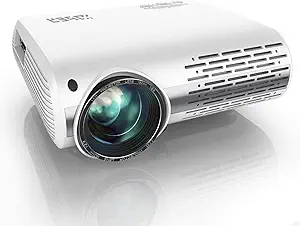
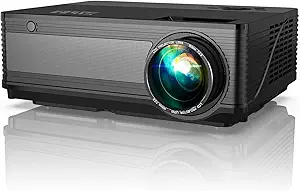
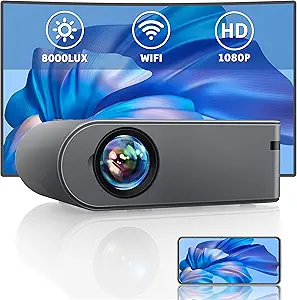
In stark contrast, YABER operates primarily within the consumer lifestyle, portable, and entry-level home entertainment segments. Their product lineup is overwhelmingly focused on compact, single-panel LCD projectors and a growing assortment of lifestyle LED and budget-tier laser units, such as their K-series and Pico-style portable projectors. While YABER has made impressive strides in integrating smart features—such as built-in Android TV operating systems, integrated JBL audio drivers, and automated keystone or autofocus capabilities—their catalog lacks the vertical breadth found with Optoma. Buyers looking for specialized formats like commercial-grade laser power, extreme throw flexibility, or ceiling-recessed installation hardware will find YABER's consumer-centric portfolio limited compared to Optoma's comprehensive commercial and residential portfolio.
Affordability
Affordability represents YABER's primary competitive advantage, as the brand has engineered its product ecosystem to deliver functional, high-brightness projection at price points that disrupt traditional home theater economics. By employing cost-effective single-panel LCD technology combined with efficient white LED illumination, YABER produces projectors that retail for a fraction of the cost of tier-one competitors, often falling between $150 and $600. These entry-level prices make big-screen projection accessible to casual viewers, students, and budget-conscious families who prioritize screen real estate per dollar spent over lab-grade color accuracy or high dynamic range tone mapping.
Optoma, while offering several competitively priced entry-level DLP models, operates in a higher pricing tier that reflects its advanced optical components and projection engines. A standard Optoma entry model typically begins where YABER's most premium offerings top out, with mid-range home cinema and gaming projectors running from $700 to $1,800, and flagship 4K laser or UST models reaching $3,000 or higher. For this premium, consumers receive precision glass optics, DLP DMD chips with superior micro-mirror switching speeds, and advanced processing boards, meaning the upfront cost is significantly steeper, presenting an investment in specialized display performance rather than raw budget economy.
Quality/Durability
Optoma establishes a benchmark for industrial reliability and long-term hardware durability through the use of robust optical modules and professional-grade manufacturing standards. Utilizing Texas Instruments DLP technology, Optoma projectors feature sealed optical engines that prevent dust accumulation on internal components, effectively eliminating the common issue of 'dust blobs' that can plague lower-end projection methods. Furthermore, Optoma's DuraCore laser line is IP5X or IP6X dust-resistant and rated for up to 30,000 hours of near-maintenance-free operation. Internal thermal management consists of precision heat pipes, heavy-duty heat sinks, and low-noise cooling arrays that extend the lifespan of internal circuits and micro-mirror arrays under rigorous thermal loads.
YABER designs products suited for intermittent lifestyle usage, though their construction inherently reflects the cost-cutting measures required for budget consumer tech. Most YABER units employ single LCD panels that are exposed to high thermal stress generated by bright LED light engines; over extended periods of continuous use, these panels can be prone to optical degradation, thermal burn-in, or yellowing if heat dissipation fails. While newer YABER models feature sealed optical engines to mitigate particulate ingress, the overall chassis materials, internal cooling fans, and non-glass optical elements skew heavily toward molded ABS plastics, which are less resilient over five to ten years compared to Optoma's commercial-tested structural engineering.
Customer Support & Warranty
Optoma delivers an established, enterprise-tier warranty and support infrastructure backed by decades of regional operations across North America, Europe, and Asia. Most consumer models carry a standard one- to two-year limited warranty, while higher-end commercial and laser units frequently include three- to five-year warranties with dedicated lamp/light source provisions and rapid advance-replacement options. Customers benefit from direct phone-based technical support, authorized service centers capable of component-level repairs, and readily available official replacement parts, ensuring that a hardware failure does not immediately render the unit obsolete or destined for a landfill.
YABER relies on a direct-to-consumer and marketplace-centric support framework, primarily operating through e-commerce channels, web-based ticketing systems, and email correspondence. While the brand has earned praise for offering responsive, customer-friendly service—frequently replacing defective units entirely rather than repairing them—their post-warranty infrastructure is relatively thin. The absence of a decentralized network of authorized physical repair centers makes out-of-warranty servicing difficult, and obtaining specific internal replacement parts like proprietary motherboards or polarizers is rarely feasible for the average end consumer once the baseline warranty period expires.
Picture Quality
When analyzing picture quality, Optoma holds a substantial technical lead driven by precision DLP technology, advanced image processing, and high-grade multi-element optical lenses. Optoma's native contrast, motion handling, and pixel response times are superior, making their displays ideal for high-frame-rate gaming (offering input lag as low as 4ms) and critical cinema viewing. Colors adhere closely to industry standards such as Rec.709 and DCI-P3 thanks to sophisticated color wheel algorithms or multi-laser engines. The resulting imagery is crisp across the entire screen plane, free of optical aberration, and capable of displaying nuanced shadow detail and HDR10/HLG tone mapping that accurately translates the director's intent.
YABER provides impressive image clarity relative to its price point, often delivering vibrant, punchy 1080p images that satisfy casual viewing environments such as backyard movie nights or dimly lit bedrooms. However, the optical limitations of single-panel LCD technology become readily apparent upon close inspection: corner-to-corner sharpness frequently softens, contrast ratios are inherently limited by LCD light bleed, and native black levels tend toward dark gray rather than true black. While newer YABER projectors support 4K input decoding and decent brightness, they struggle with deep color gradation, fast-action motion blur, and sophisticated dynamic tone mapping, ultimately delivering an enjoyable consumer display rather than a calibrated home cinema experience.