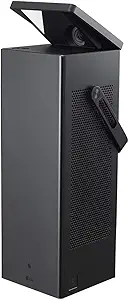
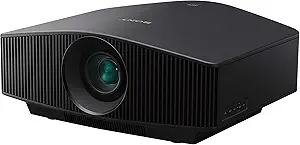
Sony vs LG: Overview & Brand Philosophy
The projector market presents a fascinating study in divergent product philosophies, best exemplified by the contrasting strategies of Sony and LG. Sony has long positioned itself at the absolute pinnacle of visual purism, treating projection not as a lifestyle convenience, but as a direct extension of professional cinema mastering. Drawing from its deeply entrenched ecosystem of professional CineAlta production cameras and theatrical post-production suites, Sony’s home theater projection division focuses almost exclusively on dedicated, light-controlled environments where native image fidelity, optics, and processing power reign supreme.
Conversely, LG approaches the projector category with the agile, consumer-centric innovation that turned the brand into a household name across consumer electronics. Recognizing that modern living spaces rarely accommodate traditional, dark-room projection booths, LG emphasizes versatility, form-factor disruption, and smart connectivity. Through its popular CineBeam portfolio, LG champions lifestyle accessibility—pioneering ultra-short-throw (UST) models, ultra-portable LED projectors, and laser engines seamlessly integrated with webOS, the same award-winning smart platform found in their industry-leading OLED televisions.
Ultimately, your choice between these two tech titans hinges on intent: Sony builds monumental, no-compromise visual instruments designed to faithfully execute a director's vision in custom screening rooms, while LG engineers dynamic, versatile display solutions engineered to transform ordinary modern living spaces into smart, high-impact entertainment hubs.
Key Differences & Technological Comparison
The most fundamental technical distinction between LG and Sony lies in their core imaging architecture. Sony relies on proprietary native 4K SXRD (Silicon X-tal Reflective Display) panels. Unlike conventional projection methods, SXRD delivers true 3840 x 2160 pixels on the chip itself without digital manipulation. When paired with Sony's bespoke X1 Ultimate or XR processors—adapted directly from their flagship Bravia displays—these projectors execute real-time frame-by-frame HDR tone mapping, precision upscaling, and digital focus optimization that consistently yields class-leading intra-scene contrast and deep, analog-like black levels.
LG, on the other hand, primarily employs Texas Instruments DLP (Digital Light Processing) technology across both standard throw and ultra-short-throw models. Most 4K LG projectors utilize XPR (Expanded Pixel Resolution) pixel-shifting technology alongside multi-channel laser or LED light sources. While purists might point out that pixel-shifting is not native 4K, LG’s optical implementation yields exceptional perceived sharpness, zero color-convergence errors, and impressive peak brightness, particularly in high-ambient-light environments. Furthermore, solid-state laser and LED engines give LG units instant-on/instant-off functionality and exceptionally wide color gamuts covering DCI-P3 and Rec. 2020 spaces without chromatic aberrations.
The operational experience also highlights stark philosophical differences. LG integrates its full-featured webOS platform, offering native access to top-tier streaming services (Netflix, Disney+, Prime Video), AirPlay 2, and voice control via the Magic Remote. A typical LG CineBeam projector is a complete, self-contained media ecosystem. Sony, by contrast, deliberately strips away internal smart platforms on most high-end chassis, assuming the end user will pair the unit with dedicated AV receivers, dedicated media players like the Apple TV 4K or Kaleidescape systems, and custom automation platforms like Control4 or Crestron.
Pros & Cons Comparison
Sony Projectors
- Pros:
- Native 4K SXRD panels provide breathtaking image density without pixel-shifting artifacts.
- Industry-benchmark video processing via the XR/X1 engine provides unmatched motion clarity and tone mapping.
- Superior optical assemblies featuring motorized lens shift, massive zoom ranges, and optical memory for anamorphic screens.
- Reference-grade black levels and micro-contrast, essential for dedicated, pitch-black home theaters.
- Cons:
- Substantially higher barrier to entry, with standard retail prices easily climbing into several thousands of dollars.
- Enormous, heavy physical footprint requiring reinforced ceiling mounting or custom installation.
- Lack of integrated smart streaming platforms or high-output onboard speakers.
LG Projectors
- Pros:
- Exceptional value proposition across a diverse range of Ultra Short Throw (UST) and portable form factors.
- Comprehensive webOS smart interface removes the need for outboard streaming devices.
- Maintenance-free solid-state LED and laser engines boasting lifespans up to 20,000–30,000 hours.
- Flexible deployment allows large-format projection directly against living room walls or ALR screens.
- Cons:
- Relies primarily on DLP pixel-shifting rather than native 4K micro-displays.
- Black levels and dynamic range struggle in fully darkened home theater environments compared to SXRD.
- Rainbow effect (color breakup artifacts) can occasionally be spotted by sensitive viewers on single-chip DLP units.
Performance, Durability & Value Analysis
From an endurance and lifecycle perspective, both manufacturers demonstrate exceptional engineering, yet their operational costs diverge significantly. LG's aggressive adoption of long-life laser and LED engines across virtually their entire catalog ensures up to 30,000 hours of maintenance-free performance. For typical consumers watching four hours of content daily, an LG projector will run reliably for upwards of two decades without color degradation or light source replacements. Sony has also transitioned its high-end SXRD line to laser phosphor engines (such as the Z-Phosphor system), similarly eliminating the fragility and dimming curves associated with legacy UHP mercury lamps. However, Sony’s intricate motorized optical systems, active ventilation assemblies, and complex thermal dynamics mean that professional calibration and occasional maintenance are prudent to protect your investment.
When measuring overall value, the calculation is strictly tethered to the deployment environment. LG runs away with the value crown for general consumers, urban apartment dwellers, and multifunctional living spaces. Offering massive screen sizes from inches away via their UST lineup—bundled with robust onboard audio and streaming apps—LG provides a turnkey big-screen experience for a fraction of the cost of dedicated projection systems. Conversely, Sony offers value through longevity of visual relevance. A native 4K Sony projector installed in a proper, light-sealed media room does not prematurely age; its optical precision, absolute contrast ratio, and filmic fidelity retain their benchmark status for many years, justifying its steep premium to audiophiles and dedicated cinephiles.
Final Verdict: Which Brand Should You Choose?
Your ultimate decision between LG and Sony boils down to physical space, aesthetic priorities, and ambient light conditions:
Choose Sony if: You are building a dedicated, light-controlled home cinema or basement media room and refuse to compromise on visual integrity. If you demand native 4K resolution, reference-grade black levels, perfect dynamic contrast, and optical lens memory for dedicated cinema-ratio screens, Sony remains the unrivaled gold standard for the authentic theater-at-home experience.
Choose LG if: You want a modern, versatile, and high-impact entertainment hub in an everyday living room, media room, or apartment. If your space features ambient light, or you prefer the space-saving convenience of an Ultra-Short-Throw projector that sits directly below an Ambient Light Rejecting (ALR) screen, LG's CineBeam series delivers vibrant colors, low maintenance, and an intuitive all-in-one smart interface at a far more accessible price point.
Product Selection
When evaluating product selection in the projector category, Sony and LG represent fundamentally divergent catalog philosophies, with Sony strictly anchoring its identity in the ultra-premium home cinema and professional installation tier, while LG adopts a wide-aperture, lifestyle-to-performance portfolio. Sony deliberately limits its consumer line to native 4K SXRD (Silicon X-tal Reflective Display) laser projectors, historically exemplified by the VPL series and modern Bravia Projector lines. This hyper-focused catalog excludes budget-conscious buyers, portable form factors, and ultra-short-throw (UST) living room models. Instead, Sony’s selection targets dedicated theater rooms, engineering every SKU with cinema-grade motorized optics, class-leading dynamic contrast, and bespoke processing silicon (such as the XR Processor for Projector). As a consequence, Sony’s portfolio offers immense technical depth for cinephiles but virtually zero breadth for casual users or multi-purpose spaces.
Conversely, LG’s CineBeam ecosystem presents one of the most versatile and commercially accessible product selections in the modern projection market. LG spans multiple engineering topologies, encompassing DLP-based ultra-portable smart projectors (such as the lifestyle CineBeam Q), mid-range traditional long-throw units, and advanced multi-laser ultra-short-throw consoles engineered for ambient light rejection in bright living rooms. By offering diverse illumination sources—ranging from energy-efficient RGB LEDs to high-output dual and triple lasers—LG democratizes 4K projection across a vast pricing spectrum. Additionally, LG heavily integrates consumer-friendly feature sets into its lineup, notably its proprietary webOS smart TV platform, robust wireless connectivity, and auto-calibration features, which are broadly absent or minimized in Sony’s purist, automation-reliant hardware.
The practical trade-offs regarding product selection ultimately hinge on the installation environment and use case. Sony’s curated, high-barrier-to-entry catalog ensures that any chosen model delivers uncompromised motion handling, native panel contrast, and optical precision, mitigating the risk of performance compromises common in lower-tier hardware. However, this narrow focus completely alienates users seeking ambient-light living room solutions or nomadic entertainment. LG fills this void comprehensively, offering a flexible catalog where consumers can choose the exact intersection of throw ratio, form factor, luminance, and price. While LG's reliance on pixel-shifting DLP technology across much of its lineup cannot match the native contrast or absolute black levels of Sony's SXRD panels, LG vastly outmatches Sony in catalog versatility, lifestyle integration, and overall market reach.
Affordability
When evaluating affordability in the projector market, Sony and LG represent fundamentally different market philosophies, with LG emerging as the undisputed champion of accessible, value-driven projection. LG’s lineup is engineered to dominate the entry-level to mid-tier consumer segments, relying on compact DLP (Digital Light Processing) and solid-state LED or laser light engines. By leveraging the scale of its consumer electronics ecosystem, LG integrates high-value features—such as its acclaimed webOS smart platform, auto-calibration sensors, integrated stereo speakers, and built-in tuners—into models priced anywhere from a few hundred to a couple thousand dollars. This produces an exceptionally low total cost of ownership; buyers receive an all-in-one, plug-and-play multimedia hub without the mandatory hidden expenses of external streaming hardware or dedicated audio solutions. In contrast, Sony bypasses the budget market entirely, focusing exclusively on premium home cinema where entry-level models often start at price points higher than LG’s flagship offerings.
Sony’s engineering choices drive its prohibitive pricing, utilizing proprietary SXRD (Silicon X-tal Reflective Display) three-chip liquid crystal panels, motorized anamorphic-capable optics, and heavy-duty X1 processing chips derived from their broadcast-monitor divisions. While this architecture eliminates the color-wheel artifacts common in LG’s single-chip DLP units and delivers vastly superior native contrast and black levels, it fundamentally compromises financial accessibility. The sheer manufacturing cost of native 4K SXRD assemblies and high-grade multi-element glass lenses positions Sony as a luxury investment. Furthermore, Sony projectors are purpose-built for light-controlled, dedicated theater rooms and lack integrated operating systems or robust internal sound, requiring consumers to invest thousands more in third-party AV receivers, high-gain screens, and professional installation. Thus, Sony’s trade-off demands a massive premium for uncompromised cinematic fidelity, yielding a steep price-to-performance curve tailored strictly for high-end enthusiasts.
Ultimately, the practical trade-offs regarding affordability highlight a divergence between casual lifestyle utility and uncompromising videophile performance. LG delivers exceptional performance-per-dollar, democratizing features like 4K resolution, HDR tone mapping, and Ultra-Short Throw (UST) form factors for everyday living spaces at realistic consumer price points. While LG sacrifices absolute black-level performance and relies on pixel-shifting rather than native resolution to keep prices low, it offers an agile, feature-complete package that maximizes consumer budgets. Sony justifies its enterprise-tier pricing through longevity, unmatched native imaging, and reference-grade motion clarity, but it cannot compete in traditional affordability metrics. For budget-conscious shoppers and mainstream media consumers, LG is the pragmatic, value-maximizing choice, while Sony remains an aspirational luxury restricted to custom-built installations with expansive budgets.
Quality/Durability
When evaluating engineering quality and durability in the projector space, Sony and LG represent two fundamentally different philosophies: dedicated high-end home cinema craftsmanship versus versatile, modern lifestyle engineering. Sony builds with a heavy-duty, commercial-grade ethos, historically relying on proprietary native 4K SXRD (Silicon X-tal Reflective Display) panels and substantial, motorized multi-element glass lenses. This mechanical precision yields unmatched optical stability, zero chromatic aberration, and chassis designs optimized for thermal regulation. Sony’s high-mass chassis allow for large, low-RPM cooling fans that pull heat away from sensitive display components effectively, drastically reducing thermal degradation over time. By contrast, LG dominates the solid-state, lifestyle, and ultra-short-throw (UST) market utilizing DLP (Digital Light Processing) chips and advanced laser phosphor or triple-laser light engines. LG’s build quality leans heavily into compact, sleek consumer-tech aesthetics, deploying lightweight polycarbonate housings and high-efficiency solid-state thermal modules that make their units exceptionally resilient against physical shock and easier to integrate into living spaces without requiring a massive, dedicated ceiling mount.
In terms of longevity, maintenance cycles, and optical durability, each brand presents clear technical trade-offs. LG’s heavy adoption of laser diode and LED light engines gives them a distinct lifespan advantage in modern mid-tier and lifestyle models, consistently rating at 20,000 to 30,000 hours of operation with virtually zero lumen decay, minimal startup stress, and no requirement for lamp replacements. The single-chip DLP architecture that LG relies on is inherently hermetically sealed, making LG units virtually impervious to dust contamination (dust blobs) and panel misalignment. Conversely, Sony’s premium laser projectors (such as the XW series) match these 20,000-hour ratings, but legacy lamp-based units and older three-panel designs have historically required active maintenance, including periodic filter cleaning and lamp replacements every few thousand hours. Furthermore, while Sony’s high-precision glass optics maintain superior focal uniformity and depth of field that cheap optics cannot match, triple-panel SXRD systems inherently harbor a slight theoretical risk of optical block degradation or panel misalignment under extreme heat cycles, demanding that Sony projectors be installed in well-ventilated, climate-controlled environments.
Ultimately, the choice in quality and durability hinges on the intended operating environment and operational expectations. LG produces consumer-focused, low-maintenance workhorses that integrate smart-TV operating systems (webOS) and solid-state dependability, rendering them exceptionally durable for daily living-room TV replacement, gaming, and portable usage where duty cycles are frequent and ambient conditions are unpredictable. Sony, however, remains the gold standard for structural uncompromising theater builds. The sheer physical caliber of Sony’s all-glass lens assemblies, high-rigidity internal bracing, premium microchips (such as the ‘X1 for projector’ processor), and precision electronic alignment tools reflect a professional-grade benchmark built to perform consistently across a decade in a custom theater. For zero-maintenance, install-it-and-forget-it resilience against everyday household wear, LG is the more practical durability pick; for high-end optical permanence, mechanical perfection, and chassis-level thermal engineering, Sony represents the superior caliber of manufacturing.
Customer Support & Warranty
When evaluating post-purchase protection and customer care in the projector category, Sony and LG represent fundamentally different tiers of market engineering and service infrastructure. Sony caters primarily to the high-end home theater and custom integration (CI) sectors with its native 4K SXRD lineup, and its warranty structure reflects this premium positioning. Sony typically provides a robust three-year limited warranty across its premium laser projection models, accompanied by dedicated AV specialist support channels and white-glove replacement services, such as their "Fast Exchange" program for professional or high-tier residential installations. This approach heavily minimizes consumer downtime and protects the substantial financial investment associated with native 4K optical engines and sophisticated laser-phosphor assemblies. Technical support representatives from Sony generally possess deep domain knowledge, capable of troubleshooting complex signal routing, anamorphic lens scaling, and HDMI handshaking anomalies.
Conversely, LG operates as a dominant player in the consumer-lifestyle and smart ultra-short-throw (UST) categories with its CineBeam family, approaching customer service through a high-volume, centralized consumer electronics framework. LG typically offers a more standard one-year limited warranty covering parts and labor on the majority of its CineBeam models, although extended coverage is occasionally offered through specific commercial lines or promotional programs. Because LG's projectors feature integrated webOS platforms and comprehensive wireless functionality, first-line customer support is broadly adept at resolving smart-platform bugs, software update issues, and built-in streaming application errors. However, LG’s vast catalog across unrelated appliances can occasionally dilute technical expertise; escalating niche hardware issues—such as optical engine micro-mirror degradation, pixel alignment errors, or color-wheel anomalies on hybrid light engines—frequently requires navigating automated ticketing systems and centralized service centers, which can result in longer turnaround times compared to dedicated AV repair pipelines.
From a practical ownership perspective, the trade-off hinges on initial purchase intent versus risk management. Sony’s comprehensive multi-year coverage and specialized AV support network provide necessary peace of mind for permanent, complex installations where service access is difficult and downtime is costly. LG, on the other hand, delivers a more consumer-accessible support framework that excels in addressing user-facing software and consumer connectivity problems, but falls short in direct warranty length and component-level rapid exchange. For consumers integrating dedicated, high-capital projection spaces, Sony’s superior coverage duration and specialized infrastructure justify its premium, while LG remains suitable for casual or plug-and-play setups where a standardized, mass-market consumer warranty framework is acceptable.
Picture Quality
When evaluating picture quality between Sony and LG projectors, the contrast in their core display engineering defines their respective visual signatures. Sony stands at the absolute pinnacle of home theater performance, utilizing proprietary native 4K SXRD (Silicon X-tal Reflective Display) three-chip panels powered by advanced "X1 for Projector" or "Cognitive Processor XR" image processing engines. This architecture eliminates color-wheel artifacts entirely, delivering unmatched native contrast, inky black levels, and deep shadow detail that cinephiles demand for dedicated light-controlled rooms. LG, conversely, heavily leverages Texas Instruments’ DLP (Digital Light Processing) technology across both standard throw and ultra-short-throw (UST) CineBeam lines. While models like the CineBeam series achieve striking clarity using XPR pixel-shifting to reach 4K resolution, they inherently suffer from elevated black floors and lower native contrast ratios, resulting in dark scenes that can appear somewhat washed out compared to Sony’s liquid-crystal-on-silicon approach.
Where LG captures ground is in modern solid-state illumination, vibrant color volume, and everyday ambient-light usability. Many flagship LG projectors employ advanced three-channel laser (RGB) light engines, which easily cover 100% or more of the ultra-wide DCI-P3 and BT.2020 color spaces without the brightness-dimming filters that Sony sometimes requires. LG's dynamic tone mapping for HDR10 is exceptionally well-tuned for variable lighting environments, and their ultra-short-throw models paired with ambient light rejecting (ALR) screens offer punchy, hyper-sharp, and saturated images suitable for typical living rooms. Sony counters this with world-class motion resolution via Motionflow processing, zero chromatic aberration through high-grade motorized glass lenses, and a more faithful, film-like color grading out of the box that adheres strictly to mastering studio standards.
Ultimately, the practical trade-off between the two brands centers on viewing intent versus convenience and cost. Sony’s image engineering is uncompromisingly tailored for purists seeking true cinematic dimensionality, depth, and pristine optics, though it commands a substantial price premium and necessitates a dark, controlled environment to fully realize its superior native contrast. LG offers a much more versatile, consumer-friendly profile, balancing high perceived sharpness, exceptional color saturation, and robust brightness capable of overcoming ambient daylight. For a true black-out home cinema experience, Sony’s SXRD delivers an undeniably superior, three-dimensional image, whereas LG represents the modern, accessible sweet spot for vibrant, high-definition entertainment across diverse room conditions.