Acer vs LG: Overview & Brand Philosophy
In the competitive projection market, Acer and LG represent two fundamentally different philosophies regarding display technology, target demographics, and product design. Acer, a stalwart of the personal computing industry, approaches projectors with a focus on data projection, budget-conscious entertainment, and functional utility. Their product line primarily targets classrooms, corporate boardrooms, and entry-to-mid-tier home cinema enthusiasts who prioritize raw lumens and cost efficiency over ultra-refined industrial design or cutting-edge smart operating systems.
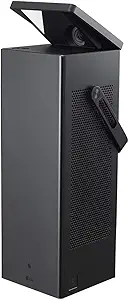
Conversely, LG leverages its dominance in consumer electronics and display innovation to capture the modern lifestyle, smart home, and premium home theater segments. Under their CineBeam and ProBeam banners, LG treats projectors as sophisticated smart appliances rather than utilitarian computer peripherals. LG heavily prioritizes solid-state light sources (LED and laser), compact portable form factors, and seamless integration with their proprietary webOS platform, reflecting a modern user base that demands cord-cutting capabilities and true home-theater color accuracy right out of the box.
Key Differences & Technological Comparison
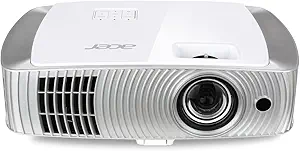
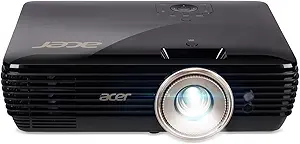
The core technological distinction between LG and Acer begins with light engine architecture. Acer predominantly employs traditional high-pressure mercury lamps and Texas Instruments DLP chips in its mass-market models, though they have expanded into LED and hybrid laser solutions in their higher tiers. This approach allows Acer to offer exceedingly high ANSI lumen counts at accessible price points, making their units capable of overcoming significant ambient light in office and academic settings. However, lamp-based systems necessitate recurring maintenance and bulb replacements over time.
LG, on the other hand, has virtually transitioned to solid-state lighting across its entire lineup, utilizing multi-channel laser engines and RGB LEDs. These light sources offer instant on/off functionality, zero bulb-replacement costs, and operational lifespans exceeding 20,000 to 30,000 hours. Furthermore, LG excels in Ultra Short Throw (UST) development, engineered to cast massive 100- to 120-inch displays from mere inches away from the wall. This contrasts with Acer's traditional long- and standard-throw models that typically require dedicated ceiling mounting or substantial throw distance.
Software and ecosystem integration represent another stark divergence. Most Acer projectors utilize a standard, utilitarian on-screen display (OSD) designed for quick hardware adjustments, relying on external input devices—such as streaming sticks, PCs, or Blu-ray players—for content delivery. LG integrates its full-fledged webOS smart platform directly into the projector hardware. This delivers an identical user experience to LG's market-leading OLED TVs, complete with native streaming apps, Apple AirPlay 2, Miracast, and the Bluetooth-enabled Magic Remote, positioning LG as the clear leader in standalone functionality.
Pros & Cons Comparison
Acer Projectors
- Pros:
- Exceptional lumen-per-dollar ratio, providing bright images in ambient-light environments.
- Aggressive pricing makes entry-level 1080p and 4K DLP projection accessible on tight budgets.
- Low input lag capabilities on select gaming-centric models (e.g., Predator series).
- Robust connectivity for legacy and standard computing inputs, including dual HDMI and VGA ports.
- Cons:
- Many affordable models still rely on traditional lamps with finite lifespans.
- Primitive internal software interfaces with no native smart streaming capabilities.
- Higher fan noise and heat output caused by high-wattage lamp cooling requirements.
- Built-in speakers are typically weak and intended solely for emergency audio.
LG Projectors
- Pros:
- Cutting-edge solid-state LED and laser engines that eliminate recurring bulb costs.
- Integrated webOS platform offers a comprehensive smart TV streaming experience natively.
- Superior industrial design, ranging from ultra-portable battery-powered units to sleek UST credenza units.
- Advanced color reproduction covering broad DCI-P3 color gamuts with dynamic tone mapping.
- Cons:
- Significantly higher initial financial investment across comparable resolution tiers.
- Budget lifestyle models often feature lower ANSI lumen ratings, struggling in brightly lit rooms without blackout curtains.
- Smart UI updates can slow down on older hardware iterations over prolonged lifecycles.
Performance, Durability & Value Analysis
When assessing long-term reliability, LG claims a notable advantage due to its widespread adoption of solid-state illumination. By replacing mechanical color wheels and high-heat mercury lamps with sealed laser and LED arrays, LG projectors suffer less thermal stress over prolonged usage sessions. This engineering choice reduces maintenance overhead to zero and preserves color fidelity and peak brightness across thousands of operational hours. While Acer's solid-state models are expanding, their high-volume lamp projectors inevitably face degradation in luminance after 2,000 to 4,000 hours, requiring users to factor replacement bulb costs and downtime into the overall total cost of ownership.
From a pure upfront value metric, Acer remains difficult to surpass for strictly utilitarian or budget-constrained installations. If your objective is simply projecting an expansive, highly visible PowerPoint presentation or weekend sports broadcast in a semi-lit room, an Acer unit costing under $600 routinely outshines an LG projector in raw white brightness within the same price bracket. LG commands a price premium, but that cost is amortized across lifestyle conveniences: silent operation, rapid startup, integrated high-definition audio options, premium optics, and an all-in-one media center capability that avoids the clutter of external streamers and cables.
Final Verdict: Which Brand Should You Choose?
Your choice between LG and Acer should be dictated by your viewing environment, installation tolerance, and primary use case:
Choose Acer if: You need an affordable, high-brightness workhorse for business presentations, classroom displays, or casual outdoor movie nights where ambient light cannot be fully mitigated. Acer is also the optimal pick for budget-focused consumers who already possess a dedicated sound system and a streaming device (such as an Apple TV or Fire Stick), and who prioritize maximum screen brightness per dollar over integrated smart features.
Choose LG if: You are designing a modern living room or dedicated home cinema space and demand an authentic, cord-free television alternative. LG is the superior choice for buyers seeking Ultra Short Throw (UST) solutions, long-lasting laser longevity, whisper-quiet operation, and a turnkey smart streaming interface powered by webOS. If premium design, accurate color science, and long-term maintenance-free performance outweigh initial price sensitivity, LG is the definitive recommendation.
Product Selection
Acer approaches the projector market with a comprehensive, enterprise-first engineering philosophy, resulting in an expansive catalog that excels in commercial, educational, and budget-to-midrange entertainment applications. Utilizing primarily single-chip Texas Instruments DLP technology paired with high-output halogen lamps, high-efficiency LEDs, or laser-phosphor engines, Acer’s portfolio emphasizes sheer lumen output, robust cooling, and cost-efficiency. Their range encompasses entry-level SVGA/XGA classroom workhorses, ultra-short-throw interactive learning displays, and mainstream home-theater units such as the Predator gaming series, which boasts low input lag and high refresh rates up to 240Hz. The engineering trade-off for Acer’s breadth, however, lies in its aesthetic conservatism and software fragmentation; while you can find a hardware chassis tailored to almost any throw-ratio or ambient light environment, these units typically rely on external streaming dongles and feature basic geometric keystone corrections rather than motorized lens shifts or premium colorimetric calibration suites.
Conversely, LG constructs its product lineup around modern lifestyle integration, cutting-edge solid-state illumination, and proprietary digital display architectures. Rather than competing in the ultra-low-cost or generic enterprise spaces, LG’s CineBeam and ProBeam series target discerning home cinema enthusiasts, design-conscious consumers, and boutique corporate suites. LG stands out technically through its aggressive deployment of advanced light engines, including multi-channel RGB laser and LED arrays, which bypass traditional phosphor color wheels to mitigate the DLP rainbow effect and achieve remarkable DCI-P3 color gamut coverage. Furthermore, LG seamlessly integrates its proprietary webOS smart TV platform across nearly the entire catalog, offering native 4K UHD resolutions, automatic keystone and focus routines, HDR10/HLG tone-mapping, and HDMI eARC connectivity. While their selection is significantly narrower and commands a higher average price floor than Acer’s, LG provides unmatched polish in battery-powered ultra-portable projectors and premium ultra-short-throw (UST) living room centerpieces.
From an analytical perspective, the practical trade-off in product selection boils down to operational utilitarianism versus consumer-centric technological refinement. Acer provides the superior sheer volume of hardware variations, making it the better choice for institutional buyers, IT procurement teams, and budget-conscious gamers who require specific throw distances, high ambient-light rejection (often exceeding 4,000 to 5,000 ANSI lumens), and maximum price-to-lumens ratios. In contrast, LG offers a more tightly curated, forward-thinking portfolio that prioritizes solid-state longevity, maintenance-free optical blocks, and turnkey software integration. Consumers and home-theater builders looking for premium smart features and elegant form factors will find LG's focused lineup far more compelling, even if it lacks the raw commercial variety and entry-level accessibility of Acer's extensive catalog.
Affordability
When evaluating affordability in the projector market, Acer consistently captures the traditional, high-lumen budget tier by prioritizing cost-to-performance efficiency in essential display metrics. Acer’s engineering philosophy heavily leverages robust, cost-effective Texas Instruments DLP chips paired with traditional high-output UHP lamps or entry-level solid-state LED modules. This allows them to deliver projectors with massive brightness outputs—often exceeding 3,500 to 4,000 ANSI lumens—at a price point well below the mid-range consumer threshold. For budget-conscious enterprise users, classroom educators, and home theater hobbyists who need to combat ambient light without spending a premium, Acer offers superior upfront value. However, the trade-off for this aggressive hardware pricing is evident in Acer’s reliance on spartan, utilitarian chassis designs, rudimentary optical zoom capabilities, and legacy software interfaces that frequently necessitate third-party streaming dongles, slightly mitigating the initial hardware savings over time.
Conversely, LG redefines affordability through the lens of modern, all-in-one ecosystem value and lower long-term total cost of ownership (TCO). Rather than competing directly in the ultra-cheap, lamp-based space, LG’s consumer line—most notably their CineBeam and portable series—incorporates high-efficiency LED and laser light sources directly into entry- and mid-tier price brackets. These solid-state modules provide up to 20,000 to 30,000 hours of maintenance-free operation, effectively eliminating the recurring, costly bulb replacement cycles inherent to many budget Acer units. Furthermore, LG integrates its proprietary webOS smart TV platform, advanced auto-keystoning, and premium wireless audio connectivity out of the box, reducing the need for secondary streaming and audio hardware. While the initial retail investment for an LG projector is almost universally higher lumen-for-lumen compared to an Acer, LG offsets this price delta by engineering compact, feature-dense devices that streamline usability and drastically reduce auxiliary expenses.
Ultimately, the affordability paradigm between these two manufacturers rests on whether a consumer values upfront raw illumination or integrated, lifecycle utility. Acer is the undisputed champion of immediate financial economy, making high-brightness projection accessible to tight institutional budgets and value-oriented consumers willing to accept utilitarian designs and potential lamp replacement costs. LG, on the other hand, presents a sophisticated value proposition that targets the smarter long-term investment, wrapping low-maintenance illumination, sleek form factors, and full-featured smart streaming into a cohesive, consumer-friendly package that minimizes hidden ownership costs.
Quality/Durability
When evaluating engineering quality and long-term durability in the projector market, Acer and LG approach hardware design from distinct philosophical baselines. Acer largely cut its teeth in the commercial and educational sectors, and this lineage reflects heavily in its build quality. Acer projectors generally feature utilitarian, rigid polycarbonate chassis engineered to withstand the rigorous demands of static boardroom installations or mobile classroom deployment. Internally, Acer heavily prioritizes thermal management, utilizing robust, high-volume fan assemblies and expansive heatsinks to protect sensitive DLP chips from heat fatigue. While this industrial-grade thermal architecture ensures excellent longevity and resilience against internal component degradation, the trade-off is frequently mechanical noise and bulkier physical footprints. Furthermore, Acer still produces a substantial number of lamp-based models, which inevitably introduces ongoing maintenance in the form of bulb replacements and air filter cleanings to prevent optical path degradation.
Conversely, LG operates as a vanguard in the lifestyle and premium home theater space, investing heavily in solid-state illumination technologies like advanced multi-channel LEDs and dual/triple-laser light engines (CineBeam series). From a durability standpoint, LG’s aggressive push into solid-state light sources provides a distinct technical advantage: maintenance-free lifespans often rated between 20,000 and 30,000 hours, entirely eliminating the cyclical costs and downtime associated with traditional lamp failure. LG’s mechanical engineering is sophisticated and sleek, integrating quiet, highly optimized vapor chamber cooling and custom fluid dynamic bearing fans that dissipate heat without the intrusive acoustic profile seen in comparable Acer units. However, LG's reliance on motorized lens assemblies, hyper-compact ultra-short-throw (UST) chassis, and dense, complex internal optics can make them more vulnerable to physical shock and miscalibration over time compared to Acer's more mechanically straightforward designs.
Ultimately, the practical trade-offs in quality and durability boil down to operational environments and component longevity. Acer offers dependable, heavy-duty workhorses characterized by structural toughness, accessible modular replacement parts, and high-altitude thermal endurance, making them less fragile for commercial use or transport. LG captures the upper echelon of consumer durability through superior optical purity, sealed optical engines that resist dust ingress, and cutting-edge solid-state hardware that virtually guarantees a decade of maintenance-free daily use. For sustained static use where color fidelity, optical lifespan, and whisper-quiet operation define quality, LG holds the technical advantage, whereas Acer remains the benchmark for physical ruggedness and cost-effective operational resilience under harsher, continuous-use scenarios.
Customer Support & Warranty
In the projector category, the disparity in warranty coverage and customer support between Acer and LG reflects their core market focuses—Acer prioritizing the budget, classroom, and corporate IT segments, while LG targets the premium lifestyle, home theater, and portable smart projector spaces. Acer typically equips its projectors with a standard one-year limited parts and labor warranty, frequently bundled with an aggressive 90-day to one-year (or 1,000-hour) coverage on traditional UHP lamp modules. Higher-end commercial units may qualify for two or three-year terms, but Acer's baseline consumer offerings are strictly entry-level in duration. In contrast, LG provides a standardized one-year limited warranty across its CineBeam and portable lineups, covering both parts and labor, but gains a massive reliability advantage through its hardware architecture. Because LG focuses almost exclusively on solid-state LED and laser light engines boasting 20,000 to 30,000-hour lifespans, users rarely face the consumable lamp-failure disputes common to traditional lamp projectors, effectively reducing warranty friction regarding the light source.
From an infrastructure and technical support perspective, LG delivers a more accessible, consumer-friendly post-purchase ecosystem, whereas Acer utilizes a traditional, IT-centric approach. LG consumers benefit from comprehensive omnichannel support, including intuitive online diagnosis, proactive software-driven troubleshooting, live chat, and a robust authorized service network built off their broader consumer electronics footprint. Firmware maintenance is another major strength for LG; their CineBeam projectors run webOS, meaning performance optimizations, app compatibility patches, and minor bug fixes are routinely pushed Over-The-Air (OTA) without requiring depot repair. Acer’s support, by contrast, is more utilitarian and sometimes opaque. Firmware updates for Acer projectors often lack automated OTA functionality, sometimes requiring consumers to perform manual serial/USB flashing or ship the device to a repair depot. While Acer's business-grade support can be efficient for volume enterprise clients who have specialized service-level agreements, individual consumers frequently encounter rigid RMA procedures, overseas call center tiers, and slower turnaround times when units require diagnostic testing.
The practical trade-offs between the two brands ultimately hinge on long-term ownership costs and the technical competence required to service each unit. Acer projectors, especially their budget DLP models, offer lower initial acquisition costs and readily available third-party replacement parts, making off-warranty repairs relatively straightforward for technically inclined users or facility managers. However, during the warranty period, users risk prolonged downtime if hardware faults arise due to Acer's centralized depot model. LG demands a higher upfront investment, but the engineering synergy of maintenance-free sealed optical blocks, longer-lasting laser diodes, and seamless consumer support creates a markedly lower risk profile. For home theater buyers seeking frictionless customer service and automated device maintenance, LG is the superior choice; Acer remains a pragmatic, cost-efficient contender primarily for commercial fleets and budget installations where dedicated IT staff can navigate the more bureaucratic support structure.
Picture Quality
When evaluating picture quality between Acer and LG projectors, the contrast lies primarily between data-centric utility and cinematic fidelity. Acer typically optimizes its projection systems for brightness, sharpness, and high-ambient-light environments, leveraging traditional DLP (Digital Light Processing) technology paired with high-output UHP lamps or hybrid LED/laser light engines. Technologies like Acer ColorBoost3D and ColorSafe II work well to maintain lumen integrity and prevent color decay over prolonged use. Consequently, Acer projectors excel in rendering razor-sharp text, vivid presentation graphics, and punchy SDR highlights. However, this engineering focus often introduces trade-offs in dark-room performance; Acer models frequently struggle with elevated black levels, limited native contrast, and noticeable color banding in complex gradients, alongside a susceptibility to the DLP "rainbow effect" on entry-to-midrange models due to fast-spinning color wheels.
Conversely, LG approaches picture quality through a dedicated consumer-entertainment lens, heavily translating the image-processing mastery of its television division into its CineBeam projector lineup. LG predominantly relies on advanced multi-channel solid-state illumination, such as dual-laser and RGB LED light engines, which bypass traditional color wheels to deliver exceptional color volume, wide DCI-P3 gamut coverage, and virtually eliminate rainbow artifacts. Supported by sophisticated dynamic tone mapping and HDR10/HLG processing, LG projectors reproduce nuance and shadow detail with far superior accuracy. While LG’s ultra-short-throw and lifestyle home theater units may not always reach the raw, piercing peak white lumens of an equivalent commercial-grade Acer unit, they compensate with significantly deeper black levels, natural skin tones, and superior contrast ratios that preserve cinematic immersion in controlled-lighting environments.
Ultimately, the practical trade-off between the two brands centers on optical application and viewing conditions. Acer represents a functional, high-luminance solution engineered for punchy contrast in spaces with moderate ambient light, making it exceptionally reliable for bright-room media consumption, casual gaming, and commercial presentations where legibility overrides fine tonal gradation. LG stands as the superior choice for discerning cinephiles and dedicated home theater setups, delivering advanced chromatic accuracy, superior dynamic range handling, and refined optical engineering that prioritizes true-to-source fidelity over pure light output.