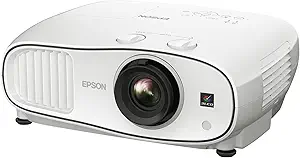







Epson vs Optoma: Overview & Brand Philosophy
When navigating the modern projection landscape, few names carry as much weight and technical authority as Epson and Optoma. Both manufacturers have spent decades refining optical technology, yet their engineering philosophies diverge significantly. Epson, a diversified Japanese electronics giant, anchors its projection identity almost exclusively around proprietary 3LCD technology. The brand focuses heavily on color accuracy, balanced lumen output, and installation versatility, targeting everything from education and enterprise boardrooms to dedicated reference-level home cinemas.
In contrast, Optoma operates as a specialized display specialist, focusing predominantly on Texas Instruments’ Digital Light Processing (DLP) architecture. Based in Taiwan, Optoma has carved out a massive market share by aggressively driving consumer adoption of 4K UHD resolution, low-latency gaming projectors, and ultra-short-throw (UST) living room laser displays. Optoma’s philosophy centers on delivering sharpness, high native contrast, and compact industrial designs that punch above their weight class in terms of price-to-performance metrics.
Understanding the fundamental divide between Epson’s 3LCD approach and Optoma’s DLP mastery is crucial for any prospective buyer. While Epson champions equal color-and-white brightness and artifact-free viewing, Optoma pushes the envelope with razor-sharp single-chip optics, superior motion handling, and aggressive pricing in the laser and solid-state illumination sectors. Choosing between them requires evaluating how their core display technologies align with your specific viewing environment.
Key Differences & Technological Comparison
The primary battleground between Epson and Optoma lies in their imaging engines: 3LCD versus single-chip DLP. Epson utilizes three separate liquid crystal panels (red, green, and blue) to continuously project a full-color image. This architecture guarantees that Color Light Output (CLO) matches White Light Output 100%, completely eliminating the annoying "rainbow effect" (chromatic aberration visible to sensitive viewers during fast motion). Conversely, Optoma relies on single-chip DLP chips paired with a spinning color wheel or solid-state RGB LED/laser arrays. DLP delivers inherent pixel-to-pixel sharpness and microsecond response times that LCD struggles to match, providing superior native intra-scene contrast and deep black levels.
Resolution handling reveals another major technical difference. While both brands produce true native 4K flagship units, their mainstream "4K" projectors utilize pixel-shifting technology. Epson historically relies on 2-phase or 4-phase "4K PRO-UHD" pixel-shifting across 1080p LCD panels, which results in a softer, more cinematic, film-like image. Optoma utilizes Texas Instruments' XPR (Expanded Pixel Resolution) fast-switching technology, which flashes an 0.47-inch or 0.66-inch micro-mirror array multiple times per frame to project a genuine 8.3 million distinct pixels onto the screen, resulting in perceptibly crisper lines, sharper text, and superior detail in native 4K HDR master files.
In terms of installation flexibility and optics, Epson holds an undeniable edge in traditional throw projectors. Mid-range and high-end Epson models typically feature extensive horizontal and vertical motorized lens shift, wide optical zoom ratios (often up to 2.1x), and robust geometric correction, allowing placement in awkward rooms without relying on digital distortion. Optoma models in comparable price tiers often feature limited vertical lens shift, narrower optical zoom (typically 1.1x to 1.3x), and require more rigid physical alignment, making initial setup somewhat more demanding for the user.
Pros & Cons Comparison
Epson: Pros
- Equal Color and White Brightness: 3LCD technology ensures vivid, saturated colors even at peak lumen ratings, without the muted colors common in entry-level DLP projectors.
- Zero Rainbow Artifacts: Completely free of color-wheel separation artifacts, making it the safer choice for viewers prone to eye strain or motion sickness.
- Superior Installation Flexibility: Generous optical zoom ranges and extensive vertical/horizontal lens shift capabilities simplify complex ceiling or shelf installations.
- Cinematic Black Floor (Upper-Tier Models): Flagship models (such as the Pro Cinema and Home Cinema 5050UB/LS12000 series) use advanced dynamic irises and optical engines to deliver reference-class black levels.
Epson: Cons
- Potential Panel Misalignment: Three-panel optical blocks can drift or show micro-misalignment over time, leading to slight color fringing around high-contrast edges.
- Bulkier Chassis: 3LCD cooling paths and larger glass lens assemblies typically result in physically larger, heavier projector housings.
- Maintenance Requirements: Most bulb-based and some lower-tier laser units rely on air filters that require regular cleaning to prevent dust buildup on optical panels.
Optoma: Pros
- Pin-Sharp Image Clarity: Single-chip DLP eliminates panel convergence issues entirely, delivering sharper overall focus across the entire frame.
- Incredible Motion Handling & Gaming Performance: Lightning-fast micro-mirror response times translate into minimal motion blur and ultra-low input lag (often dropping below 16ms or even 4ms at high refresh rates).
- Sealed Optical Engines: Optoma frequently implements IP5X-certified dust-resistant sealed optical blocks, rendering them maintenance-free without the need for periodic air filter cleanings.
- Aggressive Pricing for 4K and Laser: Delivers true 8.3-million-pixel resolution and solid-state laser engines at lower retail price points than equivalent competitors.
Optoma: Cons
- Rainbow Effect (RBE): Sensitive users can perceive brief flashes of red, green, and blue along high-contrast edges or rapid panning shots due to the color wheel.
- Restricted Placement Geometry: Minimal or non-existent lens shift on mid-tier models requires precise ceiling-mount positioning or reliance on image-degrading digital keystone.
- Lower Color Brightness on Budget Models: White light lumens can significantly outpace color lumens on lamp-based units with white segments in their color wheels, washing out saturated colors in ambient light.
Performance, Durability & Value Analysis
From a durability and reliability standpoint, both brands offer robust hardware, but their failure modes reflect their underlying technologies. Epson's engineering is exceptionally mature; its chassis designs prioritize sustained cooling, which extends the lifespan of both lamp-based bulbs and laser diodes. However, 3LCD architectures are open systems vulnerable to "dust blobs" if air filters are neglected, and organic LCD panels can eventually degrade after tens of thousands of hours of intense heat exposure. Optoma counters this with sealed DLP light engines that prevent ambient dust from ever contaminating the optical path. However, Optoma's color wheels involve moving mechanical parts that can wear down over years of heavy daily use, and historically, their customer service and firmware support have occasionally faced criticism in enthusiast forums when addressing edge-case software bugs.
When evaluating value, Optoma tends to win the pure specification-per-dollar race, particularly in the living room entertainment and compact home cinema segments. If your priority is achieving razor-sharp 4K gaming at 120Hz or 240Hz, or securing a high-lumen laser projector without spending a fortune, Optoma offers exceptional returns on investment. Epson, on the other hand, delivers superior systemic value for dedicated theater environments where image cohesion, natural skin tones, contrast dynamics, and placement flexibility outweigh pure paper specs. Epson projectors also tend to hold their resale value better on the secondary market due to broad brand trust and consistent performance profiles.
Final Verdict: Which Brand Should You Choose?
Choose Epson if you are designing a dedicated home theater, need substantial physical placement flexibility, or are biologically sensitive to the rainbow effect. If you require wide lens shift to avoid moving an existing ceiling mount, or if you prioritize balanced, hyper-accurate color reproduction in movies alongside deep cinematic contrast, Epson's 3LCD lineup (particularly models like the Home Cinema 5050UB or the Pro Cinema LS12000) remains the gold standard in the mid-to-high-tier consumer space.
Choose Optoma if your primary use cases center around high-octane gaming, native 4K edge-to-edge sharpness, and daytime living room viewing where cost-efficiency is paramount. Gamers seeking sub-10ms response times, sports fans wanting zero LCD motion smear, and budget-conscious buyers seeking ultra-bright 4K UHD laser projection will find Optoma's DLP lineup to be the more dynamic, punchy, and financially accessible solution.
Product Selection
Epson’s product selection is structurally organized around its proprietary 3LCD display architecture, offering consumers and enterprise buyers a profoundly diverse, reliable spectrum of projection technologies that eliminate the rainbow artifacts inherent to single-chip competitors. From entry-level, cost-effective Home Cinema units and the lifestyle-centric EpiqVision series to commercial-grade PowerLite models and high-lumen, swappable-lens Pro Cinema installations, Epson ensures consistent engineering quality across every pricing tier. A significant technical strength of Epson’s portfolio is its guarantee of equal white and color brightness (CLO), a standard often sacrificed in budget projection. However, the trade-off of Epson's technology-focused lineup lies in its optical footprint and native pixel dynamics; their portable and mid-range 4K offerings primarily rely on pixel-shifting rather than native micro-mirror density, resulting in chassis designs that are typically bulkier to accommodate larger cooling arrays and thermal dispersal systems.
Conversely, Optoma capitalizes on Texas Instruments’ Digital Light Processing (DLP) technology to construct an aggressive, hyper-specialized catalog that excels in compact form factors, ultra-short-throw (UST) home theater systems, and ultra-responsive low-input-lag gaming units. Optoma’s product selection—spanning the versatile UHD home theater series to the high-refresh CinemaX line and heavy-duty ZU-series professional laser projectors—offers superior native ANSI contrast and deep black levels that appeal to dedicated cinema enthusiasts. Their portfolio emphasizes cutting-edge consumer-facing features such as 240Hz refresh rates, advanced micro-mirror 4K UHD resolution scaling, and compact solid-state DuraCore laser engines. The practical drawback to Optoma’s DLP-dominated ecosystem is color light output variability, as many lower-to-mid-tier models utilize multi-segment color wheels that can lower perceptual color volume and cause color-breakup (rainbow effect) for sensitive viewers.
From a macro-selection standpoint, the decision between Epson and Optoma hinges on the intended viewing environment and deployment scale. Epson provides unmatched breadth in the multi-purpose living room and education/corporate spaces where high ambient light rejection, uniform color luminance, and lens-shift flexibility are paramount. Optoma dominates in providing tailored solutions for specialized niches, particularly where ultra-compact integration, lightning-fast gaming response times, and high-contrast, darkened-theater fidelity are required. Ultimately, while Epson offers superior volumetric light delivery and optical placement versatility across its broad array, Optoma delivers a sharper edge in contrast performance and compact gaming specialization within its enthusiast tiers.
Affordability
When assessing affordability in the projector market, Epson and Optoma approach cost-efficiency through fundamentally different engineering architectures, impacting both initial acquisition costs and long-term ownership expenses. Optoma traditionally leads in lower entry-level pricing by capitalizing on single-chip Digital Light Processing (DLP) technology. This design requires fewer internal optical components than liquid crystal assemblies, allowing Optoma to produce aggressively priced, native 1080p and pixel-shifting 4K UHD models—such as their popular HD and UHD series—for budget-conscious home theater and gaming enthusiasts. Furthermore, Optoma has pioneered budget-friendly solid-state laser lighting in their entry-to-mid-range portfolio. These DuraCore laser engines effectively eliminate the recurring cost of replacement lamps while maintaining competitive brightness levels, giving Optoma a distinct technical edge in raw upfront cost-per-lumen and entry-level resolution pricing.
Epson, conversely, utilizes proprietary 3-chip 3LCD optical engines across its entire lineup, presenting a value proposition built on color fidelity, optical flexibility, and component longevity rather than sheer bottom-dollar pricing. While Epson's baseline units generally carry a modest price premium compared to entry-level DLP rivals, they deliver equal white and color brightness (CLO), avoiding the brightness-limiting color wheels inherent to single-chip DLP projectors. From a practical total cost of ownership (TCO) standpoint, Epson mitigates the cost of traditional lamp technology by offering some of the least expensive genuine replacement lamps in the industry, frequently priced significantly below the third-party replacement costs associated with DLP bulbs. Additionally, Epson integrates premium hardware features—such as motorized wide-range lens shift and superior optical zoom capabilities—at lower price tiers than Optoma, where consumers would otherwise need to spend thousands more to escape restrictive throw ratios and digital keystone distortion.
Ultimately, the trade-off in affordability depends on whether a consumer prioritizes low entry barriers or holistic operational value. Optoma represents the superior choice for buyers seeking immediate, high-resolution performance, high refresh rates for gaming, and maintenance-free solid-state lighting on a strictly limited upfront budget. However, single-chip DLP can exhibit the "rainbow effect" (color breakup) for sensitive viewers, a flaw that costs nothing extra to eliminate with Epson. Epson wins on long-term versatility, color performance per dollar, and low-cost hardware servicing, offering a more resilient investment for multimedia and dedicated home cinema environments where optical alignment flexibility saves consumers from expensive mounting configurations and aftermarket accessories.
Quality/Durability
Epson has established an exceptional benchmark for build quality and engineering integrity, driven largely by its proprietary 3LCD display architecture. By utilizing dedicated, stationary inorganic liquid crystal panels for red, green, and blue light paths, Epson projectors eliminate internal high-speed moving optical parts, such as the spinning color wheels found in competing technologies. This deliberate mechanical simplicity dramatically lowers physical wear and tear over extended operating cycles. Furthermore, Epson's premium chassis designs prioritize robust thermal dissipation, pairing oversized, low-velocity fans with high-grade, user-accessible particulate filters. These heavy-duty filtration systems effectively isolate the optical engine from ambient dust and airborne contaminants, preventing premature degradation of light output and color calibration. Coupled with their transition toward solid-state laser light engines rated for upwards of 20,000 to 30,000 hours, Epson units consistently maintain uniform chassis rigidity, strict component tolerances, and exceptional operational lifespans across both home cinema and commercial enterprise environments.
Optoma relies predominantly on Texas Instruments' Digital Light Processing (DLP) technology, presenting a fundamentally distinct engineering paradigm that excels in optical precision yet introduces specific mechanical trade-offs. The hallmark of Optoma’s durability lies in its hermetically sealed IP5X or IP6X-rated optical engines, which render internal micromirror arrays completely impervious to dust without requiring regular filter replacements—a clear advantage in challenging, high-particulate installations. However, entry-to-mid-tier Optoma lamp-based and laser models rely on a spinning optical color wheel, introducing a high-RPM moving element that operates under intense thermal stress. Over multi-year lifespans, these color wheels and their miniature mechanical bearings can become prone to acoustic whine, rotational friction, or mechanical failure, occasionally accompanied by degrading DMD chips that produce dead micro-mirror pixels. While Optoma's industrial-grade lasers boast outstanding physical durability and solid-state longevity, their consumer and mid-range housings lean more heavily on lightweight plastics and compact designs, making them slightly more susceptible to thermal exhaustion than Epson's generously cooled, systematically engineered enclosures.
Customer Support & Warranty
When evaluating after-sales reliability in the projector industry, Epson consistently outperforms Optoma by offering one of the most robust, consumer-friendly warranty structures on the market. Epson generally covers its home theater and commercial projectors with two- to three-year limited warranties, often bolstered by their industry-leading "Extra Care Home Service." This program provides a rapid two-business-day advanced unit replacement at zero shipping cost to the consumer—a massive technical and logistical relief given the complex internal optical blocks and alignment systems inherent to 3LCD engineering. Furthermore, Epson clearly delineates lamp or laser light-source coverage, providing dedicated 90-day warranties on conventional bulbs and up to five years (or 20,000 hours) on high-end laser engines. Their domestic customer support infrastructure features localized, highly accessible phone and live-chat technicians who possess strong diagnostic expertise, minimizing the friction typically associated with projector troubleshooting and color calibration inquiries.
Conversely, Optoma presents a more fragmented customer support and warranty framework that introduces distinct practical trade-offs for users. While Optoma’s hardware engineering is revered for high-contrast, budget-friendly DLP performance, its baseline consumer warranties typically cap out at one to two years depending on the tier, with commercial or ProScene installation models carrying slightly longer coverage. Optoma often offers enticing promotional extensions—such as dedicated five-year warranties specifically for their DuraCore laser light sources—yet the accompanying internal electronics (motherboards, color wheels, and power supplies) rarely share that longevity under standard terms. Crucially, Optoma does not offer a seamless, universal advance-replacement program for its mainstream consumer lineup, frequently requiring users to absorb transit downtime while sending units to centralized service depots for Return Merchandise Authorization (RMA) repairs.
From an ownership risk and technical support standpoint, the trade-off heavily favors Epson for mission-critical installations and low-downtime home environments. Optoma’s customer service channels have historically received mixed consumer sentiment, with end-users reporting slower RMA turnaround times and higher friction when diagnosing nuanced optical issues like stuck DLP micro-mirrors or intermittent HDMI handshake failures. Epson’s comprehensive depot coverage, coupled with their advanced unit swap logistics, ensures that technical anomalies do not render an entertainment setup or boardroom unusable for weeks. For consumers where long-term operational security, responsive human technical support, and minimal logistical hassle are paramount, Epson easily outclasses Optoma's more rigid and depot-reliant warranty service model.
Picture Quality
When evaluating picture quality between Epson and Optoma, the fundamental difference lies in their underlying projection technologies: Epson champions proprietary 3LCD technology, whereas Optoma relies almost exclusively on Texas Instruments' Digital Light Processing (DLP). Epson’s 3LCD architecture delivers equal white and color lumens, eliminating the color brightness discrepancy often seen in traditional lamp-based or entry-level projectors. This results in remarkably vibrant, natural color reproduction, superior color volume, and an image completely free from the chromatic aberration known as the "rainbow effect" (color breakup artifacts caused by color wheels). However, Epson’s consumer-grade 4K projectors typically utilize pixel-shifting technology on native 1080p chips (4K PRO-UHD), which, while producing a sharp and filmic picture, resolves fewer distinct on-screen pixels compared to Optoma’s specialized implementation of single-chip DLP.
Optoma’s DLP engineering excels in perceived sharpness, pixel density, and native motion handling. By utilizing XPR fast-switching pixel-shift technology, Optoma projects a true 8.3 million distinct pixels onto the screen, yielding sharper micro-detail, crisper text, and superior geometric uniformity that cinephiles and gamers demand. Optoma projectors also benefit from DLP’s inherently faster pixel response times, making fast-moving action and gaming sequences appear virtually blur-free. Furthermore, Optoma generally delivers deeper native black levels and superior intra-scene (ANSI) contrast in dark, light-controlled environments, avoiding the elevated black floor or slight light leakage that can affect lower-to-mid-tier Epson LCD light engines. However, the presence of a rotating color wheel in non-RGB LED or non-pure laser Optoma models can introduce the rainbow effect for sensitive viewers and can sometimes result in reduced color brightness relative to peak white output.
In practical application, the choice boils down to viewing conditions and optical priorities. Epson offers superior versatility and color accuracy right out of the box, excelling in living rooms and spaces with ambient light where high color brightness and wide dynamic range are critical to prevent the image from appearing washed out. Advanced tone mapping in Epson's laser line (such as the LS series) also yields exceptional HDR performance without clipping specular highlights. Conversely, Optoma is the superior choice for dedicated, pitch-black home theaters and high-frame-rate gaming where absolute resolution, razor-sharp edge-to-edge clarity, and high contrast are paramount. Ultimately, Epson wins on color purity and artifact-free viewing comfort, while Optoma leads in absolute image sharpness, contrast depth, and motion clarity.
Compare current retail pricing, active promotions, and verified stock availability directly from authorized stores: