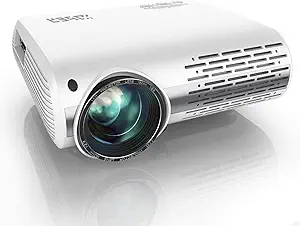
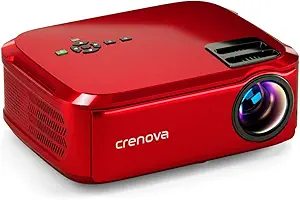
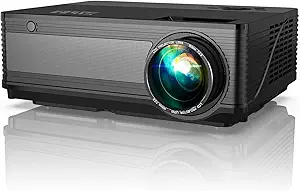
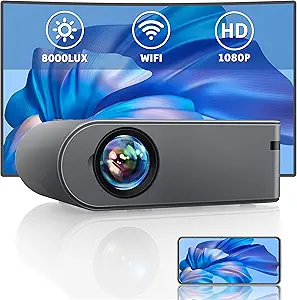
Crenova vs YABER: Overview
Comparing Crenova and YABER helps you determine which brand is best suited for your needs in Projectors. Both brands offer strong choices depending on your budget and key feature requirements.
Key Features & Comparison
Evaluate factors such as build quality, warranty, customer satisfaction, and total value before making your final purchase choice between Crenova and YABER.
Product Selection
When examining product selection, YABER offers a significantly broader and more technologically progressive portfolio compared to Crenova. YABER categorizes its lineup across entry-level entertainment, portable outdoor units, and mid-range home theater models, often adopting newer innovations such as native 1080p LCD panels, motorized focus, automatic keystone correction, and integrated operating systems like Android TV. Their catalog frequently updates to incorporate modern lifestyle designs, including dust-proof sealed optical engines and compact battery-operated projectors intended for travel and casual outdoor screenings.
In contrast, Crenova maintains a much leaner, utilitarian catalog primarily anchored in budget-friendly, basic projection technology. Their selection caters heavily to first-time buyers seeking straightforward mini projectors or utilitarian multimedia displays for gaming and casual backyard viewings. While Crenova provides reliable basic functionality with standard HDMI, USB, and AV connectivity, it lacks the specialized breadth seen in YABER's portfolio, offering fewer options for ultra-portable form factors, smart platform integrations, or higher-lumen living room alternatives.
Affordability
In the realm of affordability, Crenova establishes a distinct advantage for cost-conscious consumers by operating strictly within the lower-tier budget bracket. Their units are consistently priced at the sub-$100 to lower-$150 range, making them accessible impulse purchases or low-risk entry points into home projection. Crenova achieves these price points by focusing on essential hardware components—analog keystone correction, basic single-panel LCD mechanisms, and standard LED lamps—delivering functional big-screen entertainment without the premium markup associated with sophisticated software or high-end optical glass.
YABER, while also competing vigorously in the value segment, spans a wider pricing spectrum that ranges from budget-friendly options to mid-tier models exceeding several hundred dollars. Although YABER's entry-level models directly compete with Crenova's pricing, their upper-echelon models demand higher investment. However, this increased cost is justified through advanced features like dual-band Wi-Fi 6, bidirectional Bluetooth, autofocus algorithms, and superior lumen ratings. For shoppers prioritizing the absolute lowest upfront cost, Crenova leads, whereas YABER delivers higher feature density per dollar for users willing to spend slightly more.
Quality/Durability
Engineering quality and component longevity reflect notable differences in how both brands design their chassis and thermal management systems. YABER has increasingly integrated fully sealed optical engines into its mid-range and higher-end lineups, which substantially mitigates the common budget-projector issue of dust settling on the internal LCD panel and causing black spots. Additionally, YABER utilizes better thermal architecture with multi-fan cooling solutions that minimize heat buildup while maintaining tolerable acoustic noise levels, resulting in a more durable optical assembly over extended daily use.
Crenova relies predominantly on traditional open or semi-sealed optical paths with standard removable dust filters. While structurally adequate for occasional home or patio use, these units are more vulnerable to ambient dust infiltration and heat degradation over time if not regularly cleaned. The external housing of Crenova projectors consists of lightweight molded plastics that perform fine for stationary indoor placement, but they do not match the refined fit, finish, and wear-resistant materials found in YABER’s more contemporary hardware releases.
Customer Support & Warranty
Customer support infrastructure is a critical differentiator in the budget projector landscape, where post-purchase troubleshooting is common. YABER provides a more comprehensive, globally oriented support framework, frequently backing their products with a 3-year warranty and a dedicated 24/7 technical support desk. They actively maintain an international web presence, provide firmware updates for smart models, and maintain responsive communication through major e-commerce platforms to quickly resolve optical defects, connectivity issues, or remote control failures.
Crenova offers standard customer service, generally providing a 1-year limited warranty and direct email-based troubleshooting through online retail storefronts. While their support team is generally helpful with straightforward unit replacements or refunds within the initial return window, long-term technical resources and downloadable firmware updates are far more limited. Users looking for extended warranty coverage, proactive community engagement, and accessible replacement accessories will find YABER's customer care ecosystem to be more established.
Picture Quality
Picture quality represents one of the starkest technical divides between the two brands. YABER frequently incorporates native 1080p (and 4K-decoding) LCD panels with higher ANSI lumen ratings, delivering noticeably sharper text, crisper details, and superior color saturation. Their advanced digital image processing yields better contrast ratios and smoother handling of fast-motion sports or gaming. Furthermore, YABER's auto-focus and 4-point digital keystone correction allow users to maintain uniform edge-to-edge sharpness without severe distortion or chromatic aberration.
Crenova delivers modest visual performance tailored for completely darkened environments, often relying on native 720p resolution with 1080p input support. While acceptable for casual animated movies or children's viewing, Crenova projectors typically display lower contrast, washed-out blacks, and prominent edge softness due to inexpensive optical lenses and manual keystone correction. In scenes requiring high dynamic range or subtle color fidelity, Crenova struggles against ambient lighting, whereas YABER produces a cleaner, brighter, and significantly more immersive visual output.