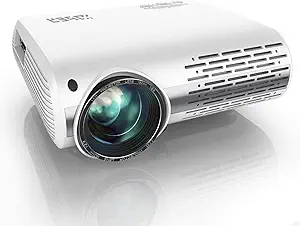
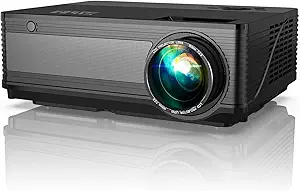
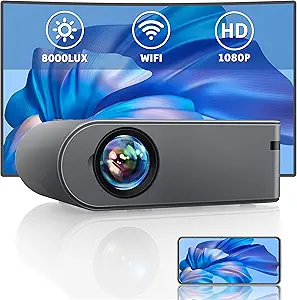
BenQ vs YABER: Overview
Comparing BenQ and YABER helps you determine which brand is best suited for your needs in Projectors. Both brands offer strong choices depending on your budget and key feature requirements.
Key Features & Comparison
Evaluate factors such as build quality, warranty, customer satisfaction, and total value before making your final purchase choice between BenQ and YABER.
Product Selection
BenQ offers an extensive, highly engineered catalog designed to meet the demands of virtually every projection environment, spanning dedicated home cinema, high-refresh-rate gaming, education, enterprise, and large-venue commercial installations. Their portfolio leverages various advanced projection engines, including traditional lamp-based systems, solid-state 4LED arrays, and high-lumen BlueCore laser systems. From ultra-short-throw (UST) living room models to specialized esports projectors featuring sub-5ms input lag and custom audio modes, BenQ structures its product lines around targeted professional tiers (such as the CinePrime, DesignVue, and TK entertainment series) to deliver application-specific optics, color science, and chassis engineering.
Conversely, YABER strategically focuses on the consumer lifestyle, casual entertainment, and portable projection markets. Rather than competing in the complex commercial or ultra-high-end home theater arenas, YABER concentrates on accessible single-LCD and entry-level DLP models, often incorporating built-in streaming operating systems, auto-focus, and motorized keystone adjustments. While YABER has expanded into sleeker, lifestyle-centric designs with modern aesthetics and integrated Bluetooth audio, its catalog lacks the vertical depth found in BenQ's line. Buyers choosing YABER are primarily looking for versatile, all-in-one smart projectors for bedrooms, backyards, or casual apartment use, rather than meticulously calibrated or high-installation-flexibility hardware.
Affordability
Affordability is YABER’s core competitive advantage, as the brand specializes in lowering the barrier of entry to big-screen entertainment. By relying heavily on cost-effective single-panel LCD technology with LED light engines, YABER can market Full HD and entry-level smart projectors at prices ranging from under $100 to roughly $600. These price points typically undercut traditional home cinema brands by several hundred dollars, appealing directly to budget-conscious consumers, college students, and first-time projector buyers who want expansive screen sizes without investing in dedicated mounting brackets, separate streaming hardware, or high-end projection screens.
BenQ occupies a premium tier where prices reflect superior optical assemblies, proprietary video processing chipsets, and precision thermal management. Even BenQ’s entry-level 1080p gaming projectors generally start around the $500 mark, with their true 4K UHD DLP, 4LED, and laser models quickly scaling between $1,200 and $4,000 or more. While BenQ requires a significantly higher upfront capital outlay, the brand delivers exceptional value retention through durable glass lens elements, lower maintenance costs over time, and industry-standard color certifications. Consumers pay a premium with BenQ, but that expense translates into demonstrable optical performance that budget-focused single-LCD units cannot match.
Quality/Durability
When examining mechanical build quality and long-term durability, BenQ stands as an industry benchmark. The brand employs precision all-glass multi-element optical lens arrays encased in robust metal barrels, which drastically minimize chromatic aberration and prevent thermal-induced focus drift during long viewing sessions. Furthermore, BenQ’s sealed optical engines protect sensitive Digital Micromirror Devices (DMD) from dust ingress, preserving image uniformity and contrast over tens of thousands of operating hours. Advanced multi-chamber cooling solutions keep internal component temperatures stable while keeping fan acoustics low, resulting in appliances built for reliable, multi-year daily operation.
YABER has made steady progress in moving from generic plastic enclosures to more polished lifestyle finishes, but its hardware still reflects its consumer-budget orientation. Many YABER projectors utilize hybrid plastic-glass lenses that are more susceptible to focus shifting as the unit warms up, alongside optical engines that are less comprehensively sealed against particulate contamination. While LED lamp lives are rated generously (often 20,000 to 50,000 hours on paper), the peripheral internal electronics, power supplies, and single-panel LCD heat-dissipation layers rarely match the rigorous stress-testing and thermal longevity found in BenQ’s commercial-grade chassis.
Customer Support & Warranty
BenQ provides enterprise-grade customer support backed by a mature global infrastructure and authorized regional service hubs. The company typically backs its home theater and commercial projectors with comprehensive two- to three-year limited warranties, often including dedicated optical engine coverage and tiered policies for light sources. Furthermore, BenQ maintains an exhaustive catalog of replacement parts, factory firmware utilities, and calibrated color profiles, supported by reachable technical teams capable of troubleshooting complex installation, signal processing, and audiovisual integration queries.
YABER handles customer service primarily through direct-to-consumer e-commerce channels, online ticketing systems, and community outreach. The brand generally offers standard one- to three-year warranty coverage depending on the retailer and model, frequently providing full-unit replacements or partial refunds in lieu of component-level repairs due to the low-cost nature of the hardware. While YABER’s support team is known for being responsive and accommodating to common consumer issues like setup confusion or straightforward defects, the lack of a physical authorized service center network makes specialized repairs and out-of-warranty servicing practically non-existent.
Picture Quality
In terms of pure picture quality, BenQ operates in a completely different performance class driven by cinematic fidelity and precision optics. Leveraging Texas Instruments DLP technology paired with high-speed color wheels or multi-channel RGB LED/laser arrays, BenQ achieves exceptional ANSI contrast, high native dynamic range, and razor-sharp image clarity across the entire frame. BenQ’s proprietary CinematicColor technology guarantees factory-calibrated Rec. 709 and DCI-P3 color gamut coverage with minimal Delta E variances, meaning film grain, color grading, and shadow gradations are rendered faithfully to director intent without artificial sharpening or oversaturation.
YABER delivers commendable image clarity within its price tier, offering native 1080p resolution and acceptable brightness for low-light or fully darkened environments. However, because most models utilize single-LCD projection technology, they suffer from inherent optical compromises, including lower native contrast, weaker black levels that often appear milky or dark gray, and noticeable edge-to-edge sharpness drop-off where the corners blur relative to the center. While vibrant enough for cartoon streaming, casual sports viewing, and outdoor family movie nights, YABER projectors lack the high-precision tone mapping, wide color gamuts, and optical uniformity required for authentic home cinema experiences.