BenQ vs Nebula: Overview
Comparing BenQ and Nebula helps you determine which brand is best suited for your needs in Projectors. Both brands offer strong choices depending on your budget and key feature requirements.
Key Features & Comparison
Evaluate factors such as build quality, warranty, customer satisfaction, and total value before making your final purchase choice between BenQ and Nebula.
Product Selection
BenQ offers one of the most comprehensive and diverse catalogs in the display industry, catering to virtually every tier of user from entry-level home cinema enthusiasts to high-end enterprise clients. Their portfolio includes dedicated 4K UHD home theater projectors, low-latency esports and gaming displays, short-throw living room laser TVs, and high-lumen commercial installation units. This breadth allows consumers to select hardware precisely tailored to specific ambient lighting conditions, throw ratios, and color accuracy requirements, reflecting BenQ's legacy as a traditional optical powerhouse.
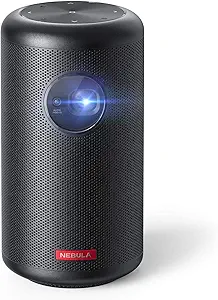
In contrast, Nebula—an Anker sub-brand—focuses almost exclusively on the portable, smart, and lifestyle projector segments. Their lineup ranges from soda-can-sized battery-powered units like the Capsule series to brighter, semi-portable outdoor models like the Mars and Cosmos series. While Nebula does offer high-end lifestyle models like the Cosmos 4K SE, their catalog lacks the sheer optical variety, interchangeable lens support, and specialized professional installation models that define BenQ's broader commercial and home theater footprint.
Affordability
When assessing affordability, Nebula distinctly leads in the ultra-portable and all-in-one value sector. By bundling high-efficiency LED or laser light sources, integrated Android TV or Google TV platforms, and surprisingly robust built-in sound systems into relatively inexpensive packages, Nebula eliminates the need for auxiliary streaming dongles or soundbars. For buyers seeking a secondary TV replacement, backyard movie night solution, or compact travel projector, Nebula provides an exceptionally accessible price-to-performance ratio that keeps total setup costs low.
BenQ operates across a wider financial spectrum, meaning their high-performance cinema and gaming projectors often command a premium price tag. While BenQ does offer budget-friendly 1080p projectors, their primary strengths lie in mid-range to high-end DLP architectures where custom glass optics, mechanical zoom, and advanced color wheels drive up production costs. Consequently, BenQ represents a higher upfront investment, often necessitating additional spending on dedicated external sound systems and proper projection screens to fully realize their technical capabilities.
Quality/Durability
BenQ's hardware design reflects industrial-grade engineering honed over decades of traditional projector manufacturing. Their chassis are built with robust thermal management architectures, substantial heatsinks, and sealed optical engines that effectively protect DLP chips from ambient dust contamination. While many classic BenQ models still utilize high-pressure metal halide lamps requiring periodic bulb replacements, their newer LED and 4K laser lines demonstrate exceptional long-term reliability and component longevity, designed to withstand thousands of hours of continuous indoor use.
Nebula excels in modern solid-state durability, emphasizing ruggedized exteriors, integrated carry handles, and resilient chassis designed to survive transit and outdoor exposure. Because nearly all Nebula projectors employ solid-state LED or ALPD laser light sources, they boast light source lifespans exceeding 20,000 to 30,000 hours with instant on/off capabilities. However, because many Nebula models rely on internal rechargeable lithium-ion batteries, their functional operational lifespan may ultimately be bounded by battery degradation over years of heavy cycling, unlike mains-powered BenQ units.
Customer Support & Warranty
BenQ provides enterprise-level warranty backing that typically outclasses lifestyle brands. Most of BenQ's consumer home projectors come with standard two- to three-year limited warranties, supported by established domestic service centers, detailed technical documentation, and accessible parts distribution for replacement bulbs and filters. Their customer service infrastructure is mature, offering responsive phone, email, and ticketing support that effectively handles complex calibration queries, firmware updates, and optical warranty claims.
Nebula benefits from parent company Anker's highly regarded, customer-friendly support ethos, generally offering a 12-month standard warranty backed by a straightforward, hassle-free replacement process for defective units. Digital self-service, chat support, and community forums are well-maintained and user-friendly. However, because Nebula's devices are tightly integrated consumer electronics rather than modular optical systems, post-warranty repairs are rare; issues often necessitate full unit replacements rather than component servicing, putting them at a disadvantage for long-term serviceability compared to BenQ.
Picture Quality
Picture quality is the arena where BenQ establishes decisive technical superiority for critical viewing. Leveraging advanced Texas Instruments DLP chipsets, proprietary CinematicColor calibration, and precision all-glass multi-element lens arrays, BenQ projectors deliver exceptional Rec.709 and DCI-P3 color fidelity straight out of the box. High optical brightness, superior native dynamic contrast, precise lens shift controls, and dedicated HDR-PRO tone mapping ensure that BenQ delivers true cinema-grade performance with razor-sharp edge-to-edge clarity and minimal chromatic aberration.
Nebula delivers punchy, vibrant, and crowd-pleasing imagery that is optimized for convenience and ambient living spaces rather than reference-level darkroom cinema. While their high-end models achieve impressive 4K resolution via pixel-shifting and benefit from bright ALPD laser illumination, their optical assemblies generally utilize hybrid plastic/glass elements that exhibit slight corner softness and reduced contrast compared to BenQ. Nebula compensates with powerful autofocus, auto-keystone correction, and intelligent screen-fit processing, trading absolute color accuracy for effortless, adaptive image setup anywhere.