BenQ vs Crenova: Overview & Brand Philosophy
The projector market spans a massive spectrum, ranging from premium, cinema-grade optical systems to ultra-affordable, entry-level entertainment boxes. Understanding where BenQ and Crenova sit within this spectrum is crucial for any prospective buyer. BenQ, a Taiwanese multinational corporation founded in 1984, stands as one of the global giants in display technology. The company’s design philosophy centers on technical excellence, color precision, and engineering innovation. BenQ devotes substantial research and development to proprietary color tuning (CinematicColor), low-input-lag gaming engines, and premium light sources including advanced lasers and high-output Digital Light Processing (DLP) arrays. For BenQ, a projector is a dedicated home theater instrument or a high-precision professional tool.
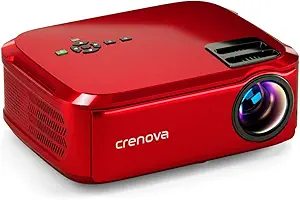
In stark contrast, Crenova operates primarily as an accessible, budget-first consumer electronics brand that gained substantial traction through online direct-to-consumer marketplaces like Amazon. Crenova's brand philosophy is built entirely around democratization and price accessibility: delivering the biggest possible screen size for the lowest possible financial investment. Rather than designing cutting-edge optical engines from scratch, Crenova packages commoditized single-panel LCD technology with LED light sources to provide plug-and-play multimedia projection for casual users, students, and families looking for backyard movie nights on a strict budget.
Consequently, comparing BenQ to Crenova is not simply a comparison of two competing manufacturers, but a comparison between professional-tier optical engineering and ultra-budget consumer utility. While BenQ focuses on longevity, color accuracy standards (such as Rec. 709 and DCI-P3), and true optical resolution, Crenova emphasizes simplicity, portability, and value-packed introductory features that require minimal monetary commitment.
Key Differences & Technological Comparison
The primary technical distinction between BenQ and Crenova lies in their optical architectures. BenQ relies almost exclusively on Texas Instruments DLP chipsets paired with sophisticated color wheels or solid-state (4LED/Laser) light engines. This architecture allows BenQ to achieve razor-sharp native resolutions (from 1080p up to true 4K UHD via pixel shifting), high ANSI lumen brightness ratings that easily combat ambient light, and exceptional native contrast with deep black levels. Crenova projectors, by comparison, utilize single-panel LCD (transmissive LCD) projection coupled with an inexpensive white LED array. While this keeps production costs low, it inherently limits optical efficiency, resulting in significantly lower real-world lumen output and softer image focus around the perimeter of the screen.
Brightness specification is another critical area of divergence. BenQ adheres strictly to internationally recognized standards such as ANSI lumens and ISO 21118, delivering honest, verified light output typically ranging from 2,000 to 4,000 ANSI lumens. Crenova frequently utilizes non-standardized marketing metrics like "Lux" or peak LED lumens, which can be misleading. In standardized real-world testing, a Crenova projector rated at "8,000 Lux" typically outputs between 150 to 300 ANSI lumens, restricting its practical use strictly to pitch-black environments.
From an image-processing and latency standpoint, the gap remains pronounced. BenQ incorporates specialized processing hardware capable of frame interpolation, HDR10/HLG tone mapping, and gaming modes delivering ultra-low input lag down to 4ms or 16ms at high refresh rates. Crenova relies on basic system-on-chip (SoC) media decoders that handle standard video playback adequately, but exhibit noticeable input latency, making them unsuitable for competitive console or PC gaming. Furthermore, BenQ units feature high-grade optical glass lenses with real optical zoom and physical lens-shift capabilities, whereas Crenova relies on fixed resin/glass lenses with digital-only keystone correction, which degrades image resolution when adjusted.
Pros & Cons Comparison
BenQ
- Pro: Outstanding Color Accuracy: Factory-calibrated out of the box with extensive coverage of Rec. 709 and DCI-P3 color gamuts.
- Pro: True High-Brightness Engines: Authentic, standardized ANSI lumen ratings that perform well in ambient-lit living rooms.
- Pro: Superior Build & Optics: All-glass lens assemblies with true optical zoom, focus uniformity, and optional lens shift.
- Pro: Elite Gaming Capabilities: Low-input-lag modes and high refresh rates (up to 240Hz) optimized for modern consoles and PCs.
- Con: High Price Point: Significantly more expensive, often costing anywhere from $500 to over $2,500 depending on resolution and light source.
- Con: Size & Portability: Many models are large, heavy, and intended for permanent ceiling or shelf installation.
Crenova
- Pro: Extremely Affordable: Priced at a fraction of the cost of mainstream home theater projectors, often under $150.
- Pro: Compact & Portable: Lightweight enclosures that are easy to pack away, move between bedrooms, or take camping.
- Pro: Long-Life LED Source: Solid-state LED rated for tens of thousands of hours, requiring no costly bulb replacements.
- Pro: User-Friendly Interface: Plug-and-play functionality with simple USB/HDMI multimedia playback for kids and casual viewers.
- Con: Low Real-World Brightness: Poor light output requires a completely dark room; unwatchable in environments with ambient light.
- Con: Soft Focus & Lens Aberration: Edge-to-edge sharpness is rare; centers are typically sharp while corners remain blurry.
- Con: High Latency & Weak Audio: Severe input lag makes fast-paced gaming frustrating, and onboard speakers lack dynamic range.
Performance, Durability & Value Analysis
When assessing long-term performance and durability, BenQ establishes a high industry standard. Their sealed optical engines, premium thermal management systems, and high-velocity cooling fans protect sensitive internal components from heat fatigue and dust accumulation (a primary cause of display artifacts and "dust blobs"). While traditional lamp-based BenQ units require a bulb replacement every 4,000 to 15,000 hours, their solid-state LED and laser variants offer up to 30,000 hours of maintenance-free operation with virtually zero color decay over time. In contrast, Crenova projectors are built using lower-tolerance plastics and basic fan assemblies. Because single-panel LCDs absorb significant heat from the LED array, they are vulnerable to polarizer burn-in over extended daily use, manifesting as yellowing or brown spots in the center of the projection. While Crenova can easily last for years as an occasional weekend movie player, it is not engineered for grueling daily living-room operation.
From a value perspective, the calculation depends entirely on user expectations. Crenova delivers remarkable utility per dollar for buyers on a shoestring budget. For the price of a dinner at a nice restaurant, it delivers a functioning 80-to-100-inch picture that satisfies young children, dorm-room residents, or casual campers. However, this is transactional value, not performance value. BenQ represents investment-grade value. While the upfront acquisition cost is significantly higher, you receive an authentic cinema-grade experience, reliable warranty protection, access to replacement parts, and a machine capable of replacing an everyday living room television without compromising on contrast, brightness, or color fidelity.
Final Verdict: Which Brand Should You Choose?
The choice between BenQ and Crenova ultimately comes down to your financial threshold and your standards for visual fidelity.
Choose BenQ if: You are building a dedicated home theater, replacing a primary living room television, or seeking a responsive big-screen gaming setup. If you care deeply about accurate cinematic colors, sharp 4K or crisp 1080p detail from edge to edge, true ambient-light-rejecting brightness, and hardware that will reliably perform for many years, BenQ is the definitive choice and well worth the investment.
Choose Crenova if: You have a strict budget (under $150-$200) and need a fun, low-stakes projector for occasional entertainment. It is ideal for parents wanting a simple cartoon projector for their kids' playroom, college students looking for an easy dorm-room display, or homeowners wanting a portable device for occasional outdoor summer movie nights in total darkness. As long as you keep your expectations aligned with its budget price tag, Crenova provides an accessible gateway into large-format projection.
Product Selection
When evaluating product selection in the projector category, BenQ operates as a tier-one legacy manufacturer offering a sprawling, highly segmented catalog designed to meet rigorous professional, educational, and consumer demands. BenQ’s engineering portfolio ranges from cost-effective 1080p classroom units to reference-grade, factory-calibrated 4K HDR home theater projectors and cutting-edge ultra-short-throw (UST) laser systems. Their technical strengths are anchored in proprietary innovations such as CinematicColor technology, dedicated low-input-lag gaming modes (reaching up to 240Hz), and high-output blue-core laser engines designed for large-venue installations. Consequently, BenQ’s depth allows consumers and AV integrators to select hardware precisely tailored to distinct throw distances, ambient light environments, color space targets (such as DCI-P3), and source device ecosystems.
Conversely, Crenova occupies a targeted, ultra-budget niche primarily focused on entry-level, highly accessible multimedia projectors for casual consumer use. Crenova’s product selection is significantly more constrained, consisting mainly of compact, LED-based portable projectors and basic mini-projectors suited for backyard movie nights, children's spaces, or temporary dorm-room setups. Rather than offering engineered optical zoom mechanisms, certified high-lumen outputs (such as ANSI lumens), or dynamic iris systems, Crenova prioritizes simplicity, lightweight enclosures, rudimentary keystone correction, and plug-and-play connectivity like screen-mirroring from mobile devices. Their catalog does not attempt to serve high-end home cinema enthusiasts, commercial enterprises, or competitive gamers, severely limiting options for users requiring advanced color fidelity, native 4K pixel-shifting, or robust ambient-light rejection.
Ultimately, the trade-offs between the two brand portfolios represent a clear divergence between specialized tier-level performance and entry-level accessibility. BenQ provides an exhaustive, future-proof selection characterized by authentic optical engineering, long-term lamp-to-laser reliability, and precision color science, though at a substantially higher price point that requires dedicated setup and technical consideration. In contrast, Crenova’s streamlined portfolio serves consumers strictly seeking minimal financial investment and utilitarian portable projection, trading off lens flexibility, verified optical brightness, and expansive model variety in favor of low-cost convenience.
Affordability
When evaluating affordability in the projector market, BenQ and Crenova represent fundamentally different pricing philosophies and value propositions. Crenova firmly targets the ultra-budget segment, operating as an entry-level consumer brand that prioritizes low upfront acquisition costs. By leveraging single-panel LCD technology, basic LED light engines, and inexpensive plastic chassis, Crenova delivers models that retail for a fraction of traditional home theater gear. This aggressive pricing makes Crenova exceptionally attractive for casual buyers, dorm rooms, or occasional backyard movie nights where high-fidelity performance is secondary to baseline visual output. However, this immediate financial accessibility comes with severe technical compromises, including heavily exaggerated lumen claims, poor native contrast, fixed throw ratios, and a noticeable absence of optical zoom or sophisticated geometric correction.
Conversely, BenQ positions itself in the mid-to-high tier, reframing affordability through the lens of long-term value, optical precision, and performance longevity. BenQ projectors utilize advanced Digital Light Processing (DLP) chipsets engineered by Texas Instruments, precision-ground multi-element glass lenses, and factory-calibrated color profiles adhering to cinematic standards like CinematicColor and Rec. 709. While the initial capital outlay for a BenQ unit is significantly higher—often four to tenfold that of an entry-level Crenova—the engineering quality justifies the expense for enthusiasts and daily users. BenQ models feature true high-ANSI-lumen brightness, low-latency processing for gaming, dynamic iris mechanisms, robust thermal management systems, and readily available replacement parts, which collectively mitigate the rapid obsolescence and thermal degradation that frequently plague ultra-cheap LCD projectors.
Ultimately, the practical trade-off between the two brands hinges on whether affordability is defined by initial purchase price or total cost of ownership relative to performance. Crenova wins purely on paper for cash-constrained shoppers needing a temporary or disposable entertainment solution without financial risk. Yet, BenQ captures the true economic value sweet spot for dedicated home theater and professional use, offering durability, dependable warranties, and a caliber of image fidelity that requires no premature replacement. Choosing Crenova minimizes immediate monetary investment at the cost of optical fidelity and build lifespan, whereas investing in BenQ pays dividends in sustained visual performance and product reliability over several years.
Quality/Durability
When evaluating engineering quality and long-term durability, BenQ and Crenova inhabit completely different tiers of projector manufacturing. BenQ is an industry heavyweight operating at the upper echelon of consumer and commercial projection, utilizing precision-engineered optical engines, all-glass lens assemblies, and robust Texas Instruments DLP (Digital Light Processing) chipsets. This results in superior thermal management, sealed optical pathways that prevent "dust blobs" from ruining the image, and fans rated for tens of thousands of hours of quiet, continuous operation. Conversely, Crenova represents the budget-tier, white-label end of the market, typically relying on single-panel LCD technology encased in generic plastic housings. These units utilize lower-grade plastic lenses that are prone to thermal warping and optical degradation over time, paired with rudimentary cooling systems that leave internal components vulnerable to heat stress—the primary killer of budget electronics.
The practical longevity and real-world durability of both brands reflect their underlying technical architecture. BenQ projectors are designed to survive heavy, daily use over five to ten years; their solid-state LED and laser light engines boast lifespans upwards of 20,000 to 30,000 hours, while their traditional lamp-based systems are built with modular, easily replaceable components and robust power supplies that withstand voltage fluctuations. In contrast, while Crenova frequently advertises staggering theoretical LED lifespans of 50,000 hours, the reality is that secondary components usually fail long before the light source does. Unsealed optical blocks in Crenova projectors actively pull in ambient dust via high-RPM, high-decibel fans, leading to permanent burn-in spots on the LCD panel, while budget capacitors and solder joints frequently succumb to heat fatigue within one to two years of moderate use.
Ultimately, the quality trade-off between the two brands boils down to reliability versus initial cost outlay. BenQ represents an investment in industrial-grade build quality, backed by rigorous factory color calibration (CinematicColor technology), comprehensive warranties, and widespread availability of replacement parts. Crenova serves purely as an entry-level, expendable alternative, suitable for occasional backyard movie nights or low-stakes child entertainment where physical damage or premature device failure won't constitute a major financial loss. For consumers seeking a dependable device capable of serving as a primary home theater anchor or classroom workhorse without color fading, focus drift, or hardware breakdown, BenQ remains radically superior in every measurable metric of durability.
Customer Support & Warranty
When evaluating the post-purchase experience and long-term reliability in the projector market, the disparity between BenQ and Crenova reflects the classic divide between an established Tier-1 manufacturer and an ultra-budget generic brand. BenQ operates with an enterprise-grade support infrastructure, backing their home theater, gaming, and business projectors with comprehensive, multi-year warranties—typically ranging from two to three years on the chassis and optical engine, with specific allowances for lamp or solid-state (LED/laser) light sources. Their engineering quality translates directly into lower failure rates, but should an issue arise, BenQ provides dedicated domestic customer service channels, authorized repair depots, readily available original equipment manufacturer (OEM) replacement parts, and documented firmware updates. This centralized warranty process ensures that complex technical problems, such as optical block alignment issues, color wheel failures, or mainboard malfunctions, are addressed by certified technicians.
Conversely, Crenova caters exclusively to the entry-level, budget-conscious segment with low-cost, single-panel LCD projectors, and its post-sales ecosystem is fundamentally decentralized and precarious. Warranty coverage for Crenova devices generally spans a nominal one-year period, but fulfillment is largely reliant on third-party marketplace logistics (such as Amazon fulfillment policies) rather than an in-house service infrastructure. Technical support is primarily conducted via generic email correspondence with overseas representatives, often suffering from communication friction, delayed turnaround times, and a lack of true component-level repair capabilities. Because Crenova uses integrated, unrepairable sub-assemblies and lacks a certified service network, standard resolution for defective units typically involves issuing basic troubleshooting tips, partial refunds, or a complete unit replacement rather than physical repair, leaving customers stranded once the initial retail return window closes.
Ultimately, the practical trade-off between the two brands centers on total cost of ownership versus risk tolerance. BenQ’s higher initial purchase price incorporates the substantial cost of a robust global warranty network, guaranteed software support, and the peace of mind that a precision optical device can be maintained over a five-to-ten-year lifecycle. Crenova minimizes upfront capital expenditure at the direct expense of support longevity; their projectors are engineered as quasi-disposable consumer electronics where post-warranty repair is virtually non-existent and the acquisition of proprietary internal parts is impossible. For consumers prioritizing investment protection, device longevity, and accountable technical assistance, BenQ is the definitive choice, whereas Crenova’s support model is viable only for buyers willing to accept limited recourse in exchange for ultra-low entry pricing.
Picture Quality
When evaluating picture quality, BenQ and Crenova operate in fundamentally different engineering tiers, with BenQ representing high-performance visual fidelity and Crenova catering to budget-constrained, casual viewing. BenQ utilizes advanced Digital Light Processing (DLP) technology powered by Texas Instruments DMD chips, paired with proprietary CinematicColor engineering that covers wide color gamuts such as 100% Rec. 709 and extensive DCI-P3 spectrums. Their precision-crafted, multi-element glass lenses ensure edge-to-edge optical clarity, virtually eliminating chromatic aberration and geometric distortion. In contrast, Crenova relies on single-panel LCD projection systems with budget-friendly LED light sources. While Crenova frequently advertises "1080p supported" or native full HD playback, their optical assemblies usually employ plastic-glass hybrid lenses that suffer from noticeable corner softness, focus uniformity issues, and light bleed, resulting in a significantly softer, less refined image compared to BenQ's razor-sharp rendering.
The contrast dynamics, dynamic range, and brightness capabilities further separate these two manufacturers. BenQ projectors excel through high ANSI brightness ratings—often ranging from 2,000 to over 3,500 real ANSI lumens—complemented by dynamic irises and specialized HDR10/HLG tone-mapping that intelligently balance highlights without crushing deep shadow details. Crenova units typically inflate their capabilities with proprietary "lux" or "LED lumen" metrics; in real-world testing, their actual ANSI output rarely exceeds a few hundred lumens. This severely restricts Crenova's contrast performance, resulting in elevated, milky black levels and washed-out visuals unless operated in pitch-black environments. While BenQ actively renders HDR metadata with depth and high contrast ratios, Crenova lacks the hardware-level processing and luminance overhead needed to translate high dynamic range content effectively.
Ultimately, the trade-offs dictate two entirely distinct consumer applications regarding picture quality. For home theater enthusiasts, gamers, and discerning viewers who require true color accuracy, fluid motion processing (MEMC), low latency, and ambient light resistance, BenQ is the definitive standard, justifying its higher price point through superior optical physics and digital signal processing. Conversely, Crenova offers a functional, entry-level compromise designed for casual backyard movie nights or children's bedrooms where visual perfection, deep contrast, and color fidelity are willingly sacrificed for accessible plug-and-play affordability.