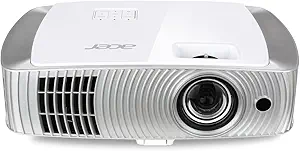
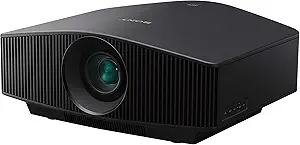
Sony vs Acer: Overview & Brand Philosophy
When navigating the modern projection landscape, few comparisons illustrate the contrast between premium home cinema engineering and value-driven commercial versatility quite like Sony versus Acer. Sony operates predominantly at the pinnacle of the projection industry. Its engineering philosophy is deeply rooted in cinematic fidelity, broadcast-grade imaging, and high-end visual precision. Targeting discerning cinephiles, custom-install home theaters, and elite commercial venues, Sony designs projectors that prioritize image depth, native resolution, and uncompromising color accuracy, often utilizing proprietary technologies developed directly from its Hollywood post-production pedigree.
Conversely, Acer approaches the market through the lens of accessibility, practical innovation, and cost-to-performance efficiency. Best known as a global computing and hardware giant, Acer applies its expertise to deliver projectors that cater extensively to educational environments, corporate boardrooms, entry-level home entertainment, and portable computing. Rather than pursuing ultra-premium luxury installations, Acer focuses on maximum brightness per dollar, robust connectivity, low maintenance costs, and hybrid versatility. Their lineup offers straightforward, plug-and-play solutions for consumers and enterprises seeking reliable big-screen displays without prohibitive price tags.
Ultimately, these two brands reflect fundamentally divergent market positions. Sony represents a boutique, high-performance approach where cost is secondary to optical supremacy, reference-level contrast, and cinematic artistry. Acer represents the democratization of projection technology, excelling in high-ambient-light environments, mobile work applications, and practical media consumption where budget optimization and user flexibility take precedence.
Key Differences & Technological Comparison
The foundational divergence between Acer and Sony begins with their internal display architectures. Sony exclusively champions its proprietary SXRD (Silicon X-tal Reflective Display) technology, a sophisticated liquid-crystal-on-silicon (LCoS) variant. SXRD delivers native 4K resolution (4096 x 2160 or 3840 x 2160) without digital pixel manipulation, paired with industry-leading native contrast ratios and microscopic pixel gaps that virtually eliminate the "screen door" effect. Acer, on the other hand, relies almost ubiquitously on Texas Instruments DLP (Digital Light Processing) chipsets. Acer frequently employs pixel-shifting technology (XPR) to achieve 4K output from smaller, cost-effective micromirror arrays, resulting in ultra-sharp, high-brightness imagery that excels in clarity, though it inherently struggles to match the deep, inky black levels of LCoS.
Light engines and optical processing further separate these manufacturers. Sony modern projectors are powered by long-lasting Z-Phosphor laser light sources paired with the advanced "X1 for projector" or cognitive processing chips. These systems execute real-time frame-by-frame HDR tone mapping, digital focus optimization, and dual-database upscaling. Mechanically, Sony incorporates large, motorized, multi-element glass lenses that provide exceptional vertical and horizontal lens shift ranges, allowing precise, artifact-free geometric alignment in custom theater rooms. Acer features a hybrid mix of high-pressure lamp, LED, and laser engines (Acer Vero line) designed for peak lumens to combat ambient room light. Their optics typically rely on manual zoom and focus dials with limited digital keystone correction, prioritizing rapid deployment over surgical optical calibration.
Pros & Cons Comparison
Sony Projectors
- Pro: Native 4K SXRD Panels: Delivers true native 4K image reproduction with unmatched pixel density and zero temporal artifacts associated with pixel shifting.
- Pro: Class-Leading Native Contrast: Exceptionally deep blacks and shadow detail, rendering high-contrast cinematic scenes with authentic depth.
- Pro: Reference-Grade Video Processing: Real-time dynamic HDR tone mapping and motion handling derive directly from Sony's master cinema monitor division.
- Pro: Motorized Optical Assemblies: Premium glass lenses equipped with extensive motorized shift, zoom, and lens memory for multiple aspect ratios.
- Con: Substantial Cost: Extremely high barrier to entry, with consumer models generally starting in the multi-thousand-dollar bracket.
- Con: Physical Footprint: Large, heavy chassis designs require dedicated ceiling mounts or specialized structural furniture, making them entirely non-portable.
Acer Projectors
- Pro: High Value-to-Cost Ratio: Delivers high lumen output and sharp 1080p or 4K resolution at a fraction of the cost of premium competitors.
- Pro: Versatile Form Factors: Broad portfolio ranging from pocket-sized ultra-portable LED units to heavy-duty conference room laser models.
- Pro: Excellent Brightness for Ambient Light: Tuned for visibility in brightly lit rooms, classrooms, and offices without total light control.
- Pro: Low Maintenance & Eco-Friendly Options: The Vero series utilizes recycled plastics and energy-efficient laser/LED sources for low operational overhead.
- Con: Limited Native Contrast: Black levels often lean dark gray, resulting in a flatter image profile in completely darkened home cinema settings.
- Con: Rainbow Effect Potential: Single-chip DLP architecture with spinning color wheels can cause perceptible color fringing for sensitive viewers.
Performance, Durability & Value Analysis
From a longevity and build quality standpoint, Sony projectors are constructed to commercial-grade standards, operating with over-engineered cooling channels and dust-sealed optical blocks that ensure high thermal stability. The implementation of laser solid-state illumination across their modern catalog yields consistent performance rated for upwards of 20,000 hours with negligible color drift. However, maintaining or servicing a Sony projector out of warranty represents a significant financial undertaking due to the proprietary nature of SXRD components. Acer units, while constructed with lighter, consumer-grade plastics, exhibit exceptional baseline durability within their mechanical class. Their DLP chips are impervious to thermal decay (unlike traditional transmissive LCD panels), and their solid-state LED/laser lines minimize operational intervention, making them reliably tough for mobile presentation environments and shared classroom usage.
Value assessment depends entirely on the deployment environment and the visual metric being prioritized. Sony does not aim to provide budget value; it provides experiential value for home cinema purists where color volume, dynamic range, and pixel-level precision justify significant expenditure. In contrast, Acer provides outstanding transactional value. An Acer projector often delivers three times the raw light output of an entry-level theater unit at a third of the capital cost, rendering it infinitely more practical for multipurpose living rooms, backyard movie nights, corporate boardrooms, or institutional spaces where critical cinema calibration is unnecessary.
Final Verdict: Which Brand Should You Choose?
Choosing between Acer and Sony requires evaluating your environment, performance expectations, and available budget. If your objective is to build a dedicated, light-controlled home theater room, private screening space, or luxury media sanctuary, Sony is the definitive choice. Its native 4K SXRD clarity, class-leading contrast processing, motorized precision optics, and authentic 24p cinematic rendering produce an uncompromising theater experience that Acer's hardware simply is not engineered to replicate.
If your requirements center around business meetings, educational lectures, mixed-use living spaces with uncontrolled ambient light, or budget-conscious home entertainment, Acer is the pragmatic, smart investment. Acer supplies the lumen power, compact form factors, rapid setup, and value-oriented 4K DLP playback required to deliver impactful, large-scale visuals without imposing an elite price tag.
Product Selection
When analyzing Product Selection, both Acer and Sony offer competitive choices in Projectors.
Affordability
When analyzing Affordability, both Acer and Sony offer competitive choices in Projectors.
Quality/Durability
When analyzing Quality/Durability, both Acer and Sony offer competitive choices in Projectors.
Customer Support & Warranty
When analyzing Customer Support & Warranty, both Acer and Sony offer competitive choices in Projectors.
Picture Quality
When analyzing Picture Quality, both Acer and Sony offer competitive choices in Projectors.