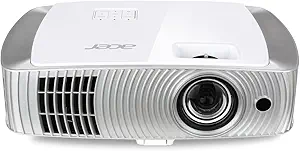
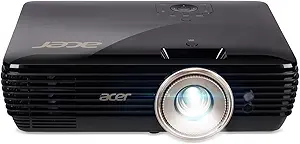
Acer vs Optoma: Overview & Brand Philosophy
When navigating the modern projection market, buyers frequently encounter Acer and Optoma as two dominant, yet fundamentally different, contenders. Acer, a global titan in consumer electronics, approaches the projector space through the lens of versatility, computing synergy, and broad accessibility. Known primarily for laptops, monitors, and IT hardware, Acer treats projection technology as an extension of functional computing. Its lineup largely focuses on high-lumen workplace machines, ultra-portable LED road-warrior units, and entry-level home entertainment projectors that prioritize plug-and-play simplicity and aggressive price-to-performance ratios.
Conversely, Optoma represents a dedicated specialist philosophy. As an enterprise singularly focused on display solutions, Optoma pours its research and engineering specifically into optical design, color science, and projection innovation. While Optoma maintains a robust presence in corporate and educational sectors, its heartland is home cinema, professional audiovisual installations, and ultra-short-throw (UST) living room theater replacements. Rather than viewing projectors as generic display peripherals, Optoma approaches them as high-fidelity cinematic instruments designed to maximize color volume, contrast dynamics, and optical precision.
This ideological split defines how each brand engineers and markets its hardware. Acer builds multi-purpose, reliable workhorses designed to hit budget-conscious specifications for hybrid workers and casual weekend movie watchers. Optoma targets discerning enthusiasts and specialized commercial operators who demand granular calibration controls, cutting-edge light source technology (such as pure laser engines), and industry-leading low input lag for competitive big-screen gaming.
Key Differences & Technological Comparison
While both manufacturers predominantly utilize Texas Instruments' Digital Light Processing (DLP) technology, their execution reveals distinct technical paths. Optoma invests heavily in advanced light engines, offering sophisticated DuraCore laser systems and multi-color LED setups alongside traditional high-pressure mercury lamps. Optoma’s high-end DLP implementations excel in dynamic contrast management through mechanisms like Dynamic Black, which modulates light output frame-by-frame to achieve deeper black levels than typical DLP projectors can muster. Furthermore, Optoma leads in input latency optimization, frequently delivering sub-16ms response times at 4K 60Hz and down to 4ms at 1080p 240Hz, making them a premier choice for gamers.
Acer counters this by prioritizing lumen output per dollar and seamless office integration. Acer’s proprietary technologies, such as Acer ColorBoost3D and ColorSafe II, are engineered to counteract the natural color decay of traditional lamps and improve brightness in high ambient light environments. While Acer offers 4K UHD models, its optical glass and lens shifting capabilities are generally more limited than Optoma's, relying more heavily on digital keystone correction, which can slightly degrade native resolution. Acer also incorporates features geared toward enterprise usability, including integrated Crestron and AMX network control protocols and Acer EcoProjection power-saving modes that significantly extend operational life.
Build quality and acoustic engineering also mark a divide. Optoma designs chassis with internal thermal baffling designed to dampen cooling fan acoustics, a critical metric for dedicated home theaters where projector noise can ruin quiet audio passages. Acer’s units feature functional, durable, but utilitarian enclosures where fan noise is often higher, reflecting an engineering baseline optimized for conference rooms and open living areas rather than dark, quiet screening rooms.
Pros & Cons Comparison
Acer Projectors
- Pros:
- Exceptional value-for-money, particularly in the sub-$600 business and classroom tiers.
- High out-of-the-box lumen brightness, capable of cutting through significant ambient room light.
- Robust wireless connectivity options and strong mobile-device screen mirroring compatibility.
- Extensive power-saving modes (EcoProjection) that extend lamp lifespans up to 15,000+ hours.
- Cons:
- Elevated cooling fan noise, especially under standard brightness operating modes.
- Mediocre native black levels and shadow detail compared to dedicated cinema units.
- Limited physical lens shift and optical zoom ranges require more precise physical placement.
Optoma Projectors
- Pros:
- Superior optical precision, contrast ratios, and color accuracy (wide DCI-P3 and Rec.709 coverage).
- Market leader in low input lag and high refresh rates for console and PC gaming.
- Comprehensive lineup of ultra-short-throw (UST) and DuraCore laser projection options.
- Refined acoustic dampening for significantly quieter operation in home theater environments.
- Cons:
- Higher cost of entry across almost all equivalent resolution brackets.
- Occasional software/firmware quirks with internal media players and smart UI layers.
- Customer support experiences can vary depending on regional distributor structures.
Performance, Durability & Value Analysis
From a performance perspective, Optoma commands a distinct advantage in picture quality fidelity and responsiveness. In dark-room environments, Optoma projectors deliver substantially richer black levels, minimizing the milky gray cast that plagues entry-level projection systems. Their color calibration menus are typically ISFccc certified, allowing certified technicians or advanced enthusiasts to tune RGB gains and biases precisely. In terms of durability, Optoma's DuraCore laser engines are sealed against dust infiltration with IP5X or IP6X ratings, effectively removing maintenance headaches related to optical engine cleaning and ensuring stable lumen output over thousands of hours without lamp failures.
Acer, however, dominates the pure value equation for utilitarian and everyday multi-purpose usage. If an enterprise or individual requires a 4,000-lumen projector for brightly lit presentations, casual backyard movie screenings, or day-lit sports viewing, Acer consistently undercuts Optoma by 15% to 30% for identical lumen and native resolution tiers. In terms of hardware longevity, Acer's electrical components and thermal protection systems are inherently durable, often surviving harsh classroom environments and transport abuse without issue. While you surrender absolute black levels and high-end cinematic nuance, Acer maximizes the operational utility of every dollar spent.
Final Verdict: Which Brand Should You Choose?
Your choice between Acer and Optoma fundamentally hinges on your primary use-case environment and performance sensitivity:
Choose Optoma if: You are constructing a dedicated home theater, seeking an ultra-short-throw laser TV to replace your living room television, or demanding a high-performance big-screen gaming display. Optoma's superior optical lenses, nuanced contrast handling, quiet thermal management, and ultra-fast refresh rates make it the clear victor for users prioritizing image fidelity, cinema-grade color reproduction, and serious gaming performance.
Choose Acer if: You are shopping on a strict budget, outfitting classrooms or corporate meeting spaces, or looking for a casual entertainment device that performs reliably in ambient daylight. Acer delivers high brightness, solid reliability, and dependable wireless features at price points that are difficult to beat, making it the smarter, highly pragmatic choice for general-purpose utility and value-driven buyers.
Product Selection
When evaluating product selection in the projector category, the core distinction lies between Optoma’s specialized, cinema-and-pro-grade dedication versus Acer’s value-driven, multi-device ecosystem approach. Optoma functions almost exclusively as a projection specialist, engineering an expansive portfolio that spans entry-level 1080p entertainment units, high-performance ultra-short-throw (UST) laser systems, high-refresh-rate competitive gaming models, and heavy-duty commercial installations surpassing 10,000 lumens with interchangeable motorized lenses. In contrast, Acer positions its projector division as a complementary wing of its broader computing hardware business. Acer’s catalog is heavily weighted toward affordable SVGA-to-4K business and educational DLP projectors, supplemented by compact LED and portable travel units like the C-Series, but it notably lacks the ultra-high-end home theater and modular venue options that define the premium market.
From an engineering and technical feature-set perspective, Optoma offers a far more granular and advanced spectrum of hardware choices. Gamers and home theater purists benefit from Optoma’s CinemaX UST series and dedicated UHD gaming lines, which integrate advanced dynamic black contrast modulation, multi-point geometric correction, and native 240Hz refresh rates with input lag as low as 4ms. Acer, while capable of producing capable 4K gaming and multimedia units through its Predator and Vero sub-brands, primarily optimizes its selection around cost efficiency, basic high-brightness data projection (LumiSense technology), and eco-conscious engineering through post-consumer recycled plastics and energy-saving lamp modules. Acer often relies on standard fixed-throw or minimal zoom ratios across its mid-tier models, restricting placement flexibility compared to Optoma’s robust offerings of horizontal/vertical lens shift and wide optical zoom ranges.
The practical trade-offs for consumers hinge on deployment needs and budgetary boundaries. Buyers seeking specialized installation capabilities—such as massive auditorium projection, ambient-light-rejecting UST setups, or color-critical DCI-P3 cinematic spaces—will find Acer’s catalog limiting, as the brand tops out at mainstream consumer and boardroom-level specifications. However, for schools, corporate breakout rooms, and budget-conscious individuals who require simple, plug-and-play lumens without the price premium of cinematic optics, Acer provides a dependable, easily navigable selection that undercuts the market. Optoma ultimately secures the advantage in total product selection depth, offering superior engineering variety tailored precisely to specialized audiovisual sub-niches, whereas Acer remains focused on general-purpose utility and accessibility.
Affordability
When evaluating affordability in the projector market, Acer positions itself as an aggressive budget-to-midrange contender, prioritizing low barriers to entry and maximum utility per dollar. Leveraging its vast computing supply chain, Acer excels in the ultra-budget and sub-$600 home office and education categories with high-lumen, DLP-based data projectors. From an engineering standpoint, Acer cuts costs strategically: it frequently relies on standardized, functional plastic chassis designs and simplified cooling systems, which can result in slightly higher fan noise and utilitarian aesthetics. However, the technical strengths are undeniable for price-conscious buyers. Acer models regularly deliver exceptional ANSI lumen counts at lower price brackets than competitors, ensuring usable, bright images even in ambient light without requiring a dedicated dark-room setup. The trade-off lies primarily in video processing refinement, lower native contrast ratios, and basic color calibration tools, making Acer an optimal choice for pragmatic users prioritizing raw brightness and functional display utility over cinema-grade nuance.
Conversely, Optoma approaches affordability through a lens of value-engineering tailored specifically for dedicated home cinema and enthusiast gaming, rather than pure rock-bottom pricing. While Optoma offers competitive entry-level models, its true affordability strength lies in the democratization of high-end optical features—such as native 4K UHD pixel-shifting technology, high-refresh-rate gaming modes (up to 240Hz), and laser phosphor light engines—at prices significantly below traditional luxury AV brands. Optoma’s engineering quality features superior multi-element glass lenses, lower input lag architectures, and proprietary color-wheel configurations (like dynamic black and advanced dynamic range tone-mapping) that yield richer color fidelity and higher sequential contrast than comparable Acer units. The practical trade-off is that Optoma’s entry-level threshold is typically higher in price than Acer’s base offerings, and replacement proprietary components like optical assemblies or specialized lamps can lead to slightly higher long-term maintenance costs.
Ultimately, the determination of affordability depends on the consumer's definition of value versus initial capital outlay. Acer captures the absolute cost-savings crown, providing reliable, high-brightness projection for classrooms, small meeting rooms, and casual backyard movie setups with a minimal upfront investment and low operational risk. Optoma represents performance-tier affordability; it is the brand of choice for consumers seeking the lowest cost per cinematic performance threshold, offering near-professional image precision and gaming responsiveness that justify a moderately higher price point. While Acer wins on raw purchase price, Optoma often delivers higher retained value and better optical engineering, making it the more cost-efficient long-term option for serious media enthusiasts.
Quality/Durability
When assessing engineering quality and long-term durability in the projector market, Optoma stands out as a dedicated specialist, while Acer operates as a versatile, value-driven contender. Optoma builds its reputation on robust optical architecture, frequently utilizing commercial-grade, sealed IP5X or IP6X dust-resistant optical engines in its popular DuraCore laser and higher-end DLP models. This structural enclosure prevents dust and particulates—the primary culprits behind optical degradation and thermal failure—from settling on the DMD (Digital Micromirror Device) chip and internal filters. In contrast, Acer frequently leverages reliable Texas Instruments DLP chipsets within cost-effective chassis designs. While Acer’s engineering is perfectly adequate for standard home or low-to-medium business usage, its consumer-tier lamp-based and entry-level LED units rely heavily on standard ventilation pathways that are more susceptible to ambient dust accumulation, requiring diligent maintenance to prevent internal thermal throttling over time.
From a hardware and component longevity perspective, Optoma prioritizes heavy-duty continuous operation, designing many of its models to handle demanding 24/7 commercial, gaming, or high-end home theater cycles. Optoma's premium models typically feature superior thermal dissipation systems, including advanced heat-pipe arrays and larger, lower-RPM cooling fans that lower operating temperatures without generating excessive chassis strain or high acoustic noise. Acer excels in bringing solid durability to entry-level and mid-range pricing, deploying rugged, compact plastic housings and competitive solid-state LED light sources with life expectancies reaching 20,000 to 30,000 hours. However, practical trade-offs emerge in Acer’s mechanical components; focus wheels, zoom rings, and physical tilt adjusters often feel lighter and have higher tolerance variations compared to the precision-tooled, weighted dials found on Optoma’s equivalent tiers.
Ultimately, the durability comparison reveals distinct brand priorities tailored to different usage patterns. Acer delivers commendable build quality for budget-conscious consumers and education environments where devices face intermittent daily usage, balancing component lifespan against accessible initial price points. Optoma commands a higher price bracket because its chassis rigidity, internal opto-mechanical shielding, and long-term chip stability are engineered to resist mechanical wear and thermal stress across sustained, heavy-duty workloads. For casual or moderate home viewing, an Acer unit offers sufficient structural resilience, but Optoma provides the superior engineering, lower component failure rates, and environmental defense necessary for demanding installations and long-term durability.
Customer Support & Warranty
When assessing customer support and warranty coverage, the core divergence between Acer and Optoma stems from their contrasting market identities: Acer operates as a vast, diversified computing conglomerate, whereas Optoma is a specialized audiovisual manufacturer dedicated almost entirely to projection technology. Acer’s standard projector warranty generally provides one to two years of limited hardware coverage, though premium home cinema or commercial laser models may extend up to three or five years, respectively. However, Acer’s support ecosystem is integrated into its broader PC-centric infrastructure. While this guarantees widespread regional service centers, standardized ticketing systems, and broad knowledge bases, end-users frequently report a lack of deep, nuanced technical expertise regarding specialized optical issues, color wheel calibration, or color-space anomalies when dealing with Tier-1 support agents. Furthermore, Acer’s lamp warranties are relatively conservative, often limited to 90 to 180 days (or 500 to 1,000 hours), reflecting a standardized consumer electronics approach rather than a cinema-grade commitment.
Conversely, Optoma delivers an audiovisual-centric support experience that tends to resonate more favorably with home theater enthusiasts, educational institutions, and AV integrators. Optoma typically backs its consumer DLP projectors with a robust one-to-three-year limited warranty, paired with extensive five-year or 12,000-to-20,000-hour light source guarantees on its DuraCore laser and DuraCore LED line-ups. Because Optoma’s operations are intensely focused on display engines, optical assemblies, and signal processing, their customer service and technical support representatives demonstrate a higher level of projector-specific engineering proficiency. Troubleshooting advanced configurations—such as 240Hz gaming handshakes, keystone/geometric grid corrections, or HDMI-EDID sync failures—is consistently smoother with Optoma’s specialized staff. However, Optoma's warranty execution is not without criticism; repair turnaround times during peak periods can experience bottlenecks due to a more consolidated network of dedicated service depots compared to a massive multinational like Acer.
Ultimately, the practical trade-off between the two brands revolves around infrastructure breadth versus domain-specific depth. Acer provides accessible, highly mechanized logistics with predictable RMA procedures, making it an easy fit for corporate IT departments already managing Acer enterprise ecosystems. Optoma, however, offers superior protection against catastrophic optical engine degradation and laser decay, backed by knowledgeable technical agents who understand the intricacies of DLP projection. For buyers prioritizing long-term solid-state illumination security and expert troubleshooting for advanced AV setups, Optoma holds the distinct advantage, while Acer remains a functional, budget-friendly alternative with standard consumer-grade assurances.
Picture Quality
When evaluating picture quality between Acer and Optoma projectors, engineering focus and color science dictate noticeably different visual experiences. Optoma functions as a dedicated display manufacturer, and this specialization is evident in their sophisticated image processing pipelines. Leveraging advanced DLP (Digital Light Processing) technology paired with proprietary systems like PureEngine and Amazing Color, Optoma consistently achieves superior native contrast ratios, deeper black levels, and cinematic color fidelity right out of the box. Many of their home theater and gaming models utilize specialized multi-segment color wheels (such as RGBRGB) that cover wide color gamuts, including Rec. 709 and DCI-P3, while virtually eliminating the distracting "rainbow effect" (color breakup). By comparison, Acer approaches projector engineering with a balanced, general-purpose computing mindset. Utilizing technologies like Acer ColorBoost3D and ColorSafe II, Acer focuses on preventing color decay over long periods and delivering bright, punchy images suitable for mixed-use environments like classrooms and boardrooms, though often at the expense of absolute color accuracy and shadow detail.
In high-dynamic-range (HDR) rendering and lumen efficiency, the technical trade-offs between the two brands become pronounced. Optoma's HDR10 and HLG tone-mapping algorithms are among the best in the mid-to-high consumer tiers, intelligently retaining highlights without crushing dark scene details—a crucial factor for cinephiles. Furthermore, Optoma’s specialized gaming and high-end laser lineups (like the CinemaX and UHD series) excel in optical sharpness, featuring multi-element glass lenses that minimize chromatic aberration across the entirety of the projection surface. Conversely, Acer excels in raw lumen-per-dollar value, heavily favoring bright-output installations where ambient light is a major factor. However, to achieve higher brightness at lower price points, Acer frequently relies on DLP color wheels with white/clear segments (such as RGBCYW). While this design effectively punches through ambient light, it compromises color saturation, washes out deeper blacks into a muddy charcoal gray, and diminishes contrast dynamics in light-controlled spaces.
Ultimately, the practical choice between Acer and Optoma centers on intended viewing conditions versus budget allocation. Acer delivers solid, highly reliable, and utilitarian picture quality; its sharpness and vibrant, bright output are well-matched for data-heavy presentations, casual sports viewing, and cost-conscious buyers needing a versatile display for ambient-lit living rooms. Optoma remains the undisputed frontrunner for dedicated media consumption, cinephiles, and discerning visual enthusiasts. By investing in superior optical glass, nuanced dynamic tone mapping, and precise color calibration standards, Optoma produces an undeniably more cinematic, immersive, and visually authentic picture, justifying its generally higher price point through superior contrast and color depth.