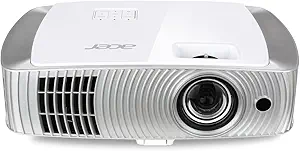
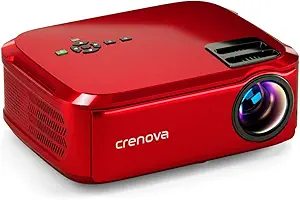
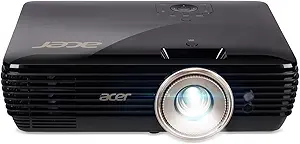
Acer vs Crenova: Overview
Comparing Acer and Crenova helps you determine which brand is best suited for your needs in Projectors. Both brands offer strong choices depending on your budget and key feature requirements.
Key Features & Comparison
Evaluate factors such as build quality, warranty, customer satisfaction, and total value before making your final purchase choice between Acer and Crenova.
Product Selection
When evaluating product selection in the projector category, Acer and Crenova represent two fundamentally different market tiers and engineering philosophies. Acer offers an expansive, vertically integrated catalog engineered for diverse operational environments, spanning enterprise, education, high-end home theater, and portable consumer sectors. Leveraging advanced optical engines—predominantly high-reliability Texas Instruments DLP chips alongside select laser and LED light sources—Acer’s portfolio scales from ultra-short-throw 4K UHD laser projectors pushing 5,000+ ANSI lumens to compact, battery-powered travel units. In stark contrast, Crenova concentrates strictly on the entry-level consumer and budget home-entertainment niche. Their catalog is deliberately narrow, dominated by single-panel LCD projectors augmented with basic LED lamps, generally designed for casual indoor movie viewing or ambient backyard use with limited lumen output and modest baseline hardware.
The feature sets across both portfolios further illuminate this disparity in selection depth. Acer’s expansive lineup delivers granular technical solutions tailored to professional deployment, such as motorized lens shift, comprehensive optical zoom ratios, professional color gamut coverage (Rec. 709, DCI-P3), high-refresh-rate gaming modes (up to 240Hz), and networked control capabilities (Crestron, AMX). Conversely, Crenova prioritizes plug-and-play simplicity and cost minimization. Their selection predominantly varies by chassis aesthetics, minor lumen increments, and basic digital conveniences—such as integrated Android TV OS, rudimentary digital keystone correction, and native screen mirroring via Wi-Fi and Bluetooth—while lacking critical mechanical lens adjustments or verified high-lumen capabilities necessary to overcome ambient light.
Ultimately, the practical trade-offs regarding product selection center on flexibility and application versus budget constraints. Consumers considering Acer benefit from a multi-tiered ecosystem backed by tier-one manufacturing, rigorous thermal dissipation designs, and broad optical variations suited for boardroom presentations, dedicated darkrooms, or daylight-heavy living rooms, though this versatility comes at a significantly higher price premium. Crenova offers a straightforward, low-barrier-to-entry catalog for budget-conscious buyers seeking an affordable, all-in-one entertainment device, but prospective buyers face substantial trade-offs in color accuracy, optical uniformity, durability, and use-case versatility due to the absence of mid-to-high-tier performance models.
Affordability
When evaluating affordability in the projector market, Crenova and Acer represent fundamentally different value propositions, distinguishing ultra-low upfront cost from long-term, performance-driven return on investment. Crenova operates squarely within the budget lifestyle tier, offering some of the lowest barriers to entry in the entire industry. By leveraging single-panel LCD technology paired with commodity LED light engines, Crenova manufactures portable units that are priced accessible to casual hobbyists and families looking for occasional backyard movie nights. However, this aggressive sub-$100 to $200 pricing strategy requires substantial engineering compromises: optical clarity often suffers from severe edge-blurring, cooling solutions can be noisy, and lumens are frequently marketed using inflated marketing metrics rather than strict ANSI standards. Consequently, while Crenova is exceptionally affordable at the point of sale, buyers trade away brightness, native high-resolution imaging, and structural longevity, meaning that for serious home theater or ambient-light viewing, the unit may quickly require replacement.
Conversely, Acer approaches affordability through the lens of cost-per-performance, bridging the gap between entry-level practicality and certified professional hardware. While an Acer projector generally demands a higher initial investment—often starting in the $300 to $600 range—the brand utilizes robust Digital Light Processing (DLP) or 3LCD architectures with industry-standard ANSI lumen ratings and superior color wheels. The engineering dividend of this higher price floor includes precise optical zoom lenses, lower input lag suitable for gaming, and sealed optical engines that eliminate the common dust-spot vulnerabilities seen in cheaper LCD enclosures. Furthermore, Acer designs with commercial-grade duty cycles in mind, utilizing advanced thermal dissipation and power-saving EcoModes that prolong lamp and diode lifespans up to 20,000 hours, dramatically minimizing total cost of ownership. For consumers focused purely on nominal out-of-pocket expense, Crenova delivers unmatched initial savings; however, Acer establishes a superior balance of durable build quality, calibrated performance, and lifespan that proves far more cost-effective for everyday and professional use.
Quality/Durability
When evaluating engineering quality and durability, Acer operates as an established tier-one hardware manufacturer, whereas Crenova primarily occupies the budget consumer tier. Acer projectors are engineered with enterprise- and education-grade structural integrity, featuring robust, thermally optimized chassis that prevent internal heat accumulation—the primary driver of component failure in projection devices. Acer heavily leverages proprietary, sealed DLP (Digital Light Processing) engines alongside ruggedized casing materials and sealed optical architectures, which protect the internal DLP chip and color wheel from ambient dust infiltration. In stark contrast, Crenova devices typically utilize single-panel LCD projection architectures housed in lightweight plastic enclosures. These designs are significantly more susceptible to environmental degradation; unsealed optical paths in Crenova models frequently lead to dust accumulation directly on the internal LCD panel, causing irreversible thermal burn-in, dead pixels, and pervasive yellow discoloration over prolonged usage.
In terms of component reliability and practical trade-offs, Acer integrates commercial-standard thermal management systems, high-grade ball-bearing fans, and certified power supplies designed to withstand frequent voltage fluctuations and thousands of hours of continuous duty. While Crenova markets the theoretical longevity of solid-state LED light sources—often claiming up to 50,000 hours of lamp life—the ancillary components typically fail long before the light source reaches its rated lifespan. Budget-tier capacitors, fragile internal focusing gears, and inadequate passive cooling frequently compromise Crenova units within 12 to 24 months of moderate ownership. Conversely, Acer’s thermal mitigation ensures consistent optical alignment and steady lumen output over extended lifespans, supported by robust regional warranties, replacement component availability, and stringent international compliance standards (such as CE and FCC certifications) that Crenova rarely matches.
Ultimately, the durability distinction between these brands reflects their intended market segments. Acer demands a higher initial capital investment, but it delivers measurable technical resilience, stable thermal dynamics, and reliable physical construction capable of enduring rigorous multi-hour home cinema sessions or daily corporate demands. Crenova serves as an entry-level convenience option that presents a low financial barrier, but consumers trade off long-term operational durability. For buyers seeking a projector engineered to maintain structural and optical fidelity over several years, Acer is the categorically superior investment, whereas Crenova remains restricted to intermittent, disposable consumer usage with elevated failure risks over time.
Customer Support & Warranty
When evaluating the post-purchase experience and long-term reliability in the projector market, the divide between an established multinational hardware manufacturer like Acer and a budget-oriented direct-to-consumer brand like Crenova is stark. Acer provides enterprise-grade customer support backed by a globally distributed service infrastructure. Their standard consumer and business projectors typically feature a comprehensive one-to-three-year limited hardware warranty, often paired with a dedicated lamp-hour guarantee (commonly one year or 1,000 hours, whichever comes first). Acer’s engineering-level documentation is exhaustive, offering readily accessible firmware updates, comprehensive multilingual user manuals, and technical schematics. In contrast, Crenova operates primarily through third-party e-commerce channels, offering a standard one-year warranty on paper that is largely dependent on the retailer's fulfillment ecosystem. Crenova’s technical documentation is often minimal, firmware update cycles are practically nonexistent, and troubleshooting resources are limited to generic digital quick-start guides.
The technical strengths and operational trade-offs become particularly evident when handling component failures, warranty claims, and routine maintenance. Acer maintains certified regional repair depots, robust ticket-tracking systems, and tiered phone and live-chat technical assistance capable of diagnosing complex DLP engine faults, color-wheel sync errors, or power-supply issues. This structured ecosystem ensures that if an internal component fails, genuine OEM parts and factory-calibrated replacements are used. Conversely, Crenova's support model lacks a physical repair network. In the event of a critical failure—such as an LED array burn-in or single-LCD thermal degradation—Crenova's resolution pathway relies on email or marketplace messaging that frequently bypasses diagnostic troubleshooting in favor of shipping a complete replacement unit or offering a partial refund. While this can provide a frictionless, "no-questions-asked" resolution for simple defects within the initial return window, it creates severe long-term usability risks once the initial warranty expires, as replacement optical components and board-level repairs simply cannot be sourced.
Ultimately, the choice between Acer and Crenova in terms of support and warranty reflects a trade-off between institutional accountability and low-cost expediency. For professional installations, classroom deployment, or dedicated home theater environments where downtime is unacceptable and longevity is paramount, Acer's structured, documented, and globally recognized warranty programs provide necessary investment security. Crenova may suffice for consumers seeking an entry-level, low-cost projection solution where the replacement cost of the hardware is low enough that total unit replacement compensates for the absence of dedicated, engineering-grade post-sales technical support.
Picture Quality
When evaluating picture quality between Acer and Crenova, the fundamental divergence lies in their core display architectures and optical engineering standards. Acer, an established heavyweight in the visual display industry, predominantly leverages advanced Texas Instruments DLP (Digital Light Processing) technology paired with sophisticated proprietary color-enhancement engines like ColorBoost3D and ColorSafe. This enables Acer projectors to deliver high native contrast ratios, deep black levels, and exceptional color fidelity with wide Rec. 709 gamut coverage. Furthermore, Acer’s optics utilize multi-element precision glass lenses that minimize chromatic aberration and corner-to-corner softness, ensuring pin-sharp focus from the center to the periphery. In sharp contrast, Crenova operates primarily in the budget-oriented LCD segment, utilizing single-panel LCD engines paired with standard LED light sources. While Crenova models often claim high "supported" resolutions, their native resolution often caps at basic 1080p, typically exhibiting higher pixel grid visibility, compromised black levels that skew toward a muddy gray, and noticeable edge-blurring due to cheaper plastic lens elements.
The technical disparity becomes even more pronounced when considering luminance performance, motion handling, and dynamic range. Acer designs its projectors to output verified ANSI lumens—often ranging from 3,500 to well over 4,500 lumens in their business and home entertainment lines—allowing for vibrant, punchy HDR10 and HLG decoding that resists ambient light wash-out. This is complemented by high dynamic refresh rates and sophisticated digital image processing chips that effectively eliminate motion blur and judder during fast-paced video or gaming sequences. Conversely, Crenova projectors frequently rely on ambiguous "lux" ratings rather than standardized ANSI measurements, delivering realistic light output that rarely exceeds a few hundred true ANSI lumens. This severely restricts Crenova's dynamic range; in environments with any ambient light, the picture washes out dramatically, crushing shadow details and over-saturating highlights. In pitch-black environments, Crenova displays can produce a passable, colorful image, but they frequently struggle with motion artifacts, color banding, and limited gamma control compared to Acer's fine-tuned color wheels.
Ultimately, the practical trade-off between the two brands centers on optical fidelity versus cost-driven adequacy. Acer offers superior, cinema-grade picture quality featuring true-to-life color calibration, exceptional brightness uniformity, and robust contrast, making it the clear choice for demanding home theater enthusiasts, gamers, and professional environments where visual accuracy is non-negotiable. Crenova serves as a strictly entry-level alternative, trading advanced image processing and optical precision for an accessible price point. While Crenova's picture quality may suffice for casual backyard movie nights or rudimentary projection needs where critical image sharpness and dynamic range are secondary, it falls considerably short of the technical refinement, luminance output, and color precision engineered into Acer's projector lineup.