





Brother vs Lexmark: Overview
Comparing Brother and Lexmark helps you determine which brand is best suited for your needs in Printers. Both brands offer strong choices depending on your budget and key feature requirements.
Key Features & Comparison
Evaluate factors such as build quality, warranty, customer satisfaction, and total value before making your final purchase choice between Brother and Lexmark.
Features
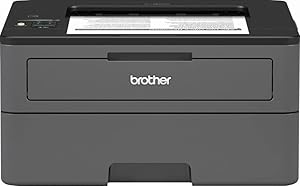
From a feature and functional capability standpoint, Brother excels in usability, everyday versatility, and transparent consumable management. Brother machines frequently incorporate flexible physical connectivity options—including dual-band Wi-Fi, Ethernet, NFC touch-to-print, and comprehensive mobile printing support via AirPrint, Mopria, and their intuitive Mobile Connect app. A defining technical advantage for Brother, particularly in their desktop laser and all-in-one lines, is their modular consumable architecture with separate toner cartridges and photoconductor drum units, which reduces operational waste and allows users to replace only what is depleted. Additionally, Brother's cloud-integrated scanning shortcuts facilitate seamless document capture to Google Drive, OneDrive, and Dropbox directly from mid-range touchscreen displays, making advanced digitization accessible without demanding complex enterprise server setups.
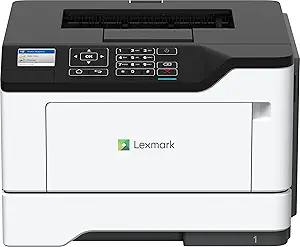
Lexmark, conversely, differentiates itself through enterprise-grade firmware intelligence, advanced workflow customization, and state-of-the-art security suites. Operating on its proprietary e-Task interface, Lexmark’s large, tablet-like touchscreens serve as interactive enterprise terminals capable of running embedded Lexmark Embedded Solutions Framework (eSF) applications. These apps allow organizations to integrate scanned documents directly into ERP, CRM, or specialized document management repositories like SharePoint with rule-based routing and automated metadata tagging. Lexmark’s feature set is further elevated by its comprehensive 'Full Spectrum' security architecture, which includes hardware-level root-of-trust, continuous firmware monitoring, encrypted hard drives, and native support for CAC/PIV card authentication, providing a level of cryptographic protection that easily surpasses Brother's standard small-business security protocols.
Performance
Evaluating pure hardware performance reveals notable operational trade-offs, particularly in duty cycle sustainability and print speed characteristics. Brother's performance profile is optimized for rapid burst printing in small workgroups, boasting exceptionally fast first-page-out times (often under 7 seconds from ready mode) that make single-to-few-page print jobs practically instantaneous. Their compact laser engines produce razor-sharp monochrome text with exceptional clarity at nominal speeds ranging from 30 to 48 pages per minute. However, while Brother printers handle daily office tasks with high mechanical resilience, their continuous monthly duty cycles and paper input capacities are calibrated for moderate, intermittent workloads rather than non-stop, shift-based printing demands.
Lexmark exhibits its engineering prowess when subjected to relentless, high-volume production cycles. While some Lexmark models exhibit slightly longer warm-up latencies due to deep-sleep power-saving modes, their sustained continuous output speeds frequently reach 50 to 70 pages per minute with minimal thermal degradation or internal heat throttling. Powered by robust multi-core processors and expandable RAM, Lexmark machines chew through complex, graphics-heavy PostScript and PCL files or multi-page vector PDFs without the memory bottlenecks that can occasionally slow down mid-tier Brother units. Moreover, Lexmark's industrial dual-cis single-pass document feeders and heavy-duty fusers are built to process tens of thousands of pages monthly, delivering unmatched paper-path reliability and consistent toner fusing under continuous industrial stress.
Design
Design philosophies between the two manufacturers reflect their respective core environments, contrasting compact consumer practicality with rugged modular industrialism. Brother machines are purposefully designed with space-saving, low-profile footprints that integrate comfortably on standard office desks or shared work tables. The engineering focuses on ergonomic simplicity: front-loading paper trays, intuitive clamshell access for toner replacement, and straightforward physical control panels that minimize user confusion. The exterior casing primarily utilizes matte, fingerprint-resistant plastics configured to endure standard office wear, keeping total unit weight relatively low and facilitating effortless deployment or physical relocation within dynamic office environments.
Lexmark designs, by comparison, are engineered with industrial durability, modular vertical expansion, and fleet uniformity at the forefront. Lexmark chassis are built upon heavy, torsion-resistant steel frames that minimize mechanical vibration during high-speed printing, resulting in significantly heavier, more robust units with a substantial footprint. These devices are intrinsically modular, engineered to accommodate tower configurations with multiple 550-sheet input trays, high-capacity envelope feeders, integrated staple finishers, and multi-position hole-punch attachments. While Brother's design prioritizes plug-and-play desktop convenience, Lexmark’s industrial design provides the structural stability, mechanical headroom, and physical serviceability demanded by high-traffic enterprise environments.