



Samsung vs ViewSonic: Overview
Comparing Samsung and ViewSonic helps you determine which brand is best suited for your needs in Monitors. Both brands offer strong choices depending on your budget and key feature requirements.
Key Features & Comparison
Evaluate factors such as build quality, warranty, customer satisfaction, and total value before making your final purchase choice between Samsung and ViewSonic.
Affordability
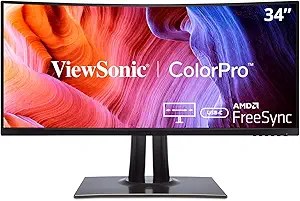
When evaluating affordability, ViewSonic fundamentally anchors its brand identity on high value-for-money, particularly across the budget and mid-tier enterprise and consumer segments. ViewSonic excels at delivering panel essentials—such as reliable IPS displays with high refresh rates or factory-calibrated color profiles—at prices that systematically undercut mainstream giants. For small-to-medium businesses, education sectors, and budget-conscious gamers, ViewSonic’s OMNI and ColorPro lines strip away extraneous aesthetic luxuries like RGB lighting or ultra-thin bezels to pass pure hardware value directly to the buyer, making them one of the most cost-effective brands on the shelf.
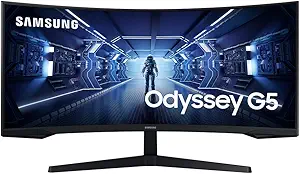
Samsung operates on a vastly different pricing spectrum, often occupying the premium and ultra-premium tiers while maintaining an entry-level fleet that trades off certain specs to stay competitive. While Samsung's budget monitors provide decent baseline utility, consumers typically pay a brand premium for the styling and proprietary Tizen OS smart features integrated into their Smart Monitor series. In the high-end gaming and productivity spaces, particularly with their Odyssey and ViewFinity lines, Samsung charges significantly more than ViewSonic. However, Samsung offsets these steeper prices with cutting-edge panel technology like Mini-LED and QD-OLED, which ViewSonic rarely rivals in scale or technological ambition, meaning Samsung justifies its cost through bleeding-edge performance rather than sheer frugality.
Customer Support & Warranty
ViewSonic establishes an industry-leading standard when it comes to standard manufacturer warranties, outperforming Samsung across almost every standard commercial and consumer display. ViewSonic typically protects its desktop displays with a standard three-year limited warranty covering parts, labor, and the backlight, backed by an explicit LCD Pixel Performance Guarantee that offers clear thresholds for replacement due to defective sub-pixels. Additionally, ViewSonic provides corporate programs like 'Express Exchange' for business clients, minimizing downtime through rapid product replacement and offering responsive, North American-based technical support that generally receives praise for its direct, low-friction resolution process.
In contrast, Samsung’s warranty coverage is notably more conservative, typically offering a limited one-year warranty on standard consumer and gaming monitors, with select commercial panels extending to three years. For premium offerings like the Odyssey OLED series, early burn-in coverage policies were historically vague compared to specialized competitors, though Samsung has gradually updated guidelines to compete. Furthermore, dealing with Samsung customer support can occasionally be an exercise in bureaucracy; as a consumer electronics conglomerate, navigating tiers of outsourced representatives to get RMA authorization for complex issues like panel flicker or micro-dimming faults can be time-consuming compared to ViewSonic’s streamlined, dedicated display-service channels.
Picture Quality
In raw visual performance and technological innovation, Samsung is an uncontested panel pioneer. Leveraging its display-manufacturing dominance via Samsung Display, the brand pushes the absolute envelope of picture quality with state-of-the-art Quantum Dot (QD-OLED), high-density Mini-LED backlighting, and dramatic 1000R curved screens. Samsung's top-tier displays deliver infinite contrast ratios, class-leading peak HDR brightness exceeding 1,000 nits, and unprecedented color volume. While lower-end Samsung VA panels can occasionally struggle with viewing angles or pixel response transitions (black smearing), their premium displays deliver an intensely immersive, cinematographic experience that dominates the high-end gaming and media consumption market.
ViewSonic approaches picture quality from a philosophy of chromatic accuracy, clinical precision, and wide-angle consistency rather than sheer HDR intensity. Its ColorPro series relies heavily on high-grade IPS panels characterized by broad color space coverage (AdobeRGB, DCI-P3), factory Delta E < 2 calibration, and integrated hardware calibration tools engineered for graphic designers, video editors, and photographers. While ViewSonic monitors generally feature lower native contrast ratios and lack the ultra-deep black levels and dazzling peak brightness seen in Samsung's high-end Mini-LED and OLED units, they provide uniform illumination, minimal color shift, and authentic color reproduction that professionals depend on for critical color-grading tasks.
Build Quality & Durability
Samsung’s build quality showcases sophisticated industrial design, but it can be polarizing when it comes to functional durability and mechanical tolerances. High-end Samsung monitors feature striking aerospace-inspired enclosures, metallic accents, and integrated cable routing channels. However, the aggressive curvature on models like the Odyssey Neo G9 puts high mechanical stress on panel layers, historically leading to occasional complaints regarding bezel separation, creaking plastics under thermal expansion, and fragile panel bonds. Additionally, the broad 'V-wing' stands native to the Odyssey series consume immense desktop real estate and introduce minor wobble, though recent iterations have trended toward sleeker, more stable flat metal bases.
ViewSonic prioritizes utilitarian robustness, functional ergonomics, and long-term mechanical reliability over flashy aesthetics. Enclosures are primarily composed of textured, heavy-duty matte plastics that resist scratches, scuffs, and fingerprints, reflecting the brand’s deep roots in enterprise and educational environments. ViewSonic’s stands are among the most versatile in the industry, offering expansive height, tilt, swivel, and 90-degree pivot adjustments alongside secure, weighted footprints that resist tipping. While a ViewSonic monitor will rarely win design awards for futuristic elegance, its thermal dissipation, component longevity, and rugged mechanical joints ensure dependable operation over many years of continuous daily use.