Lenovo vs MSI: Overview
Comparing Lenovo and MSI helps you determine which brand is best suited for your needs in Monitors. Both brands offer strong choices depending on your budget and key feature requirements.
Key Features & Comparison
Evaluate factors such as build quality, warranty, customer satisfaction, and total value before making your final purchase choice between Lenovo and MSI.
Affordability
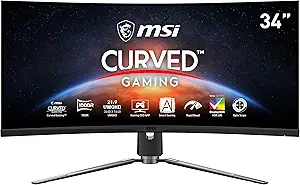
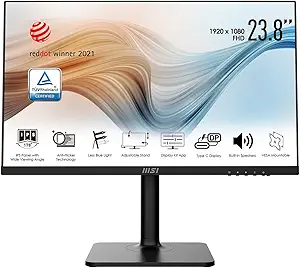
When analyzing the cost-to-performance ratio across standard and competitive display markets, MSI frequently dominates the budget-to-midrange gaming spectrum. MSI achieves high value by bundling aggressive performance specifications—such as elevated refresh rates (144Hz to 240Hz), rapid response times, and adaptive-sync technology—into competitively priced packages under their Optix and MAG lines. Their aggressive pricing strategy extends down to entry-level VA and IPS panels, offering features normally reserved for premium brackets, such as wide color gamuts and curved panels, without demanding significant price premiums. For consumers primarily interested in gaming metrics per dollar spent, MSI routinely undercuts major competitors while minimizing sacrifices to baseline gaming performance.
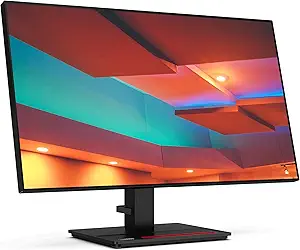
Lenovo approaches affordability from an enterprise and general productivity perspective, providing exceptional value in entry-to-midrange office monitors through their ThinkVision and Lenovo L-series displays. Lenovo models often emphasize ergonomic flexibility, low blue-light certifications, and integrated connectivity—such as USB-C power delivery hubs—at price points where competitors like MSI only provide basic video inputs. In the dedicated gaming segment, Lenovo’s Legion and LOQ displays maintain competitive MSRPs, though they tend to align more closely with traditional market pricing rather than aggressively undercutting it. Overall, MSI holds a distinct edge in high-refresh gaming affordability, whereas Lenovo yields better cost efficiency for users needing integrated multi-port connectivity and workspace productivity.
Customer Support & Warranty
MSI’s monitor warranty policies vary by tier, generally offering two- to three-year limited warranties depending on whether the unit falls within the G, MAG, or MEG product families. While their standard warranty structure is comparable to industry norms, MSI has historically faced consumer criticism regarding the responsiveness of its consumer RMA infrastructure and regional variations in dead pixel coverage. Recent warranty expansions—specifically offering a three-year burn-in warranty on their modern QD-OLED lineup—demonstrate a commitment to building user trust in high-end segments. However, navigating MSI's return protocols, support ticketing systems, and panel replacement standards can sometimes prove cumbersome for mainstream desktop users seeking rapid turnarounds.
Lenovo leverages its mature corporate infrastructure to offer one of the most reliable customer service and warranty ecosystems in the computer display market. Typical retail monitors carry standard three-year warranties, but Lenovo's ThinkVision professional displays frequently include access to enterprise-grade support channels, advance replacement programs, and stricter zero-bright-dot defect criteria. The company's well-established global logistics pipeline typically ensures faster turnaround times on replacements and smoother processing of hardware claims compared to consumer-focused vendors. Although their consumer-facing Legion gaming support relies on standard web ticketing similar to MSI, Lenovo’s vast corporate presence provides a more comprehensive, stable, and easily reachable support backbone overall.
Picture Quality
MSI distinguishes itself heavily in picture quality by focusing on wide color gamuts and aggressive contrast. Through its rapid adoption of Quantum Dot (QD) film technology across both rapid IPS and QD-OLED panels, MSI delivers exceptionally saturated and vibrant imagery characterized by expansive DCI-P3 and Adobe RGB coverage. Their OLED displays present near-infinite contrast ratios, true blacks, and stellar HDR highlights, making them a favorite for immersion-focused gamers and media enthusiasts. However, out-of-the-box color accuracy on their lower-tier VA and IPS monitors can lean toward overly saturated profiles tuned for dramatic gaming visuals rather than professional color grading, often necessitating manual calibration for color-critical tasks.
Lenovo centers its picture quality philosophy on color fidelity, panel uniformity, and natural tone reproduction. The ThinkVision line is celebrated for rigorous factory calibration, achieving Delta E < 2 color accuracy out of the box with dedicated sRGB and Rec.709 emulation modes designed specifically for content creators and enterprise users. While Lenovo’s Legion gaming monitors provide crisp image processing and low-motion-blur strobing, their peak HDR brightness and quantum-enhanced color saturation frequently lag behind MSI's high-end enthusiast displays. Ultimately, users prioritizing vibrant, wide-gamut imagery and high-tier HDR immersion will find superior picture performance in MSI, while those requiring precise, calibrated consistency and clean textual clarity will benefit more from Lenovo's panels.
Build Quality & Durability
MSI monitors display a clear evolutionary gradient in structural integrity depending on the price tier. Entry-level Optix and MAG units heavily utilize lightweight ABS plastics, and their chassis can exhibit subtle flexing along with basic stands that may offer limited tilt-only adjustment. Conversely, MSI's flagship MEG and premium QD-OLED series incorporate heavy metal-reinforced stands, robust hinge mechanisms, and sophisticated thermal solutions—including custom graphene heatsinks that reduce operational temperatures without noisy active cooling fans. While the engineering on these premium units is undeniably robust, MSI’s lower-tier monitors feel distinctly gamer-centric and utilitarian in their material selection, prioritizing internal panel specs over chassis heft.
Lenovo brings its legendary ThinkPad industrial design ethos to its monitor portfolio, resulting in exceptionally high structural standards and long-term durability. ThinkVision monitors, along with higher-end Legion displays, feature heavy-duty counterbalanced stands, full ergonomic articulation (height, swivel, tilt, and bidirectional pivot), and dense, smudge-resistant plastics built to survive intensive enterprise deployment. Cable management channels and integrated accessory mounts are smoothly integrated into the hardware, eliminating desk clutter and reducing strain on internal connection ports. Lenovo’s thermal venting and power-delivery isolation are engineered for continuous operational cycles, giving Lenovo a discernible advantage over MSI in overall chassis durability, ergonomic engineering, and long-term mechanical reliability.