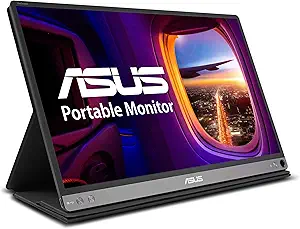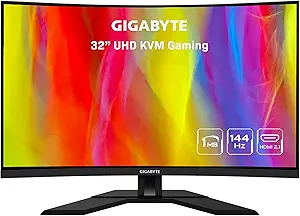





Asus vs GigaByte: Overview & Brand Philosophy
In the competitive landscape of computer displays, Asus and Gigabyte represent two divergent approaches to hardware engineering, product segmentation, and user targeting. Asus is a veteran titan in the monitor industry, having spent decades cultivating dedicated sub-brands such as Republic of Gamers (ROG), The Ultimate Force (TUF), and ProArt. Their brand philosophy is built around technological prestige, aesthetic distinction, and uncompromising engineering for specific niche demographics. Whether pushing the boundaries of extreme refresh rates with cutting-edge OLED and Fast-IPS panels or delivering factory-calibrated color precision for Hollywood-level video editing, Asus operates as an industry pacesetter that charges a premium for high-tier performance and proprietary innovation.
Gigabyte, historically recognized for motherboards and graphics cards, made a disruptive entry into the display market by leveraging an entirely different philosophy: maximum utility, feature democratization, and disruptive price-to-performance ratios. Rather than establishing distinct, disconnected divisions for different consumer brackets, Gigabyte concentrates largely on mainstream gaming (under the Gigabyte banner) and high-end enthusiast gaming (under the AORUS banner). Their strategy focuses on packing enterprise-grade features—such as built-in KVM switches, high-bandwidth USB-C connectivity, and tactical software overlays—into displays that undercut comparable legacy competitors by significant margins, fundamentally changing consumer expectations regarding what an affordable monitor can deliver.
Ultimately, both manufacturers command respect, but they solve different problems. Asus seeks to provide the absolute best-in-class experience regardless of price constraints, frequently introducing world-first specifications to trade shows and enthusiast battlestations. Gigabyte, on the other hand, engineers monitors through an analytical, pragmatic lens, determining which flagship features can be effectively integrated into mass-market price points without catastrophic compromises to panel quality.
Key Differences & Technological Comparison
When examining panel technology and image processing, Asus maintains a distinct lead in proprietary calibration, firmware customization, and thermal dissipation designs. Premium Asus monitors often feature custom heatsinks, intelligent voltage management, and patented technologies like ELMB-Sync (Extreme Low Motion Blur), which allows users to utilize variable refresh rate (VRR) synchronization simultaneously with backlight strobing—a feat few competitors have matched cleanly. Furthermore, their ProArt line offers true hardware calibration directly to the monitor's internal scaler (LUT), a prerequisite for serious color grading that Gigabyte does not currently contend with.
Gigabyte distinguishes itself by dominating the functional feature set at the mid-range level. The most notable technological differentiator is the native integration of hardware KVM switches across a vast portion of their monitor lineup. This feature enables users to control multiple systems (such as a work laptop and a gaming desktop) using a single keyboard and mouse connected directly to the display, drastically simplifying desk setups. While Gigabyte relies heavily on panels sourced from third-party manufacturers like AU Optronics, LG Display, and Samsung Display without extensive custom thermal redesigns, their factory firmware delivers exceptionally low input lag and respectable factory gamma curves out of the box.
From an aesthetic and build quality standpoint, Asus monitors are generally more robust, featuring ergonomic stands with extensive swivel, tilt, and height travel, built with higher-grade plastics and reinforced metal bases. The AURA Sync RGB implementation on premium Asus ROG models is also noticeably more sophisticated. Gigabyte panels, especially within their mainstream lineup, tend to utilize minimalist, functional industrial design. While the bezels are thin and clean, the chassis and stands frequently incorporate lighter plastic elements, and their ergonomic adjustments, while adequate, lack the ultra-smooth counterbalanced glide found on high-end Asus displays.
Pros & Cons Comparison
Asus
- Pros:
- Exceptional portfolio breadth ranging from professional ProArt displays to ultra-high-refresh ROG gaming panels.
- Advanced proprietary motion-blur technologies like ELMB-Sync.
- Superior build quality, premium thermal solutions, and exceptionally ergonomic stand mechanics.
- Comprehensive on-screen display (OSD) controls driven by responsive five-way directional joysticks.
- Cons:
- Substantial brand premium attached to the ROG and ProArt product lines.
- Lower-tier models (such as entry-level TUF variants) can sometimes exhibit inconsistent panel uniformity.
- Software suites (such as Armoury Crate) can be bloated and resource-heavy.
Gigabyte
- Pros:
- Industry-leading price-to-performance ratio across 1440p and 4K gaming categories.
- Hardware-integrated KVM functionality standard on many mainstream and budget-friendly models.
- Clean, understated industrial styling suitable for both gaming setups and modern office environments.
- Intuitive OSD Sidekick software that allows display parameter adjustments directly within Windows via USB.
- Cons:
- More limited color-critical offerings for dedicated creative professionals.
- Chassis materials and stand assemblies frequently feature more lightweight plastics compared to rivals.
- Customer service and warranty handling can vary significantly depending on global region.
Performance, Durability & Value Analysis
From a pure performance perspective, both manufacturers consistently deliver panels with rapid pixel response times, low input latency, and certified adaptive sync capabilities (FreeSync Premium and G-Sync Compatible). Asus, however, typically exhibits greater quality control consistency at the ultra-enthusiast tier. Their implementation of Fast-IPS and QD-OLED panels frequently demonstrates superior overshoot tuning, meaning you encounter less inverse ghosting when shifting across various refresh rate windows. In terms of long-term durability, Asus monitors benefit from superior passive and active cooling implementations, which is especially critical in mitigating burn-in risk on the latest generation of OLED displays.
When assessing absolute value, Gigabyte commands the conversation. In the highly sought-after 27-inch and 32-inch 1440p and 4K gaming segments, a Gigabyte monitor typically retails for 15% to 30% less than an Asus display with near-identical panel specifications. For the vast majority of consumers who do not require custom internal heatsinks or specialized color calibration hardware, the minor delta in chassis materials or motion-blur algorithms rarely justifies the price premium demanded by Asus. Gigabyte's long-term reliability has proven resilient over recent generation releases, solidifying their reputation as a smart, pragmatic investment for budget-conscious performance seekers.
Final Verdict: Which Brand Should You Choose?
The choice between Asus and GigaByte hinges on your specific operational requirements, sensitivity to cost, and the types of workloads you plan to run.
Choose Asus if: You are seeking the absolute technological cutting edge and are willing to pay for it. If you need a world-class, hardware-calibrated display for professional color-critical creative work, the Asus ProArt line is the clear choice. Similarly, competitive esports players and enthusiasts seeking bleeding-edge refresh rates (360Hz to 540Hz), elite OLED tuning with robust burn-in warranty policies, and flawless industrial construction will find the Asus ROG series well worth the investment.
Choose Gigabyte if: You prioritize functionality, modern features, and raw value for money. If your goal is to find a high-refresh-rate 1440p or 4K gaming monitor that looks modern, performs reliably, and includes game-changing productivity additions like a built-in KVM switch without inflating the cost, Gigabyte is the definitive brand to select. For mid-range gamers, remote workers balancing multiple machines, and budget-conscious performance buyers, Gigabyte represents the smartest purchase on the current market.
Affordability
When evaluating affordability in the monitor space, Gigabyte has positioned itself as one of the most aggressive market disruptors, routinely undercutting legacy competitors while delivering top-tier performance metrics. Gigabyte’s philosophy centers on maximizing practical gaming specifications per dollar, primarily through its core Gigabyte and enthusiast-focused AORUS lineups. Rather than inflating costs with high-concept industrial designs, proprietary software suites, or excessive chassis illumination, Gigabyte invests its engineering budget directly into the display panel itself. Budget and mid-tier models, such as the widely praised M27Q and G27Q series, deliver fast refresh rates, wide DCI-P3 color gamuts, and integrated hardware KVM switches—a productivity feature virtually unheard of at their price points. While Gigabyte occasionally cuts costs via utilitarian plastic enclosures, basic menu navigation, and lower peak brightness on its budget HDR implementations, the baseline performance-to-price ratio remains extraordinarily high for cost-conscious consumers.
Asus approaches affordability through a heavily tiered product segmentation strategy, dividing its offerings primarily between the budget-oriented TUF Gaming series, productivity-focused ProArt displays, and premium ROG (Republic of Gamers) lines. In the direct fight for the budget dollar, Asus TUF monitors compete admirably against Gigabyte, often integrating advanced proprietary display engineering such as Extreme Low Motion Blur Sync (ELMB-Sync), robust stand ergonomics, and superior factory overdrive tuning that minimizes ghosting. However, across the broader catalog, Asus attaches a tangible price premium to its higher-end engineering and brand prestige. Even within its affordable segments, Asus products often cost between 10% and 25% more than identically specced Gigabyte alternatives, trading absolute raw value for superior structural build quality, more refined on-screen displays (OSD), and comprehensive quality control backed by mature customer service infrastructure.
Ultimately, the practical trade-off between the two brands comes down to feature density versus overall refinement within a constrained budget. Gigabyte represents the purely analytical choice for consumers seeking the highest possible technical throughput—such as 1440p resolution, high refresh rates, and USB-C connectivity—at the lowest possible barrier to entry, even if it comes with minor compromises in aesthetic cohesion and panel uniformity variance. Asus, conversely, offers a more polished end-user experience, superior physical durability, and proprietary motion-blur technologies, but forces consumers to pay a premium that diminishes their claim to pure affordability. For buyers strictly shopping by the spec sheet and bottom-line pricing, Gigabyte consistently edges out Asus, while Asus remains the preferred choice for those willing to pay a moderate premium for engineering nuance and brand reliability.
Customer Support & Warranty
When evaluating the post-purchase experience and long-term reliability for gaming and professional monitors, Asus generally demonstrates a more mature and technically nuanced warranty architecture compared to Gigabyte. Asus standardizes a three-year limited warranty across both its Republic of Gamers (ROG) and mainstream TUF lineups, which includes its robust Rapid Replacement (ARR) cross-shipping service in select regions. A notable strength in Asus's policy is its transparent Zero Bright Dot (ZBD) guarantee, which covers specific premium panels against bright sub-pixel anomalies within the initial months of ownership. Furthermore, in response to early panel degradation concerns on newer QD-OLED models, Asus explicitly integrated two-to-three-year burn-in mitigation warranties. In contrast, Gigabyte also matches the industry baseline with a standard three-year warranty on the majority of its G-series and premium AORUS displays. However, Gigabyte’s policy documentation is historically more rigid, with stricter thresholds for pixel defects—often requiring a minimum of three to five malfunctioning pixels before approving an RMA—and slower formal integration of burn-in coverage on their performance OLED variants.
From an operational standpoint, the practical trade-offs emerge in technical support execution and Return Merchandise Authorization (RMA) logistics, where both brands exhibit distinct friction points. Asus benefits from an expansive, long-established global repair network and multiple tier-one support channels, including dedicated web ticketing, live chat, and telephone triage. Despite this reach, users occasionally encounter bureaucratic resistance regarding RMA tier approvals, with some regional service centers notoriously pushing the boundaries of what constitutes user-induced physical damage. Gigabyte operates a leaner infrastructure through its centralized eSupport platform, which, while direct, often yields slower ticket response cycles and extended turnaround times for bench repairs. Consumers managing a Gigabyte display repair are typically responsible for one-way shipping transit costs, and the lack of an equivalent cross-shipping program means weeks of monitor downtime. Consequently, while Gigabyte offers competitive display hardware at aggressive price-to-performance ratios, Asus delivers a more dependable post-sale safety net for consumers prioritizing minimal downtime and stringent panel defect tolerances.
Picture Quality
When evaluating picture quality between Asus and Gigabyte, the fundamental difference lies in factory calibration standards, panel binning, and target market segments. Asus demonstrates superior engineering depth, particularly across its premium lines such as the ProArt and ROG Swift series. Asus ProArt displays set an industry benchmark for color fidelity, frequently achieving a Delta E of less than 1 or 2 straight out of the box, backed by hardware calibration capabilities and comprehensive gamut coverage across sRGB, DCI-P3, and Adobe RGB. In the gaming sphere, Asus ROG Swift monitors—particularly their latest QD-OLED and Mini-LED implementations—deliver exceptional contrast, ultra-fine local dimming, and peak HDR brightness that easily surpasses mid-tier competition. Gigabyte, conversely, excels in delivering exceptional value-per-dollar, sourcing capable Fast IPS, VA, and increasingly QD-OLED panels from premier manufacturers, but tuning them with slightly more aggressive, consumer-friendly color profiles that favor high saturation over absolute color accuracy.
From a technical and feature perspective, Asus implements more sophisticated proprietary image processing technologies. Features like Asus Splendid, ProArt Preset, and GamePlus hardware overlays are backed by robust internal scalers that minimize artifacting, color banding, and inverse ghosting via finely tuned variable overdrive algorithms. Gigabyte, primarily known through its standard and Aorus gaming branding, relies heavily on high native contrast ratios—particularly on its curved VA options—and wide DCI-P3 color spaces. Aorus models offer robust picture features like Black Equalizer, Aim Stabilizer, and 10-bit color depth (often via 8-bit + FRC). However, Gigabyte panels tend to show higher variance in unit-to-unit color uniformity, with occasional edge-lit backlight bleed and slightly elevated Delta E deviations that necessitate manual calibration for professional use.
Ultimately, the practical trade-off between the two brands comes down to budget versus uncompromising visual precision. Asus commands a noticeable price premium, but it delivers unmatched dynamic range, peak HDR luminance, and laboratory-grade color consistency that creative professionals and hardcore enthusiasts require. Gigabyte offers far superior cost efficiency, democratizing high-end visual specifications like 4K resolution, 144Hz+ refresh rates, and wide color gamuts at price points Asus rarely matches. For consumers seeking strict color fidelity, superior HDR tone mapping, and uniform luminance, Asus holds a clear technical edge; however, for general multimedia consumption and high-fidelity gaming where high color vibrancy is preferred without paying an enthusiast tax, Gigabyte offers an extraordinarily compelling picture.
Build Quality & Durability
When evaluating engineering quality and structural integrity in the monitor market, Asus establishes a higher ceiling, driven primarily by its premium Republic of Gamers (ROG) and professional ProArt lineups. Asus displays an exceptional standard of build execution at the upper tiers, utilizing reinforced, heavy-gauge plastics, die-cast aluminum core stands, and high-tolerance articulation hinges that resist wobble and sagging even on ultra-wide panels. Furthermore, Asus’s internal durability is bolstered by bespoke thermal engineering; high-performance ROG monitors frequently integrate custom passive heatsinks or internal airflow channeling to mitigate the heat buildup that often degrades fast-refresh IPS and high-brightness OLED panels prematurely. In contrast, Gigabyte adopts a more utilitarian, cost-efficient approach centered around structural pragmatism. While Gigabyte’s AORUS sub-brand features robust metallic elements and dense plastics, the standard Gigabyte-branded lineup relies predominantly on functional matte plastics that exhibit slight chassis flex and more perceptible creaking under torsional stress, though they remain structurally adequate for standard desktop environments.
The technical trade-offs between the two manufacturers center on ergonomic longevity, panel QA consistency, and price-to-durability ratios. Asus’s stands—particularly on TUF and ROG models—feature industrial-grade tension springs with superior resistance to mechanical wear over years of height, tilt, and swivel adjustments. However, Asus's lower-end tiers still command a price premium despite occasionally sharing similar plastic-heavy compositions found on cheaper competitors. Gigabyte’s major technical strength lies in maximizing internal component value per dollar, offering solid baseline reliability with standard VESA-compatible mountings and integrated KVM switches that hold up well under daily use. Where Gigabyte trails Asus is in the long-term physical finesse: their adjustment mechanisms can feel stiffer or exhibit more joint play over time, and their exterior bezels often show micro-gaps that can trap dust. In terms of long-term operational durability and panel longevity, both brands source from top-tier panel fabricators (like AU Optronics, LG Display, and Samsung Display), but Asus’s stricter factory calibration standards, superior quality control against backlight bleed, and better passive heat dissipation make it the more durable investment for demanding users willing to pay for premium craftsmanship.