Asus vs Corsair: Overview & Brand Philosophy
In the competitive landscape of display technology, Asus stands as an entrenched titan with decades of hardware manufacturing experience. Operating primarily through its Republic of Gamers (ROG), TUF Gaming, and ProArt sub-brands, Asus approaches monitor design with a philosophy centered on comprehensive market coverage and relentless technological ambition. From budget-friendly 1080p esports panels to bleeding-edge 540Hz fast-TN displays and color-critical Mini-LED workstations, Asus leverages an expansive engineering infrastructure to cater to virtually every segment of PC users, enthusiasts, and creative professionals.
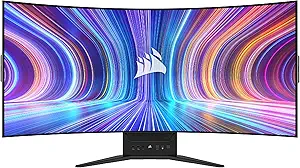
Conversely, Corsair entered the standalone monitor market relatively recently, applying the boutique, enthusiast-first philosophy that built its reputation in computer components and peripherals. Rather than saturating the market with dozens of redundant SKUs across entry-level price brackets, Corsair strategically curates a targeted lineup focused heavily on high-end gaming and streaming experiences. Under its Xeneon banner, Corsair prioritizes premium industrial design, novel form factors (such as bendable OLEDs), and deep software integration with its unified iCUE ecosystem, catering directly to power users looking to centralize their desktop setups.
Key Differences & Technological Comparison
When evaluating the underlying display technologies and hardware implementations between Asus and Corsair, several fundamental differences emerge across product lines, panel choices, and feature integration:
- Catalog Diversity and Tiering: Asus offers an expansive portfolio covering standard office panels, affordable TUF gaming options, high-end ROG esports gear, and color-accurate ProArt displays factory-calibrated for media production. Corsair bypasses the budget and dedicated enterprise tiers entirely, maintaining a lean lineup of premium 1440p, 4K, and ultrawide monitors designed specifically for enthusiast gamers and content creators.
- Panel Innovation and Refresh Rates: Asus frequently leads the industry in pushing boundary-pushing refresh rates, utilizing proprietary thermal management to drive OLED and Fast IPS panels to 240Hz, 360Hz, and even 540Hz thresholds. Corsair focuses on mainstream enthusiast standards—typically 165Hz to 240Hz—but distinguishes itself through bold physical design choices, such as the Corsair Xeneon Flex, which features a manually bendable LG OLED panel that transitions between flat and 800R curved states.
- Cooling and Burn-in Mitigation (OLED): In the OLED space, Asus employs custom passive heatsinks, tailored voltage management algorithms, and graphene films across its ROG Swift lineup to maximize peak brightness while minimizing burn-in risks. Corsair counters with its own robust heatsink thermal designs backed by an industry-leading zero dead pixel guarantee alongside comprehensive 3-year burn-in warranties.
- Ecosystem Integration & Ergonomics: Corsair displays feature integrated mounting solutions that align directly with Elgato Multi Mount accessories, reflecting Corsair’s ownership of Elgato and targeting streamers with native webcam and lighting compatibility. Asus monitors, particularly in the ROG line, feature distinctive gamer aesthetics with customizable Aura Sync RGB, tripod sockets on monitor stands, and physical OSD joysticks paired with extensive on-board game-assist overlays.
Pros & Cons Comparison
Asus Monitors
- Pros:
- Massive product selection spanning ultra-budget to world-class professional tiers (ProArt).
- Pioneering refresh rates with class-leading motion clarity via proprietary ELMB-Sync technology.
- Sophisticated thermal engineering that allows panels to sustain higher peak brightness.
- Precise factory color calibration available on specialized workstation models.
- Cons:
- Product naming schemes and massive SKU variety can be confusing to navigate.
- Aggressive gamer styling on ROG models may not suit professional or minimalist environments.
- Customer support experiences and RMA processes can vary considerably depending on region.
Corsair Monitors
- Pros:
- Sleek, modern minimalist aesthetics that blend into both gaming and home office setups.
- Built-in compatibility with the Elgato broadcasting ecosystem, including 1/4-inch thread mounts.
- Generous warranties that explicitly include a 3-year burn-in policy and zero dead pixel guarantees.
- Unique hardware innovations like the manually bendable Xeneon Flex OLED.
- Cons:
- High barrier to entry with virtually no budget or mid-range offerings.
- Limited portfolio lacks options tailored strictly for color-critical prepress and video mastering.
- iCUE software, while feature-rich, can consume noticeable system resources.
Performance, Durability & Value Analysis
In terms of outright panel performance, both brands extract exceptional results from their underlying panels (primarily sourced from industry leaders such as LG Display, AU Optronics, and Samsung Display). Asus tends to hold the performance edge in competitive gaming scenarios, where their specialized motion blur reduction technologies (ELMB) and extreme refresh rate capabilities provide measurable latency advantages for competitive esports titles. Corsair, however, demonstrates outstanding consistency in desktop real estate, motion fluidity, and input response within the 1440p and 4K sweet spots. Their color reproduction on Fast IPS and OLED panels is tuned exceptionally well out of the box, making them immediate crowd-pleasers without intensive manual calibration.
When assessing long-term durability and financial value, the two brands appeal to different types of buyers. Asus provides unmatched value at the entry and mid-tier levels via the TUF line, delivering solid build quality and modern specs at accessible prices; however, their ultra-premium ROG products carry steep brand-tax markups. Corsair demands a high upfront investment across all its models, but balances this with exceptionally rigid, die-cast aluminum stands, thoughtful cable routing channels, and one of the most reassuring OLED burn-in warranty policies in the industry. For buyers investing heavily in high-end displays, Corsair’s post-purchase security provides tangible peace of mind that offsets its premium pricing.
Final Verdict: Which Brand Should You Choose?
Choosing between Asus and Corsair ultimately hinges on your specific use case, desired ecosystem, and budget constraints:
Choose Asus if: You are a competitive gamer seeking maximum frame rates and cutting-edge motion blur reduction (ROG Swift), a budget-conscious shopper seeking reliable gaming performance under $300 (TUF Gaming), or a digital artist and video editor who requires certified, factory-calibrated color accuracy (ProArt). Asus remains the definitive choice for users who want specialized displays tailored precisely to narrow technical requirements.
Choose Corsair if: You are a content creator, streamer, or gaming enthusiast looking for an ultra-premium, beautifully built centerpiece for your desk. Corsair is ideal for users already invested in the Corsair/Elgato ecosystem who value clean industrial design, streamer-friendly mounting hardware, flexible form factors, and the safety net of an aggressive warranty against burn-in and pixel defects.
Affordability
When evaluating affordability in the monitor market, Asus establishes a decisive advantage through sheer catalog diversity and aggressive price segmentation. Operating across multiple targeted sub-brands—ranging from the ultra-budget Eye Care and business-oriented ProArt lines to mainstream TUF Gaming and elite Republic of Gamers (ROG) hardware—Asus offers viable display solutions at virtually every price tier. Entry-level consumers can access high-refresh 1080p and 1440p panels within the TUF Gaming lineup that offer exceptional price-to-performance metrics, utilizing cost-effective IPS or VA panels paired with robust adaptive sync technologies. While their flagship ROG Swift models command astronomical premiums to push the technical envelope with cutting-edge OLED and mini-LED backlights, Asus consistently trickles engineered feature sets, such as extreme low motion blur (ELMB) and bespoke heatsinks, down to mid-range SKUs. This allows budget-conscious gamers and creative professionals to procure technically capable, factory-calibrated panels without paying a luxury tax.
Conversely, Corsair approaches the monitor space with an uncompromising, boutique philosophy that inherently limits its accessibility for budget-focused buyers. Rather than competing in the sub-$300 entry-level market, Corsair focuses almost exclusively on premium, aspirational form factors through its Xeneon product line. Their displays generally start at the mid-to-high tier, heavily emphasizing enthusiast specifications such as high-refresh-rate 4K IPS panels, ultra-wide QD-OLEDs, and unique engineering novelties like the bendable Xeneon Flex. While Corsair delivers remarkable industrial design—incorporating ultra-thin bezels, aluminum stands, integrated cable management, and native synchronization with the Corsair iCUE software ecosystem—the cost barrier to entry remains consistently high. Consumers pay a distinct premium for these luxury chassis materials, multi-year burn-in warranties, and specialized ergonomics, meaning Corsair completely lacks an answer to the ultra-accessible, sub-$200 daily driver displays where Asus thrives.
Ultimately, the practical trade-off between the two brands regarding affordability boils down to accessibility versus tailored exclusivity. Asus represents the pinnacle of consumer scalability; buyers on strict budgets can sacrifice ancillary aesthetic luxuries like aluminum enclosures and integrated RGB lighting to obtain cutting-edge panel speeds and color fidelity at a fair market price. In contrast, Corsair demands that the buyer invest in the entire high-end experience from the outset, yielding exceptional build quality and holistic ecosystem integration, but delivering very poor value for consumers seeking baseline utility. Therefore, Asus is the undisputed victor in affordability across virtually all traditional metrics, while Corsair remains a luxury investment strictly reserved for enthusiasts with substantial expendable capital.
Customer Support & Warranty
When evaluating monitor reliability and post-purchase assurance, warranty structure and customer service efficiency are paramount, particularly as high-refresh-rate IPS and sensitive OLED panels dominate the enthusiast space. Corsair has established an exceptionally strong foothold in monitor warranty engineering, most notably through its comprehensive three-year zero dead pixel guarantee alongside a robust burn-in warranty explicitly covering its Xeneon OLED display lineup. Corsair’s technical service framework is streamlined; replacement protocols are straightforward, advance RMAs are frequently honored for qualified products, and their global digital ticketing system is generally responsive. By contrast, Asus offers their long-running Asus Rapid Replacement (ARR) program on select professional (ProArt) and flagship gaming (ROG) panels, which attempts to minimize downtime through advance cross-shipping. However, Asus’s standard dead pixel policy for non-flagship units often relies on strict ISO 13406-2 defect thresholds, requiring a specific cluster or minimum count of bright or dark subpixels before triggering a warranty replacement, creating technical friction for standard buyers.
The practical trade-offs between the two brands become apparent during the physical RMA lifecycle and consumer support escalation. Asus operates a massive, often decentralized global support infrastructure that suffers from inconsistent third-party regional repair centers. Historically, users navigating Asus warranty claims have reported bureaucratic roadblocks, arbitrary physical damage assessments, and protracted turnaround times when an exact panel replacement is out of stock. Corsair operates a comparatively leaner, direct-to-consumer support apparatus natively integrated into their broader PC component ecosystem. While Corsair's phone support availability is more limited than Asus's multinational network, their warranty fulfillment is far more predictable: Corsair generally replaces entire defective chassis rather than attempting intrusive board-level or panel repairs, which eliminates the recurring panel artifacts and misaligned bezels sometimes associated with refurbished Asus replacements.
Ultimately, while Asus provides localized call centers and specialized warranty extensions for high-end sub-brands like ROG and ProArt, Corsair delivers a superior, modern warranty policy tailored to the realistic failure modes of high-performance displays. The explicit inclusion of comprehensive OLED burn-in protection and zero-dead-pixel coverage across Corsair's entire monitor portfolio reduces consumer risk significantly. For users investing in premium gaming or creative panels where micro-defects ruin the viewing experience, Corsair’s transparent technical coverage and predictable RMA execution decisively outshine Asus's more rigid pixel fault policies and variable support quality.
Picture Quality
When evaluating picture quality, Asus leverages one of the most comprehensive display ecosystems in the industry, ranging from its color-critical ProArt series to high-performance ROG gaming panels. Asus displays are distinguished by their exceptional out-of-the-box color accuracy, with ProArt models boasting factory-calibrated Delta E < 1 ratings and extensive coverage of wide color gamuts such as DCI-P3, Adobe RGB, and Rec. 2020. In high-end gaming, Asus pushes the envelope through aggressive panel engineering, employing advanced Mini-LED backlights with thousands of local dimming zones to achieve true HDR performance, peak brightness levels surpassing 1,400 nits, and virtually zero halo effect. While Corsair competes admirably in the premium sector, its portfolio lacks Asus's exhaustive range of panel types and dedicated professional color calibration workflows, making Asus the more versatile brand for multi-disciplinary users who transition between color-sensitive content creation and high-fidelity gaming.
Corsair takes a highly focused, enthusiast-driven approach to picture quality by concentrating its resources almost exclusively on flagship OLED and Fast IPS technologies, most notably popularized by its XENEON lineup. By partnering closely with panel manufacturers like LG Display, Corsair delivers breathtaking contrast ratios, infinite black levels, and per-pixel dimming that eliminate the blooming issues found on traditional backlit panels. Corsair distinguishes itself with smart image processing that limits aggressive Automatic Brightness Limiter (ABL) behavior—a common grievance among OLED users—ensuring a more consistent visual experience in bright scenes. Furthermore, Corsair displays feature premium anti-glare coatings that maintain deep black levels and clarity even in well-lit environments, avoiding the purple tint or raised blacks that plague some competing QD-OLED implementations. However, Corsair's maximum sustained full-field brightness on its OLED models remains modest compared to Asus’s brightest Mini-LED displays, which can limit punchiness in brightly illuminated rooms.
Ultimately, the trade-off in visual performance comes down to display diversity versus tailored enthusiast execution. Asus gives consumers greater control through deeply customizable OSD color spaces, proprietary calibration software, and superior HDR peak luminance across its top-tier Mini-LED and ROG OLED displays, though lower-tier budget models can exhibit inconsistent panel uniformity and mediocre IPS contrast. Corsair offers fewer overall models, but each display delivers an exceptionally refined, premium viewing experience out of the box with stellar pixel response times and reference-grade motion clarity that natively enhances perceived image sharpness. If you require specialized, high-luminance HDR mastering or industry-standard color grading alongside gaming, Asus holds the technical advantage; however, for consumers seeking cinematic, contrast-rich OLED clarity with robust panel uniformity, Corsair presents a formidable, meticulously engineered rival.
Build Quality & Durability
When assessing engineering standards and structural integrity, Asus and Corsair approach monitor construction from distinctly different design philosophies. Asus, through its dominant Republic of Gamers (ROG) and ProArt lineups, exhibits mature manufacturing characterized by rigid, impact-resistant polycarbonate shells, heavy-duty metal core stands, and advanced internal thermal dissipation systems. Flagship ROG displays frequently incorporate custom heatsinks to prolong panel lifespans—a critical longevity feature for high-refresh and OLED panels prone to thermal degradation. In contrast, Corsair, a more recent entrant into the display space, leans heavily into premium, modern materials such as anodized aluminum and cast metals, notably evident in their Xeneon series. Corsair’s displays feel exceptionally sleek and dense, with heavy-duty cast aluminum stands that offer virtually zero wobble and remarkable torsional rigidity. However, while Corsair’s external fit and finish are elite, Asus boasts the deeper engineering track record, leveraging decades of display supply-chain refinement to ensure higher panel-to-bezel tolerance consistency and tighter quality control across mass production runs.
The practical trade-offs between the two brands emerge in their mechanical features and long-term durability implementations. Corsair distinguishes itself with superior articulation mechanisms and consumer-friendly physical longevity features, such as standardized quarter-inch camera threads atop the stands for streaming gear and robust integrated cable management channels that reduce connector strain over time. Furthermore, Corsair provides an industry-leading zero-dead-pixel policy coupled with robust comprehensive warranties—often matching Asus's standard three-year warranty but frequently including more aggressive OLED burn-in coverage on panels like the Xeneon Flex. Asus, on the other hand, excels in durability-focused firmware safeguards, deploying intelligent voltage optimization and pixel-cleaning cycles tailored to stave off panel decay. While Corsair’s adventurous structural innovations, such as the bendable mechanism on the Xeneon Flex, raise questions regarding ultra-long-term fatigue over hundreds of flexing cycles, Asus relies on time-tested, rigid monitor architecture that offers predictable, long-lasting reliability for traditional desk setups.