





While both Osaki and OHCO occupy prominent spaces in the U.S. luxury massage chair market, they take entirely different design philosophies toward achieving world-class therapy.
Osaki has built one of the most extensive catalogs in the industry, stacking an enormous amount of technology into models across all price tiers. With chairs like the budget-friendly OS-Champ, the highly versatile OS-Pro Admiral II, and the fully loaded 4-D Maestro LE 2.0, Osaki appeals to a broad audience looking for feature density, customization, and aggressive pricing flexibility.

OHCO, engineered in Japan and distributed through its exclusive U.S. dealer network, focuses on refined simplicity, fluid motion, and artfully synchronized massage choreography. Its top-of-the-line Sens8™ roller system, elegant design language, and Japanese motion algorithms aim to replicate human hands as closely as possible rather than overwhelm buyers with tech features. While OHCO’s catalog is much narrower than Osaki’s, its flagship models such as the M.DX and M.8 NEO have developed a loyal following among serious wellness buyers.
Customer Support & Warranty
After-sales service plays a huge role in owner satisfaction as massage chairs often require technical attention after heavy usage.
🟦 Osaki offers warranties ranging from 1 to 3 years on parts and labor, extendable to 5 years for frame coverage on some models. Parts availability within the U.S. remains solid thanks to its Texas warehouse network. However, because Osaki works through a large dealer network, service experiences can vary depending on retailer, technician availability, and geographic location.
🟪 OHCO maintains a premium-level service experience via its smaller, authorized dealer structure. Warranty coverage typically includes 3 years in-home labor, 5 years parts, and 5 years frame coverage. Because OHCO limits distribution to certified resellers, service requests often flow directly to factory-trained technicians, providing smoother repair logistics and shorter turnaround times for most customers.
✅ Verdict: OHCO provides more consistent, concierge-level customer service with highly trained repair coordination. Osaki offers broad nationwide coverage but more dealer-dependent variability in service response.
Massage Variety
Variety isn't simply about how many programs exist—but whether they deliver unique therapeutic feel over long-term daily use.
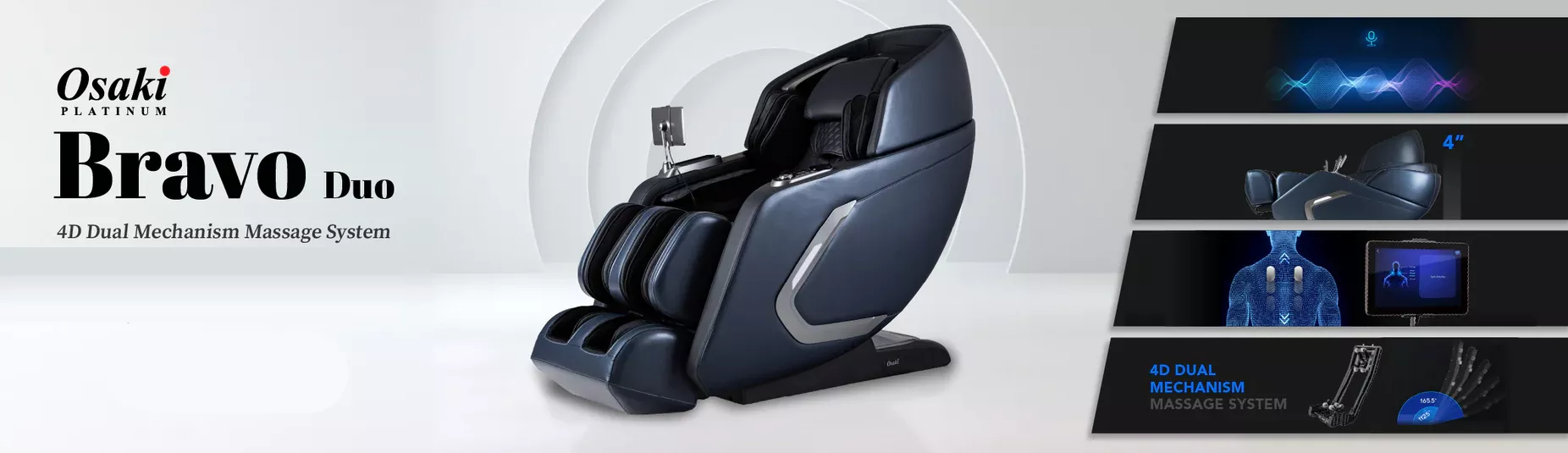
🟦 Osaki is known for its extensive program libraries. Even the entry OS-Champ offers five full-body programs with kneading, tapping, rolling, and dual-mode techniques. The Admiral II upgrades to 3-D depth control and 15 auto programs, covering targeted body regions, office recovery, sports stretch, and more. The flagship Maestro LE 2.0 elevates into heated 4-D rollers, offering variable-speed mid-stroke adjustments that mimic human therapist pacing. Programs like "Thai Stretch," "Sports Recovery," "Gentle Wake-Up," and "Neck & Shoulder" build significant long-term variety, especially for multi-user households.
🟪 OHCO takes the opposite approach: fewer programs, but exceptional refinement in execution. The M.DX, powered by the Sens8™ roller mechanism, focuses on deeply synchronized motions, variable-width rolling, and smooth pressure transitions that emulate trained shiatsu professionals. OHCO offers fewer total auto-programs than Osaki, but each program is meticulously choreographed for flow, therapeutic rhythm, and natural feel—where abrupt motion changes are nearly absent. Rather than "more modes," OHCO emphasizes better balance between depth, contour following, and dynamic roller pacing.
✅ Verdict: Osaki delivers broad program variety for multi-user versatility. OHCO excels at ultra-refined massage choreography and fluid roller motion that simulates real therapist hands.
Body Coverage & Adjustability
Coverage is about more than track length—it’s about how thoroughly the rollers, airbags, and stretch functions adapt to body shape.
🟦 Osaki delivers wide full-body coverage with its long SL-tracks (53 inches in the Maestro LE 2.0), extending from the occipital ridge to the upper hamstrings. Airbag zones exceed 30 across shoulders, arms, hips, calves, and feet, with independent intensity adjustments. Its body scanning technology reliably detects user shoulder height and leg length, fine-tuning the roller start position and width dynamically. Even the mid-tier Admiral II mirrors most of this coverage.
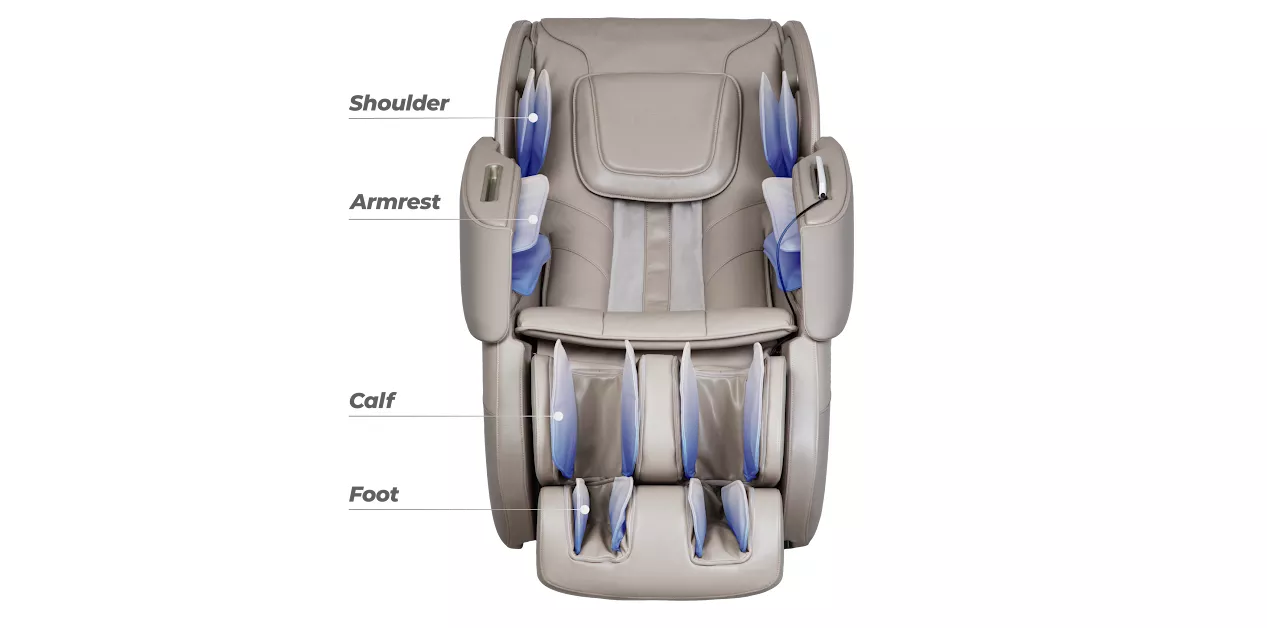
🟪 OHCO, while using a slightly shorter S+L hybrid track (~49 inches), emphasizes extremely precise roller contour following using the Sens8™ system. The roller movement varies width dynamically, tightly hugging spinal curves without requiring multiple preset widths. OHCO uses fewer airbags than Osaki but applies them more selectively, focusing on sequentially modulated compression in shoulders, lumbar, arms, and calves that mimic the hands of a therapist repositioning. Shoulder airbags integrate gentle traction, enhancing decompression without excessive stretch force.

✅ Verdict: Osaki offers broader total zone coverage with highly adjustable intensity controls. OHCO delivers more precise, highly responsive roller contouring and dynamic pressure sequencing.
Comfort & Ergonomics
Comfort depends not just on padding softness but long-session tolerability, joint alignment, and how naturally the chair supports circulation.
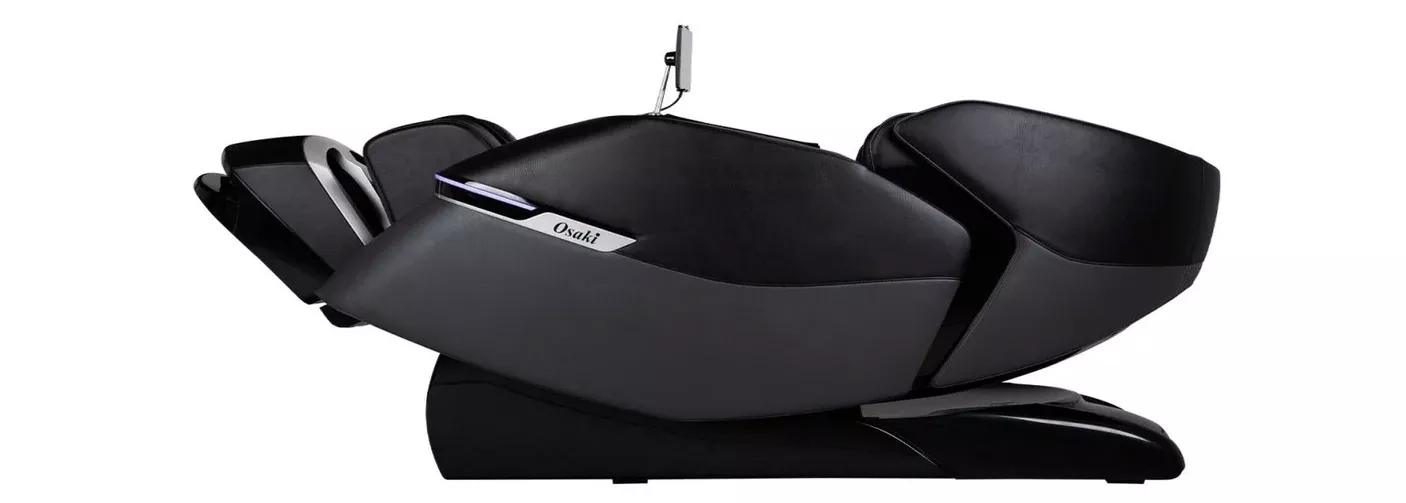
🟦 Osaki designs most models for plush, casual relaxation comfort. The Admiral II and Maestro LE 2.0 offer generous memory-foam padding, multiple Zero Gravity recline stages, wide shoulder frames, and auto-lengthening leg rests that easily fit users up to 6′5″. Even the budget OS-Champ delivers solid lumbar heat, although taller users may find the seating somewhat shallow. Osaki’s plush design allows for comfortable daily casual use for a wide variety of body shapes.
🟪 OHCO, while still luxurious, leans into postural precision. The M.DX seat architecture is carefully engineered around Japanese ergonomic standards, supporting pelvic neutral alignment, spinal lengthening, and natural cervical curves even during full recline. The Zero Gravity system is perfectly tuned for both decompression and extended therapy sessions, with less "deep seat sink" than Osaki. This delivers excellent circulation control, especially for users with back sensitivity or who undergo longer daily sessions.

✅ Verdict: Osaki wins for plush, universally comfortable family lounge-style seating. OHCO excels for therapy-focused spinal alignment comfort tuned for long-session therapy.
Quick Buyer Match Guide
🟦🟦 Choose Osaki if you
• Want maximum features-per-dollar across all price points.
• Prefer 4-D heated rollers, voice integration, and entertainment extras.
• Need flexible pricing and frequent sales with wide dealer access.
• Value highly customizable massage programs for multiple household users.
• Like smart-home-level technology in addition to therapy.
🟪🟪 Choose OHCO if you
• Demand ultra-fluid roller motion engineered by Japanese massage experts.
• Prioritize precision therapy over high feature count.
• Seek simplified, distraction-free programming focused on meditative therapy.
• Value long-session comfort with advanced spinal alignment.
• Expect high-end concierge-level customer service and boutique purchasing.
Conclusion
Osaki represents the king of mainstream versatility—stacking tech features, broad price accessibility, and full customization into models that appeal to both first-time buyers and demanding daily therapy users alike.
OHCO, meanwhile, represents one of the purest expressions of Japanese massage chair engineering, focusing entirely on mechanical precision, fluidity of motion, and clinical massage simulation that borders on human hands—at the expense of flashy features but in favor of uncompromised therapeutic experience.
For buyers seeking maximum features, personalization, and budget flexibility, Osaki remains the industry’s tech-powered feature giant.
For those who want meditative, therapist-grade fluidity and Japan’s finest massage engineering, OHCO offers one of the purest luxury experiences money can buy.